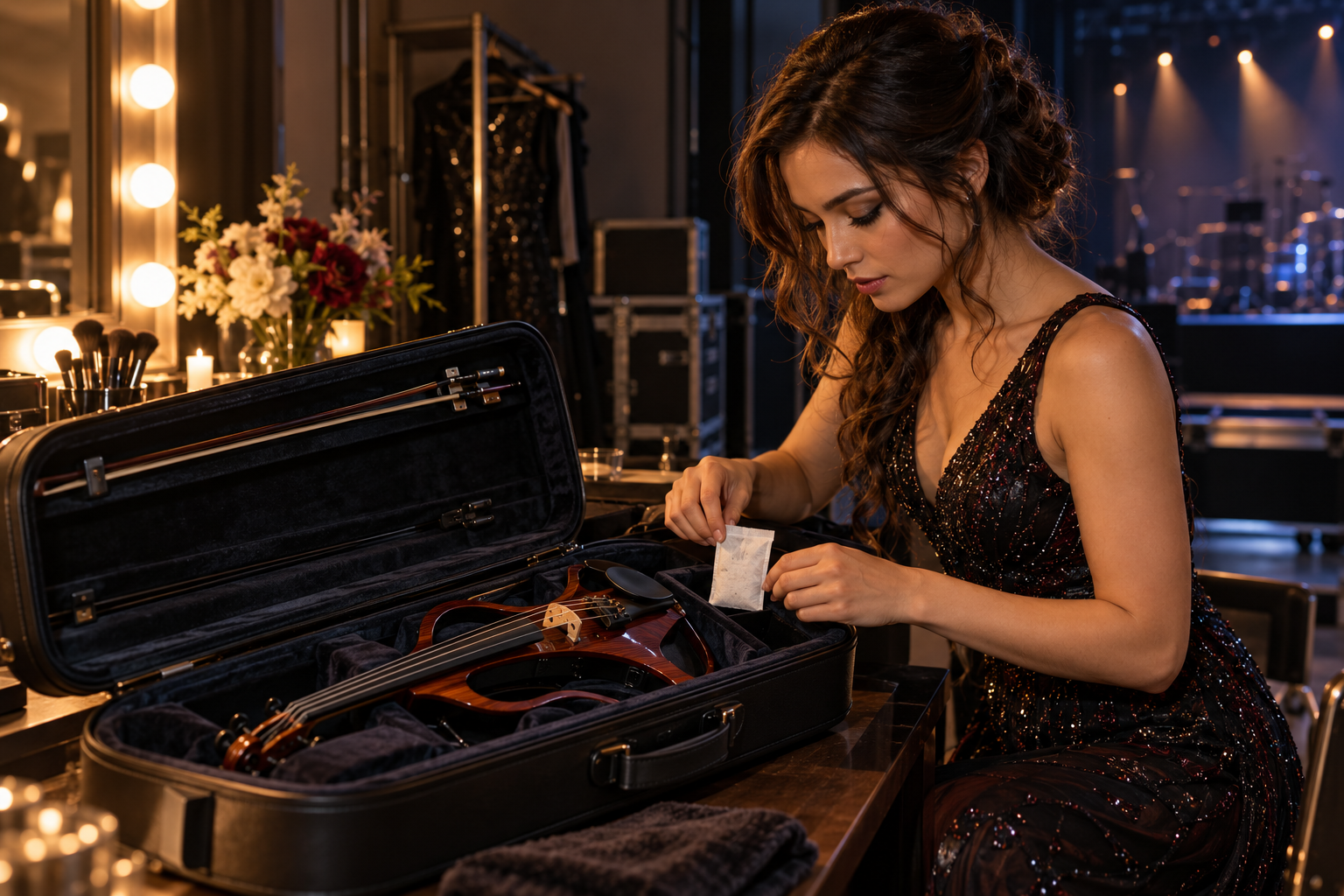
The best violin case humidity control for a touring performer is usually a two-way system that is sized for the case, kept away from the instrument, and checked with a reliable hygrometer. Compare D’Addario Humidipak, Boveda 49% packs, Stretto humidifiers, Dampit, Oasis and MusicNomad by whether you need stable two-way regulation, added moisture in a dry room, or a compact backup for changing travel conditions. Tanya Strings approaches humidity as stage readiness: protect the wood, bow hair and fittings before soundcheck, then let the electric violin performance take the spotlight.
Some links in this article are affiliate links. I may earn a commission if you make a purchase, at no extra cost to you.
Start with the environment and the instrument maker’s advice. A two-way pack helps buffer swings; an added-moisture humidifier is for genuinely dry conditions; a hygrometer tells you what is happening. Do not place a wet device against varnish, wood, bow hair or electronics. For a solid-body electric violin, focus on any wooden components, bow and acoustic backup rather than assuming every case needs the same treatment.
| Option | Best for | Pros | Watch for |
|---|---|---|---|
| D’Addario Humidipak | Two-way case regulation | Set-and-check format | Replace packs on schedule |
| Boveda 49% | Stable target comparison | Two-way pack format | Use compatible holder |
| Stretto | Dedicated violin-case system | Purpose-led design | Follow fill guidance |
| Dampit | Dry-climate comparison | Familiar violin option | Never over-wet |
| Oasis | Compact dry-air backup | Easy travel size | Check case clearance |
| MusicNomad | Hygrometer-led routine | Useful monitoring category | Monitor is not treatment |
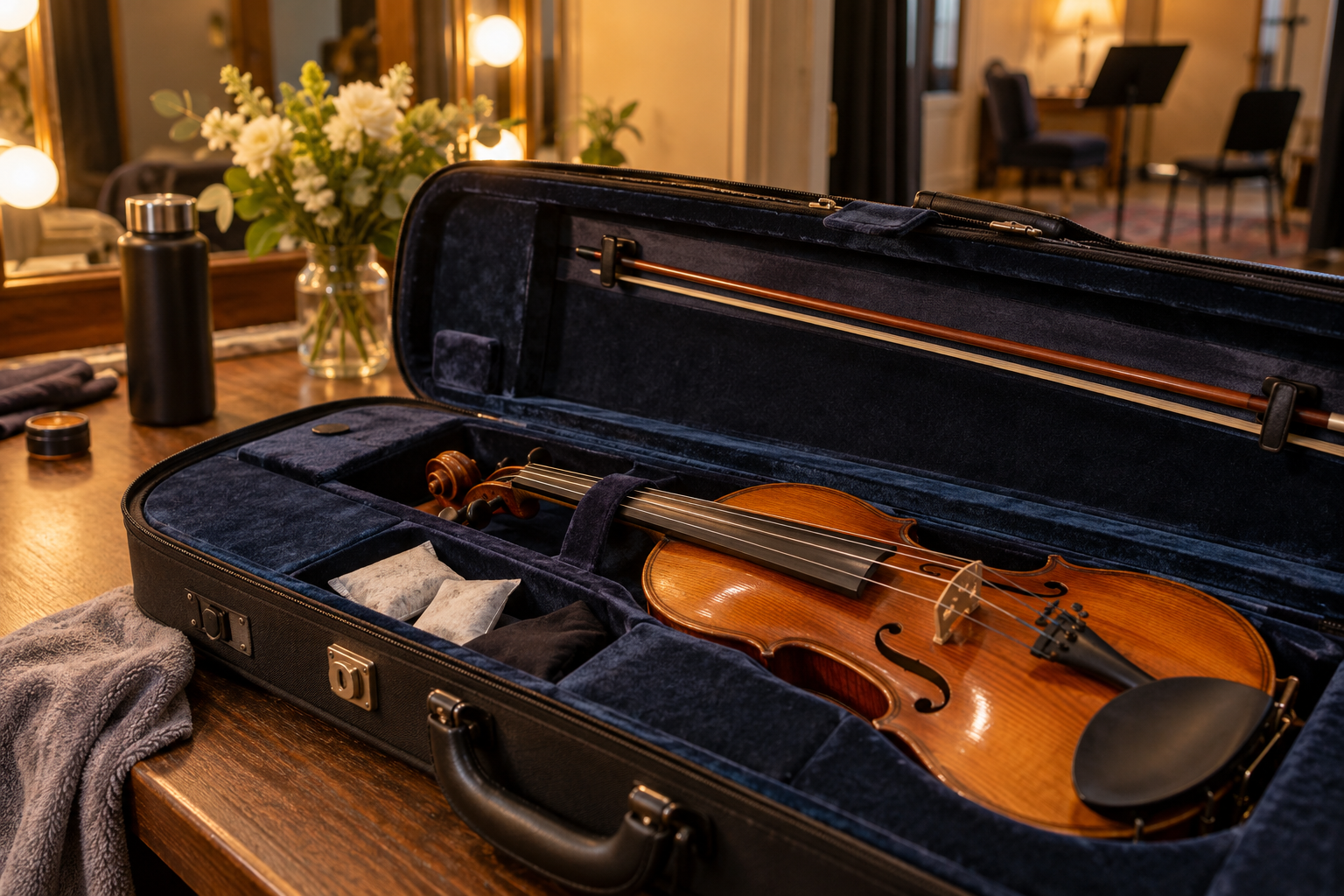
Humidipak is a sensible starting point for players seeking a two-way humidity-control format made for string-instrument cases. Pros: it is designed around a simple replacement routine. Cons: it is not a substitute for checking local conditions or case fit. D’Addario details · Compare Amazon listings
Boveda 49% packs are useful as a two-way control category to compare when stable storage is the goal. Pros: a specified target makes selection clearer. Cons: use the holder and pack quantity recommended for the enclosed space; a loose packet does not belong against an instrument. Boveda details · Compare Amazon listings
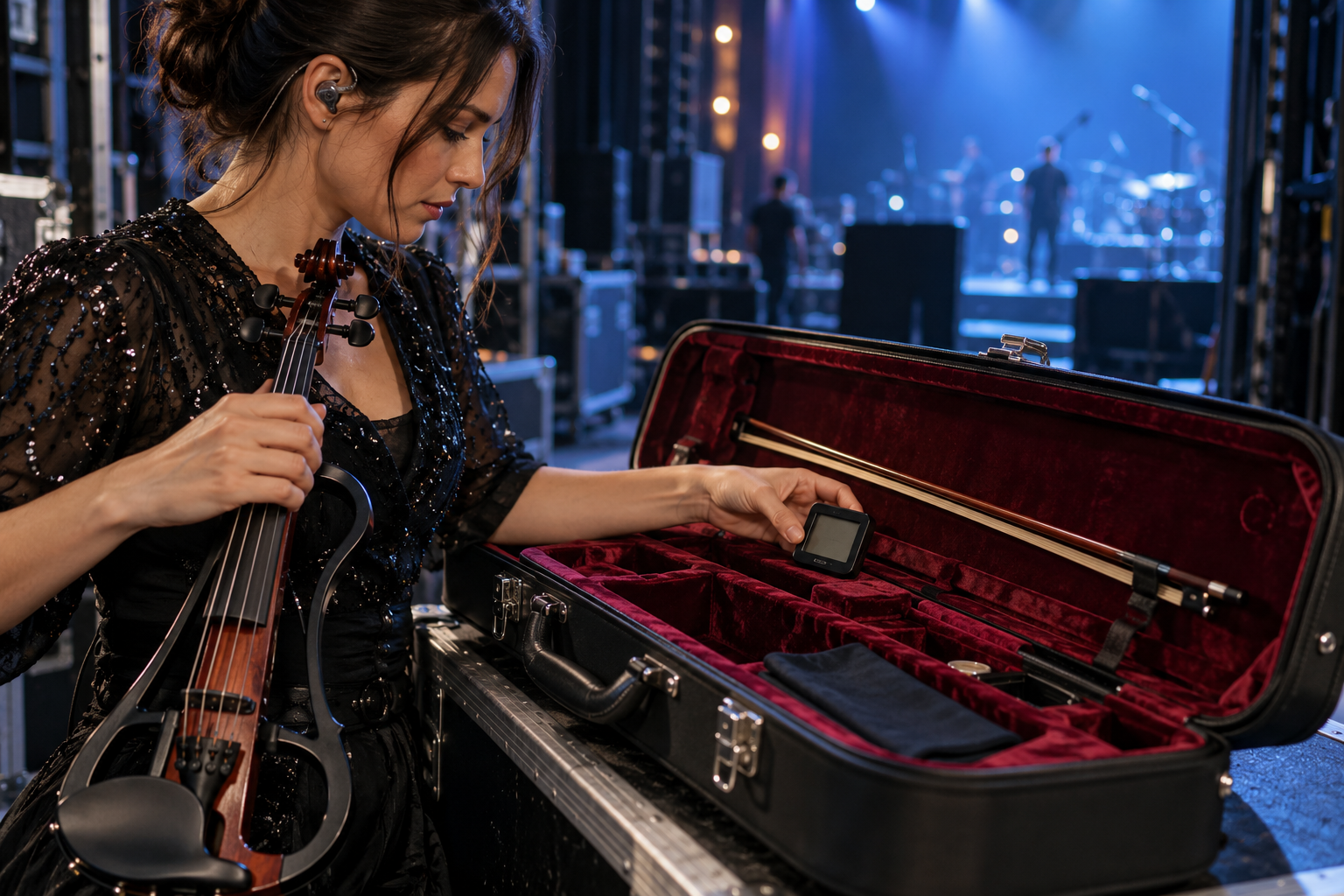
Stretto belongs on the shortlist when you want a violin-specific case humidifier to evaluate beside pack systems. Pros: its purpose is immediately clear. Cons: the refill routine matters, so read the supplied instructions and keep moisture contained. Stretto details · Compare Amazon listings
Dampit is a familiar dry-air comparison for acoustic violin cases. Pros: it is widely recognized by players. Cons: overfilling or poor placement can introduce unwanted moisture, so it needs more care than a sealed packet. Dampit details · Compare Amazon listings
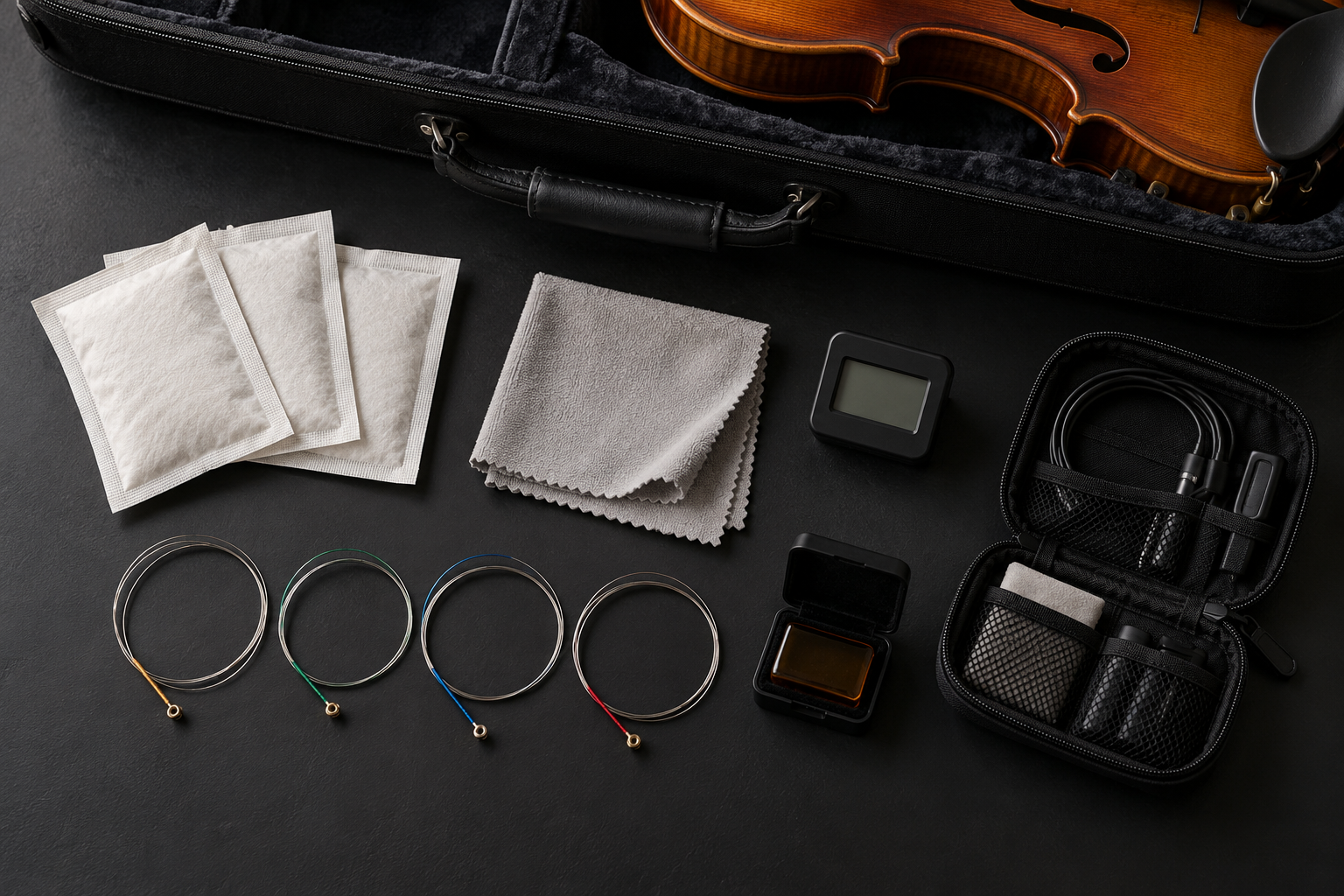
Oasis is worth comparing for a compact case-humidifier format. Pros: it can suit a small accessory routine. Cons: verify the physical clearance in your particular case and avoid contact with wood or varnish. Oasis details · Compare Amazon listings
MusicNomad gives performers a useful humidity-monitoring and care category to compare while planning a case routine. Pros: monitoring turns vague worry into a decision. Cons: a monitor reports conditions rather than changing them. MusicNomad details · Compare Amazon listings
Choose a system that stays in a holder or accessory compartment. Nothing damp should touch the instrument, strings, bow hair, electronics or case lining.
Measure first. A very dry hotel, winter heating and aircraft travel can call for a different solution from a merely fluctuating room. Ask a luthier when a reading is persistently extreme.
Pack replacement supplies, set a calendar reminder and inspect the case after every major travel leg. Consistency beats a complicated kit that gets forgotten.

Tanya Strings is a world-class electric violin performer and content creator, so the instrument has to arrive camera-ready and stage-ready. I would check the case reading after travel, keep any compatible control system secured away from the violin, and inspect the bow and fittings before soundcheck. The goal is not to chase a number all day; it is to avoid preventable surprises while the focus stays on tone, movement and a confident live set. These are performer-focused buying considerations, not a claim that Tanya has personally tested every item listed.
Many makers recommend a stable moderate range, often around 40–60% relative humidity. Follow your instrument maker’s guidance for your violin and climate.
Yes when instructions allow it, but keep packs in their holder, avoid direct contact with the instrument and inspect the case after arrival.
They are often less sensitive than acoustic wooden violins, yet wooden necks, fittings, bows and acoustic backups still deserve sensible storage.
No. A hygrometer tells you the condition; it does not correct it. Use the reading to decide whether a compatible system is appropriate.