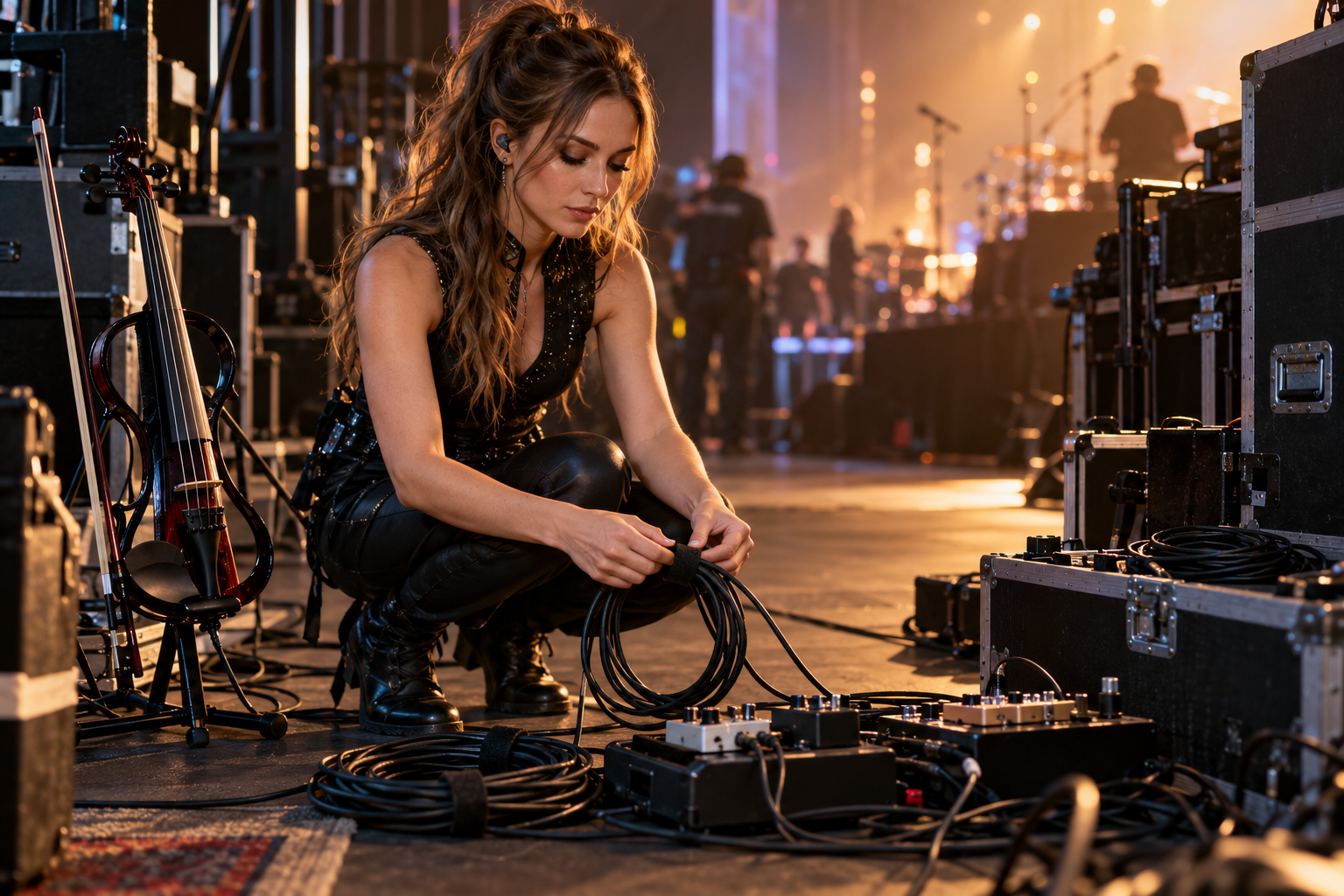
The best cable management for an electric violin stage rig starts with reusable hook-and-loop ties, a small labelled cable pouch and only enough sleeve or routing hardware to make setup repeatable. Compare VELCRO Brand ONE-WRAP, GearIT ties, Hosa Hook & Loop, Alex Tech braided sleeve, Cable Matters cable-management sleeves and Kootek pouches by how often your rig changes, how much movement your show needs and whether power must stay apart from audio. Tanya Strings treats tidy cable paths as performance insurance: faster soundchecks, fewer snags and a cleaner frame for every live video.
Some links in this article are affiliate links. I may earn a commission if you make a purchase, at no extra cost to you.
Use soft reusable ties for every lead you coil, reserve sleeves for permanent or predictable paths, and keep a pouch for adapters and short patch cables. Separate mains power from instrument and balanced audio where the stage permits. The aim is not a laboratory-perfect board; it is a setup that you can rebuild calmly in a dark wing, then pack in the same order after the encore.
| Option | Best for | Pros | Watch for |
|---|---|---|---|
| VELCRO Brand ONE-WRAP | Everyday cable coils | Soft, quick, reusable | Choose the right width |
| GearIT reusable ties | Colour-sorted bundles | Simple multi-pack value | Do not over-tighten |
| Hosa Hook & Loop | Music-rig spares | Familiar studio category | Keep extras in the case |
| Alex Tech sleeve | Stable cable looms | Neat protective finish | Less flexible for changes |
| Cable Matters sleeve | Longer routing runs | Helps tame multiple leads | Measure before buying |
| Kootek pouch | Adapters and small ties | Fast inventory check | Not a cable substitute |
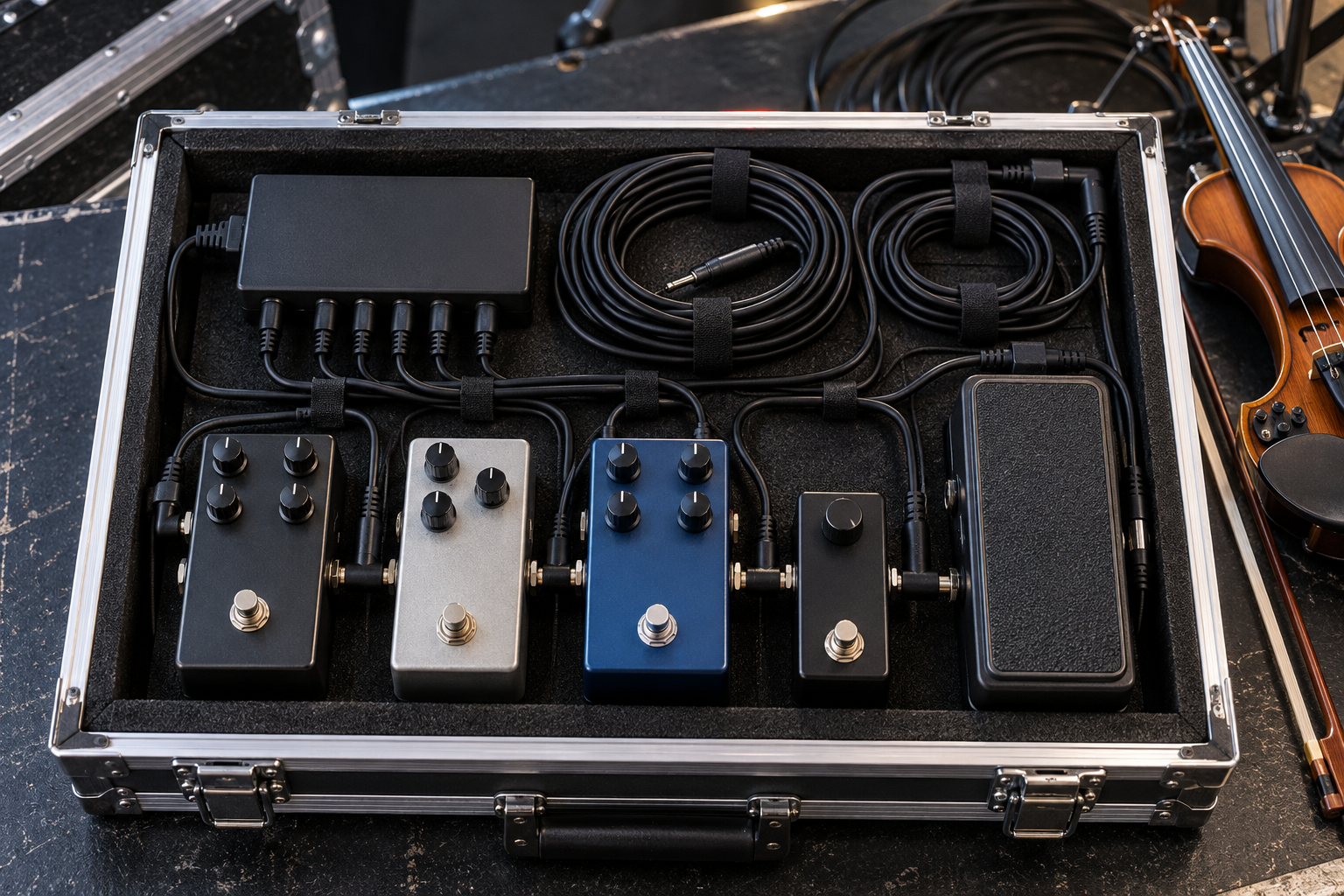
ONE-WRAP is the straightforward baseline for coiled instrument, XLR and power leads. Pros: soft, reusable and fast when a venue changes your plan. Cons: it manages a coil but does not protect an exposed run. VELCRO Brand details · Compare Amazon listings
GearIT ties are useful when several rigs or colour groups travel together. Pros: a multi-pack makes it easy to assign one colour to instrument, power or camera leads. Cons: colour is only helpful when the system stays consistent. GearIT details · Compare Amazon listings
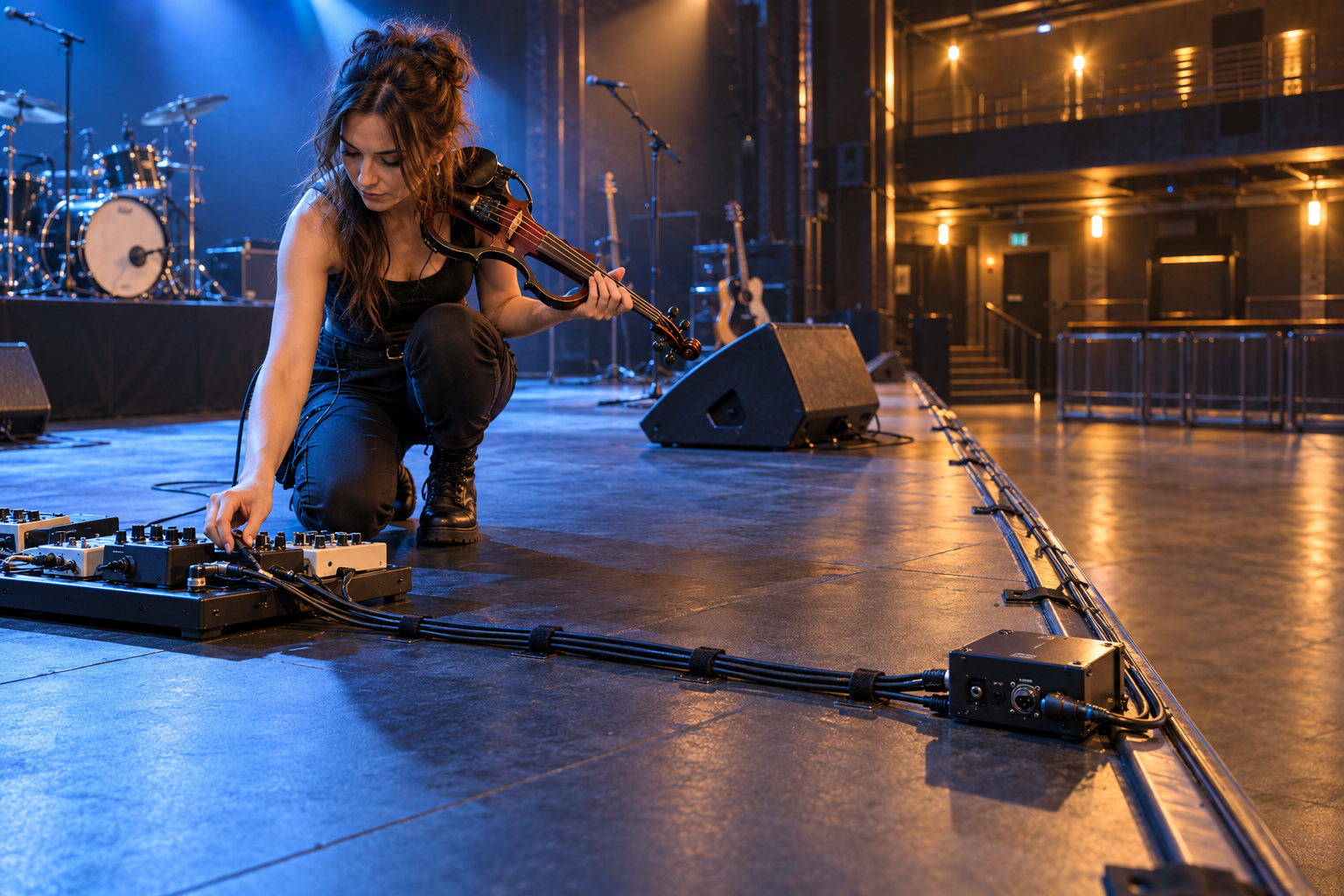
Hosa is a sensible music-specific comparison for a spare-tie pouch. Pros: the category fits the cables already found in studio and stage bags. Cons: ties cannot fix a bad route, so place the board before bundling anything. Hosa details · Compare Amazon listings
Alex Tech braided sleeve is worth considering for a repeatable board-to-DI or board-to-playback route. Pros: it can make several leads look and travel as one. Cons: it slows last-minute changes, so leave connectors and service loops accessible. Alex Tech details · Compare Amazon listings
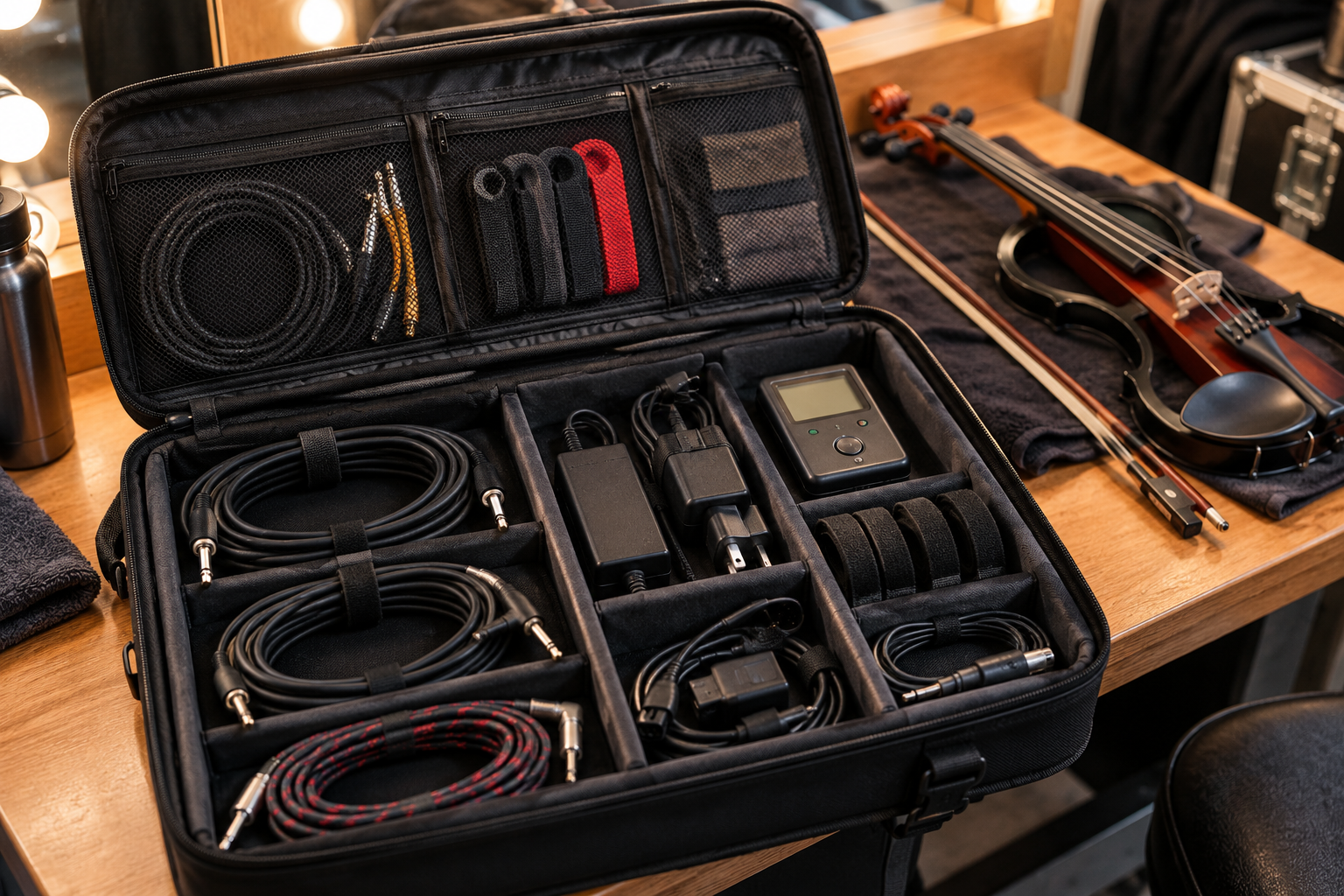
Cable Matters sleeves belong on the shortlist when a longer station-to-station run must stay presentable. Pros: they can reduce visual clutter around a playback table or content station. Cons: measure diameter and length first, then avoid trapping a cable that needs quick replacement. Cable Matters details · Compare Amazon listings
A compact Kootek pouch is a useful companion for labelled ties, adapters and short emergency leads. Pros: it makes the pre-show inventory visible in seconds. Cons: it cannot solve floor safety by itself; route and secure cables thoughtfully at the venue. Kootek details · Compare Amazon listings
If your pedalboard, camera station or backing-track table moves often, choose loose ties and a pouch before committing to sleeves. Repeatability matters more than a permanently bundled look.
Map your outlets and DI path before soundcheck. Keep high-voltage power separate from sensitive instrument cables when possible, and never run a loose cable across a performer’s movement path.
Use a short label, colour cue or small bag divider. A five-second check is better than guessing during a changeover.

Tanya Strings is a world-class electric violin performer and content creator, so the rig needs to sound dependable and look intentional on camera. I would keep one tie on each coiled lead, a dedicated pouch for small spares, and enough slack for musical movement without a loop underfoot. After soundcheck, I would photograph the finished layout for a reliable reset at the next show. These are performer-focused buying considerations, not a claim that Tanya has personally tested every item listed.
Start with reusable hook-and-loop ties and a pouch. Add sleeve only where the cable path stays consistent between shows.
Keep them separate where practical, particularly around sensitive pickup or high-gain paths. Cross at right angles if routes must meet.
Use enough length for safe movement and routing, then coil the remainder loosely. Avoid tight bends and oversized loops.
Reusable hook-and-loop ties are kinder to cable jackets and much faster to release when the rig changes.