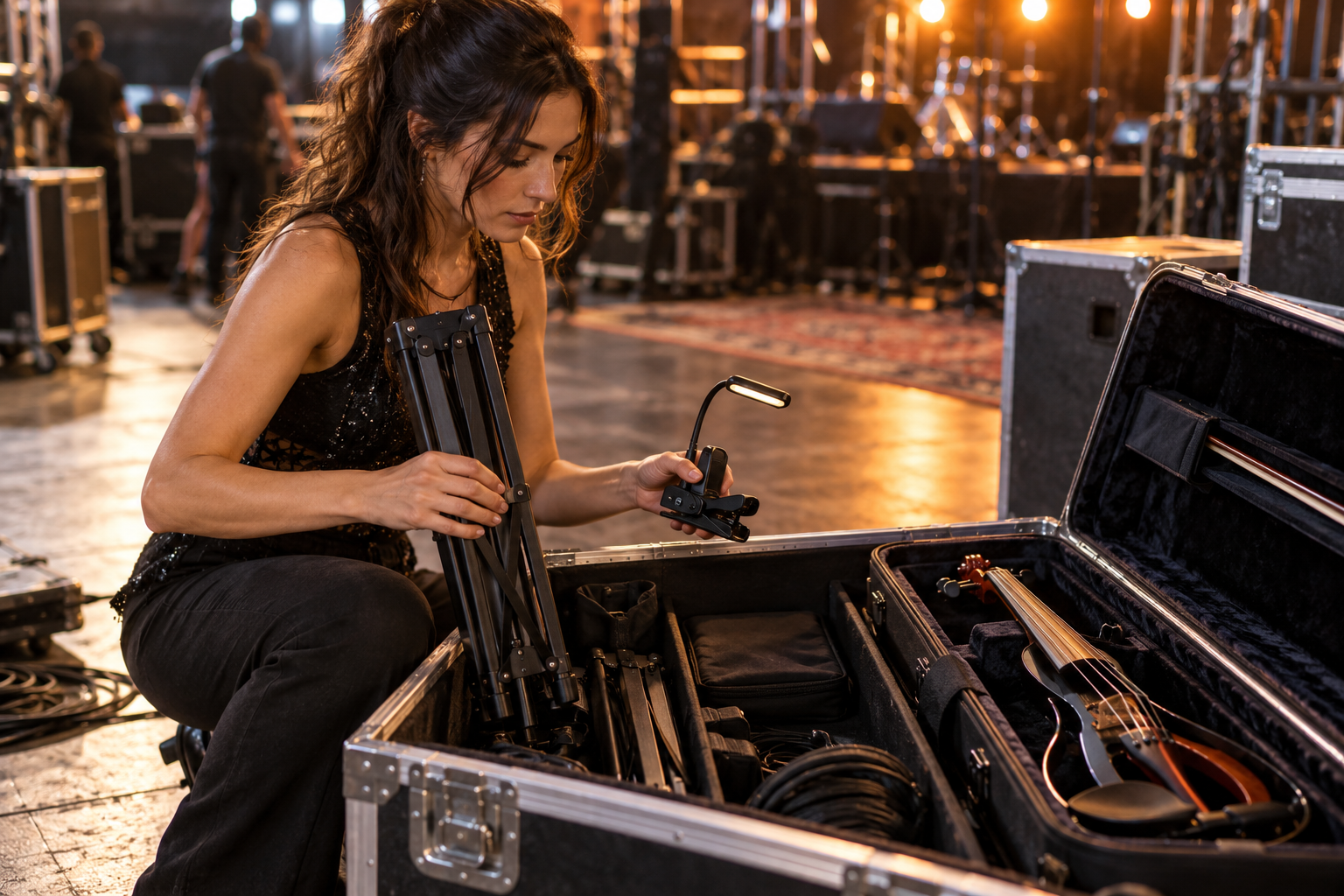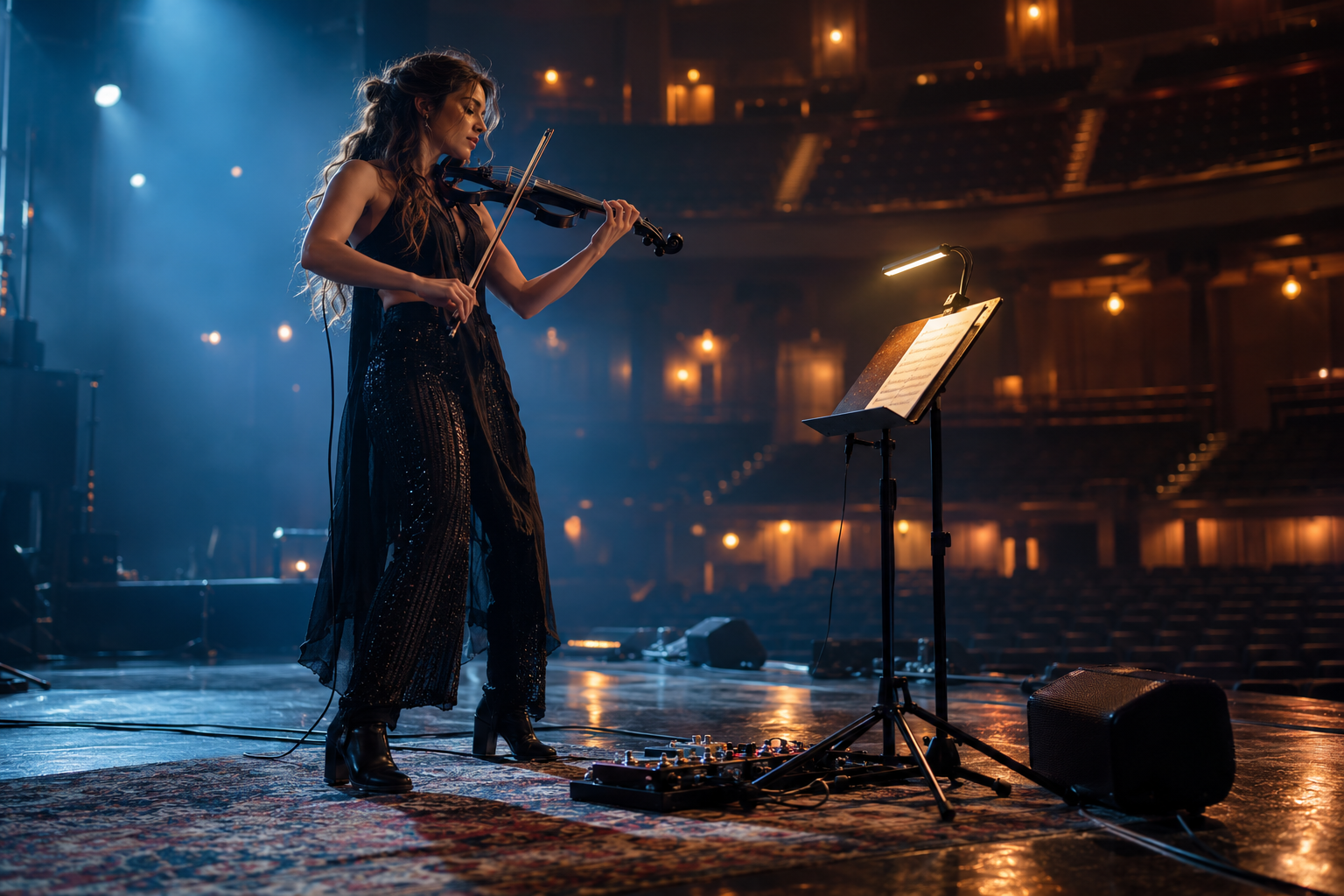
The best music stand light for an electric violin performance is a rechargeable clip-on model with a firm clamp, adjustable brightness and enough battery life for soundcheck plus the show. Compare Mighty Bright NuFlex, Glocusent LED Neck Reading Light, Vekkia Rechargeable Music Stand Light, Luminolite Clip-on Light, Cocoweb Orchestra Light and TaoTronics Clip Light by beam control, charging method and how securely they sit on your stand. Tanya Strings approaches stand lighting as stage gear: it protects a last-minute chart, keeps cues readable in a dark wing and avoids a bright distraction in the audience’s view or a performance video.
Some links in this article are affiliate links. I may earn a commission if you make a purchase, at no extra cost to you.
Start with a clip that grips your specific stand, then choose adjustable brightness before chasing maximum output. A light that stays put during page turns and gives an even pool across two pages is more useful than a powerful lamp with a harsh centre hotspot. For touring, rechargeable power and a simple backup plan are the real priorities.
| Option | Best for | Pros | Watch for |
|---|---|---|---|
| Mighty Bright NuFlex | Flexible beam placement | Gooseneck control, familiar format | Check clamp reach |
| Glocusent Neck Light | Emergency personal light | Portable, rechargeable | Not a stand-mounted primary |
| Vekkia Rechargeable | Two-page charts | Wide clip-on coverage | Charge before call time |
| Luminolite Clip-on | Compact touring bag | Small, adjustable output | Confirm battery runtime |
| Cocoweb Orchestra Light | Traditional stand setup | Purpose-built music light | Measure the stand lip |
| TaoTronics Clip Light | Flexible multi-use backup | Useful around content stations | Avoid over-bright settings |
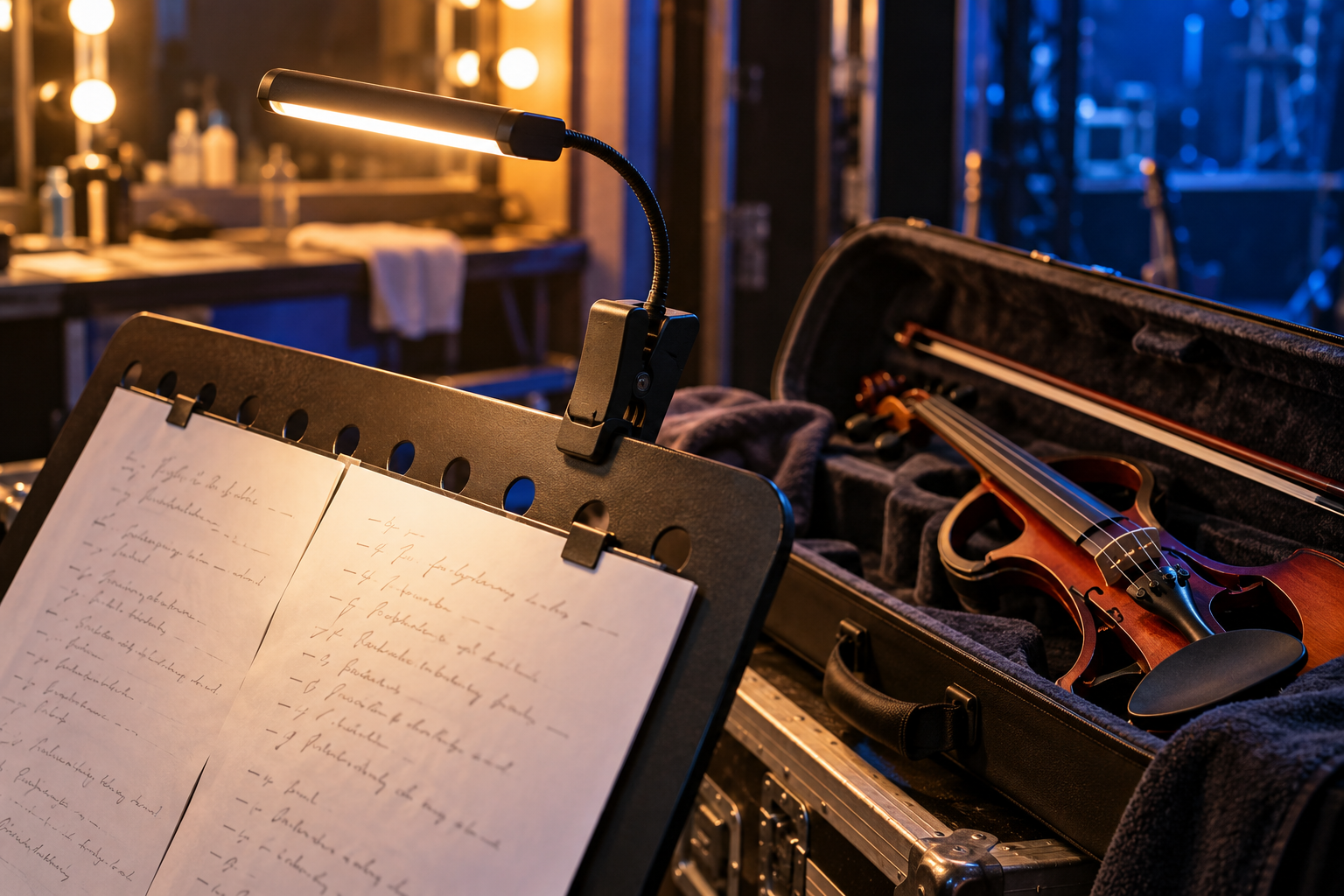
NuFlex is the familiar flexible-neck starting point for a stand where the light needs to land precisely. Pros: aimable beam and simple format. Cons: test clamp depth against your stand before a travel date. Compare Amazon listings
Glocusent is best treated as a rechargeable contingency light for a dark wing, case or emergency chart check. Pros: compact and hands-free. Cons: it is less tidy than a dedicated stand clamp during a filmed performance. Compare Amazon listings
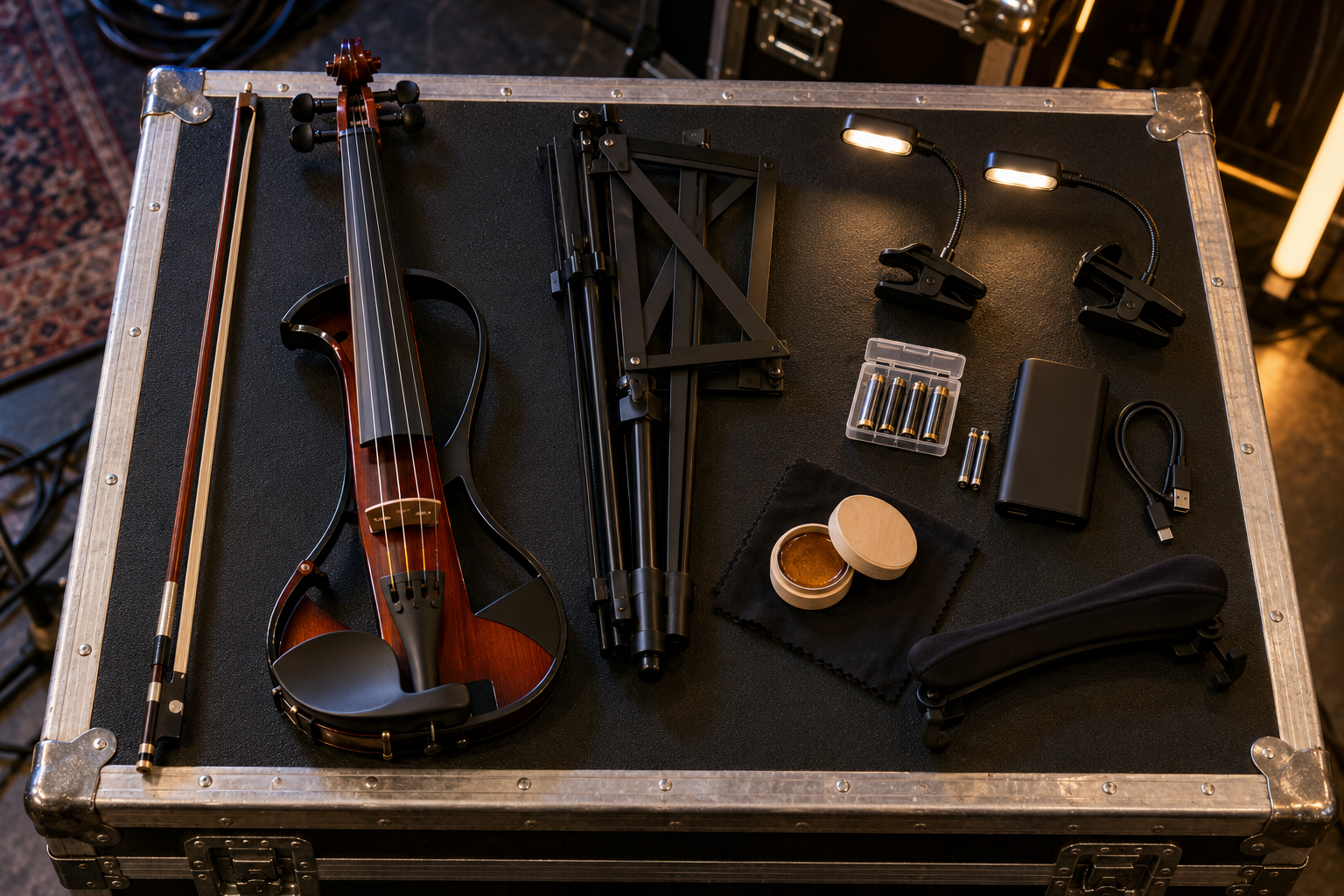
Vekkia is worth comparing when your setlist or cue chart spreads across two pages. Pros: clip-on form factor and rechargeable convenience. Cons: verify the brightness setting after a full charge rather than discovering it at doors. Compare Amazon listings
Luminolite belongs on a compact-rig shortlist. Pros: small footprint and adjustable light for quick rehearsals or backstage preparation. Cons: light travel gear can be easier to misplace, so pack it in the same pouch after every show. Compare Amazon listings
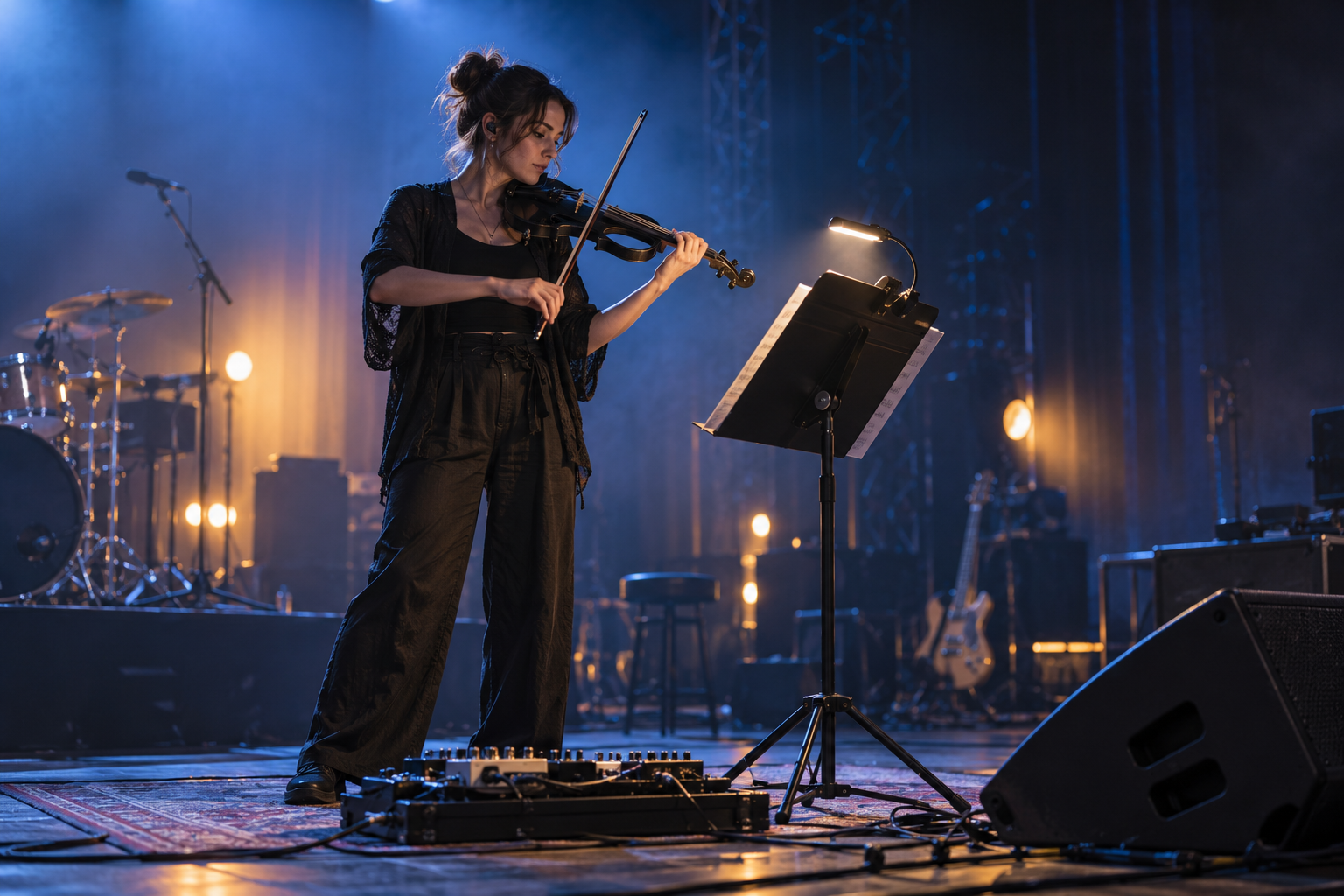
Cocoweb is a natural comparison for performers who prefer a conventional music-stand light shape. Pros: purpose-led design for charts. Cons: confirm the clamp and reach work with your own stand and don’t assume every backstage lip is identical. Compare Amazon listings
A TaoTronics-style clip light can work as a second light for a content table, hotel chart check or spare stand. Pros: flexible use outside the stage. Cons: choose a low setting at the show so the light supports your sightline instead of becoming visible scenery. Compare Amazon listings
Measure the stand’s top edge and check whether the clip can close fully without touching your charts. A secure clamp matters when the stand moves during a fast change.
Set up your widest real chart at home. Look for a soft, even beam and position it so polished paper does not reflect into your eyes or lens.
Put charging into the same pre-show checklist as your wireless receiver, pedalboard and camera batteries. Carry a small backup light or compatible spare cells.
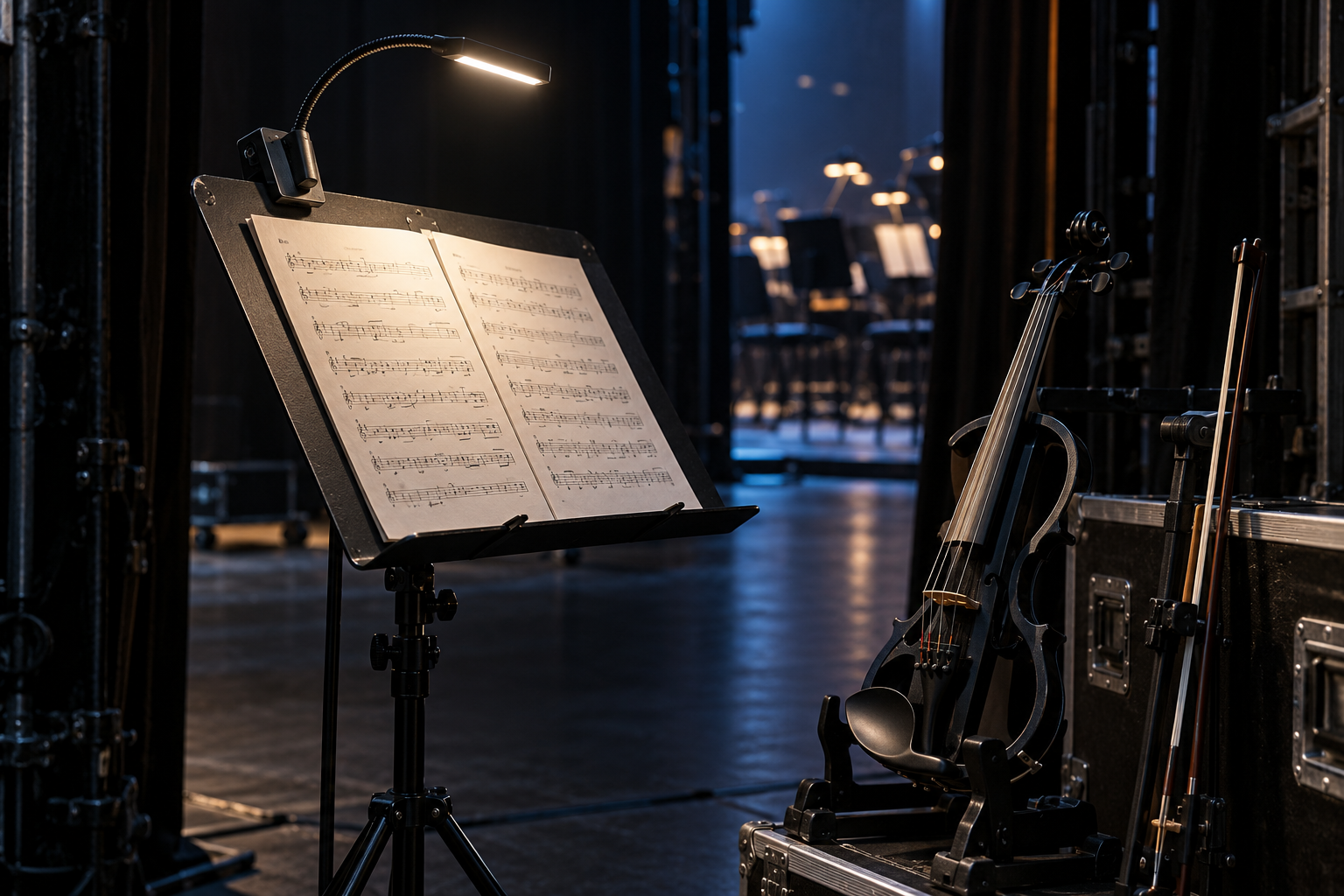
Tanya Strings is a world-class electric violin performer and content creator, so every small accessory must serve the music and the visual frame. I would use a dimmable stand light only where a cue, arrangement change or guest set requires it, test the beam through the camera angle at soundcheck, and pack a charged backup. The goal is confidence under pressure, not a glowing object competing with the performance. These are performer-focused buying considerations, not a claim that Tanya has personally tested every product listed.
A rechargeable clip-on with brightness control and a secure clamp is the reliable all-round choice.
Warm-neutral or adjustable light is usually easier on the eyes and kinder to a live camera than an icy blue beam.
Yes, if you charge before the show and carry a small backup for longer calls.
Use the lowest level that makes the chart readable from playing distance.