Violin News: Hahn’s Premiere, Kavakos and New Makers
The October 25 violin picture connects a new work, an evergreen concerto and the people building tomorrow’s instruments. Hilary Hahn’s Atlanta dates with Matthias Goerne and Gloria Chien include a world premiere by Reena Esmail. In San Francisco, Leonidas Kavakos joins the Orchestre Symphonique de Montréal for Tchaikovsky’s Violin Concerto. And New York’s Contemporary Violin & Bow Makers Exhibition has just put working instruments and bows directly in players’ hands. Tanya’s performer take: whether the material is newly written, famously familiar or still on a maker’s bench, a compelling violin performance depends on a clear point of view and a reliable path from craft to audience.
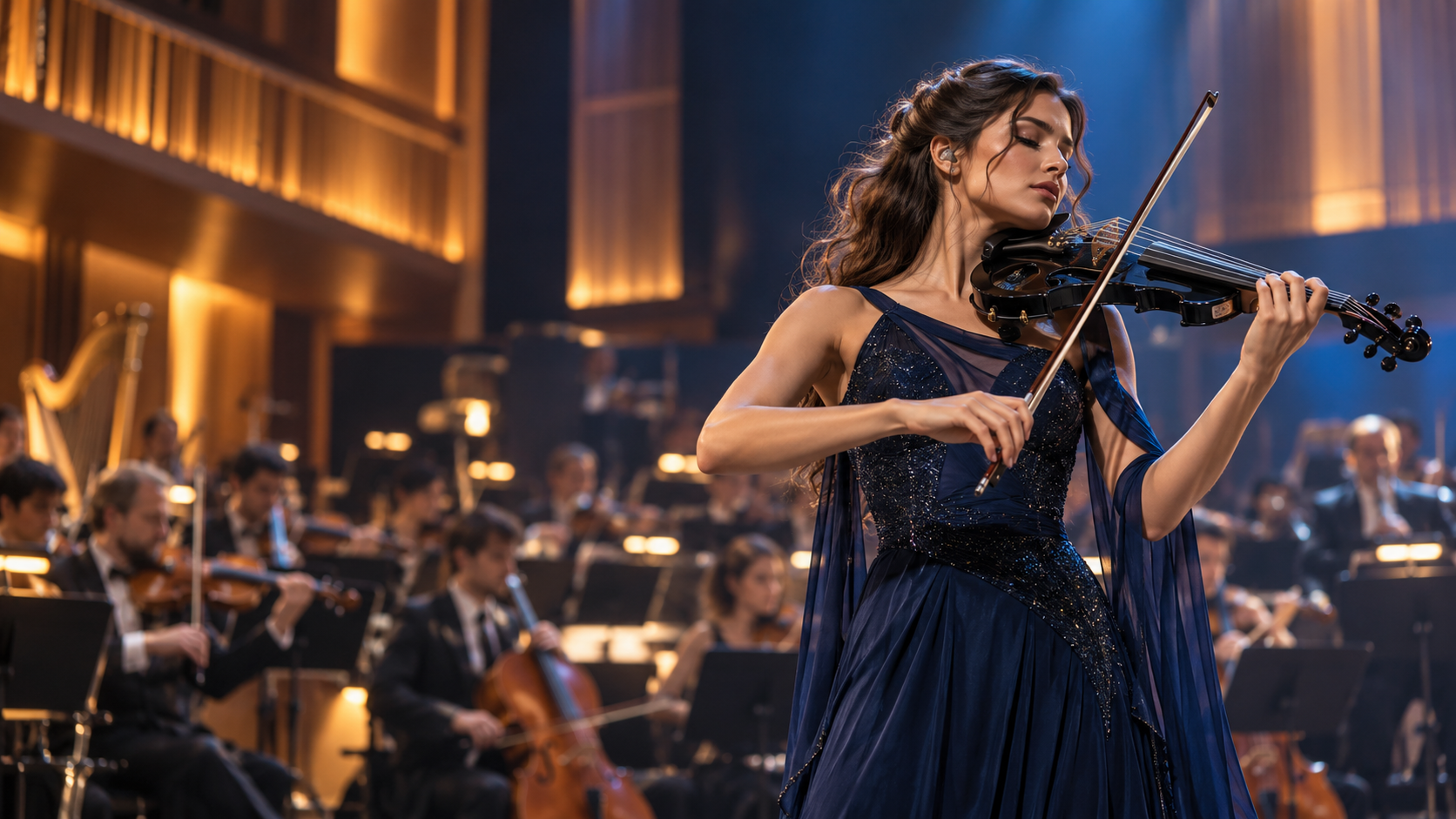
Original AI-generated editorial image for Tanya Strings; it is not a photograph from the reported events.
Why is Hilary Hahn’s Reena Esmail premiere worth tracking?
Hilary Hahn is in Georgia this weekend for an unusually focused collaboration with baritone Matthias Goerne and pianist Gloria Chien. The University of Georgia’s October 25 listing identifies a new work by Indian American composer Reena Esmail, co-commissioned by its Performing Arts Center. Spivey Hall’s October 24 programme note confirms that the premiere was written for Hahn and Goerne.
That pairing matters because it starts with voices that do not normally share the same solo role. A violin and baritone can meet as two melodic characters, while piano supplies both pulse and changing perspective. Esmail’s work often engages Western classical and Hindustani traditions, according to the presenters, so the premiere is also a reminder that new music need not arrive in one stylistic language.
What can performing artists take from a premiere like this?
- Commissioning is communication: tell the audience who the collaborators are and why their combination is unusual.
- When a set moves across genres, let the transitions be intentional rather than treating the new piece as a side note.
- For an event programme, a small premiere or a bespoke arrangement can create the feeling of a one-night-only occasion.
Tanya’s take: an electric violin set can use the same principle. A loop, original arrangement or live guest should have a role in the story, not simply appear as an extra effect.
What does Kavakos’s Tchaikovsky date say about classic repertoire now?
The San Francisco Symphony lists Leonidas Kavakos with Rafael Payare and the Orchestre Symphonique de Montréal at Davies Symphony Hall on October 25. Their programme pairs Tchaikovsky’s Violin Concerto with Shostakovich’s Tenth Symphony. It is a familiar concerto, but that familiarity is precisely the pressure: listeners carry a strong memory of its opening, its long melodic passages and its sprint to the finish.
For a violinist, such a work is a masterclass in pacing. The big moments only register if the line has room to breathe first; the finale only feels inevitable if the rhythmic engine remains buoyant rather than rushed. For a concert presenter, the bill also gives a useful lesson in contrast: a visible solo voice opens the door, while a large symphonic statement expands the emotional scale afterwards.
Fans who cannot be in the hall can still use official programme pages as a better way to follow a live performance than an isolated short clip. Read the repertoire, note the conductor and venue, then listen for how the soloist shapes the bridge between personal gesture and orchestral colour.
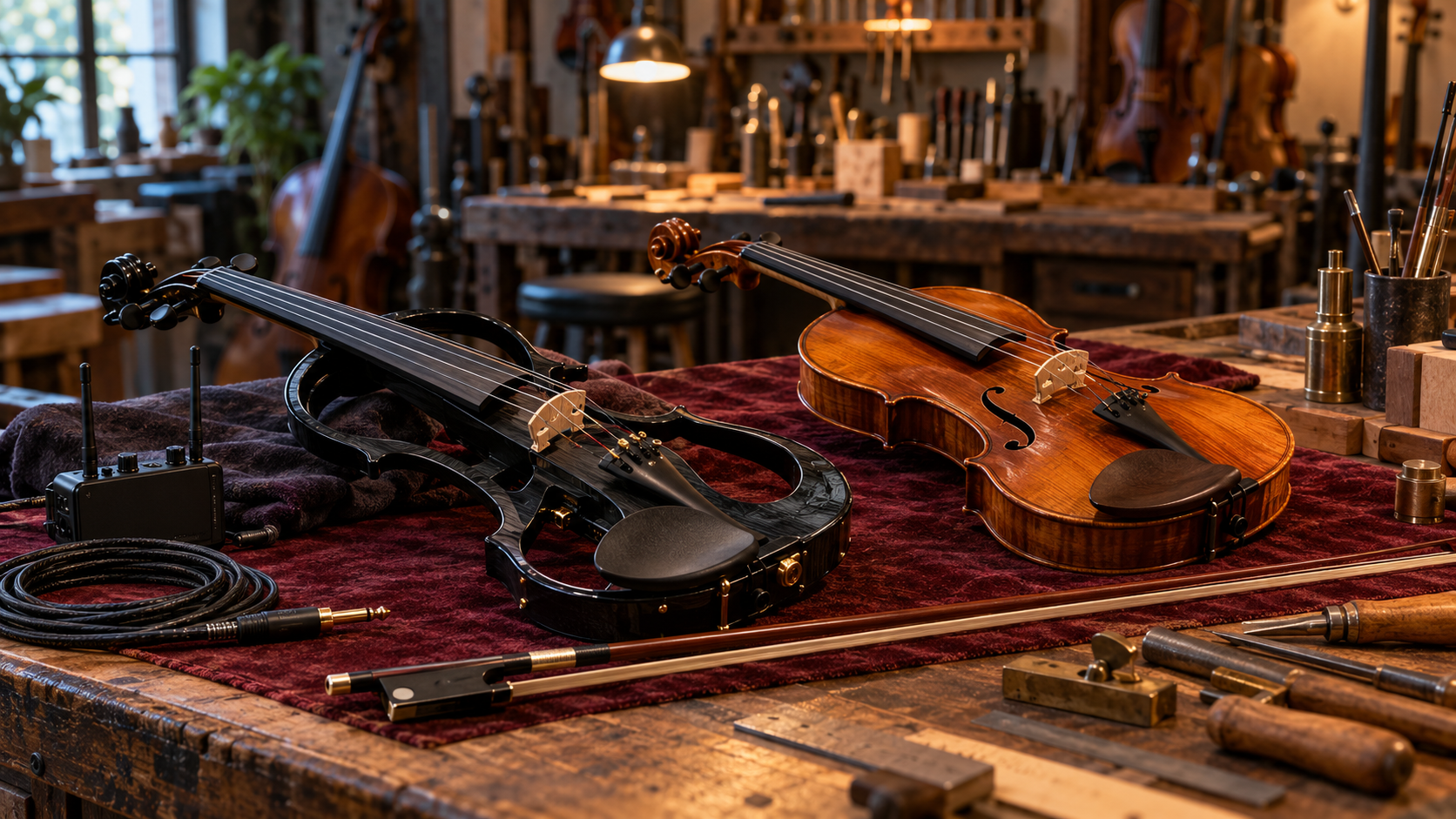
Original AI-generated editorial image for Tanya Strings; it is not a photograph from the reported events.
Why should players care about a contemporary makers’ exhibition?
The Contemporary Violin & Bow Makers Exhibition brought its October 22 opening-night concert to a livestream from New York. Hosted by Reed Yeboah Fine Violins and Yi-Ping Yang, the annual event invites players to try current violins, violas, cellos and bows rather than only look at them behind glass. The format makes the practical point beautifully: an instrument is not finished when it looks impressive. It becomes meaningful when a musician can test response, colour and comfort.
That conversation belongs to electric violinists too. Pickups, DI boxes, wireless systems and effects are part of an instrument’s working ecosystem. A stage setup earns its place through repeatable signal, ergonomic movement and a sound that translates to the room. For planners booking amplified strings, the best question is not “How much gear?” but “What does the performer need to deliver the musical moment cleanly?”
What should listeners and presenters watch next?
Watch for first audience impressions from Hahn’s Esmail premiere, listen for Kavakos’s approach to Tchaikovsky’s long lines, and keep an eye on artist-led makers’ events where performers can test tools in person. Together, these stories show a healthy violin culture: it protects tradition, commissions fresh language and keeps the connection between hands, instruments and audiences alive. Tanya Strings brings that same performer-first focus to world-class electric violin performance and creator-led content—musically direct, technically assured and designed for a vivid live connection.