Violin News: Tokyo Duo, London Dvořák and Creator Releases
This October 26 violin roundup follows three useful ways an artist can meet an audience: an alert live duo, a major concerto platform and a recording that is built for both listening and sharing. Patricia Kopatchinskaja and Sol Gabetta begin their Tokyo recital dates today with Bach, Kodály, Ravel and new material. James Ehnes prepares Dvořák’s Violin Concerto for London’s Royal Festival Hall on October 29. And violinist Esther Abrami’s recent Amour campaign pairs a Sony Classical album with a newly arranged Carmen single. Tanya’s performer take: great violin work travels further when the musical idea, live presentation and audience pathway all point in the same direction.

Original AI-generated editorial image for Tanya Strings; it is not a photograph from the reported events.
What makes the Kopatchinskaja–Gabetta Tokyo dates worth watching?
Violinist Patricia Kopatchinskaja and cellist Sol Gabetta play Toppan Hall in Tokyo on October 26, followed by Saitama on October 27. Kopatchinskaja’s official calendar lists Bach, Kodály, Ravel and her own music among the programme’s ingredients. That is a compact but expressive recipe: familiar architecture, colour-rich 20th-century writing and a performer’s own voice in the same evening.
For a duo, the point is not to make two soloists sound identical. It is to make the handovers feel inevitable. A violin and cello can trade lead, build a single pulse, then reveal two opposing textures. That elasticity gives the room different entry points without diluting the artists’ identity.
What can a live performer borrow from that format?
- Give each collaborator a distinct dramatic job: lead line, rhythmic engine, atmosphere or response.
- Build contrast into the set order, so a delicate acoustic moment has room beside a more amplified or layered section.
- Share a clear programme story in captions and event copy; audiences should know what makes tonight’s meeting specific.
Tanya’s take: an electric violin set does not need to be louder to feel larger. A thoughtfully placed duo, loop or guest voice can change the scale by changing the conversation.
Why does James Ehnes’s Dvořák week matter?
The Philharmonia places James Ehnes at the centre of its October 29 Royal Festival Hall programme, conducted by Kevin John Edusei. Its official event page pairs Dvořák’s Violin Concerto with Pejačević’s Overture for Large Orchestra, Suk’s Scherzo Fantastique and Janáček’s Sinfonietta. An open rehearsal is scheduled earlier that day, giving listeners a useful view of a concert’s working process rather than only its finished surface.
Dvořák asks a soloist to make folk-inflected rhythm, lyrical length and orchestral conversation feel like one continuous argument. It is a reminder that concertos are not simply endurance tests. The best pacing makes the audience sense where the line is headed before the big arrival.
Ehnes recently told the Philharmonia that streaming and recording have changed the profession while the one-time nature of a live event remains special. Read the orchestra’s new interview alongside the concert listing: it is a timely prompt for performers to treat documentation as an extension of a live idea, rather than its substitute.
How is Esther Abrami joining album craft to creator reach?
Esther Abrami’s October release cycle offers a different kind of violin news: a classical recording designed to circulate through a direct artist audience. Her management’s release announcement says Sony Classical issued Amour on October 9, alongside a violin-and-orchestra arrangement of Bizet’s “Habanera”; it also identifies the album as the home of Abrami’s first large-scale original composition.
There is no need for every violinist to launch an album at that scale. The transferable lesson is editorial discipline. A recognisable short-form release can introduce a longer project, while an original work gives followers a reason to stay after the familiar melody. For planners, a clear release narrative also supplies context for social posts, programme notes and guest outreach.
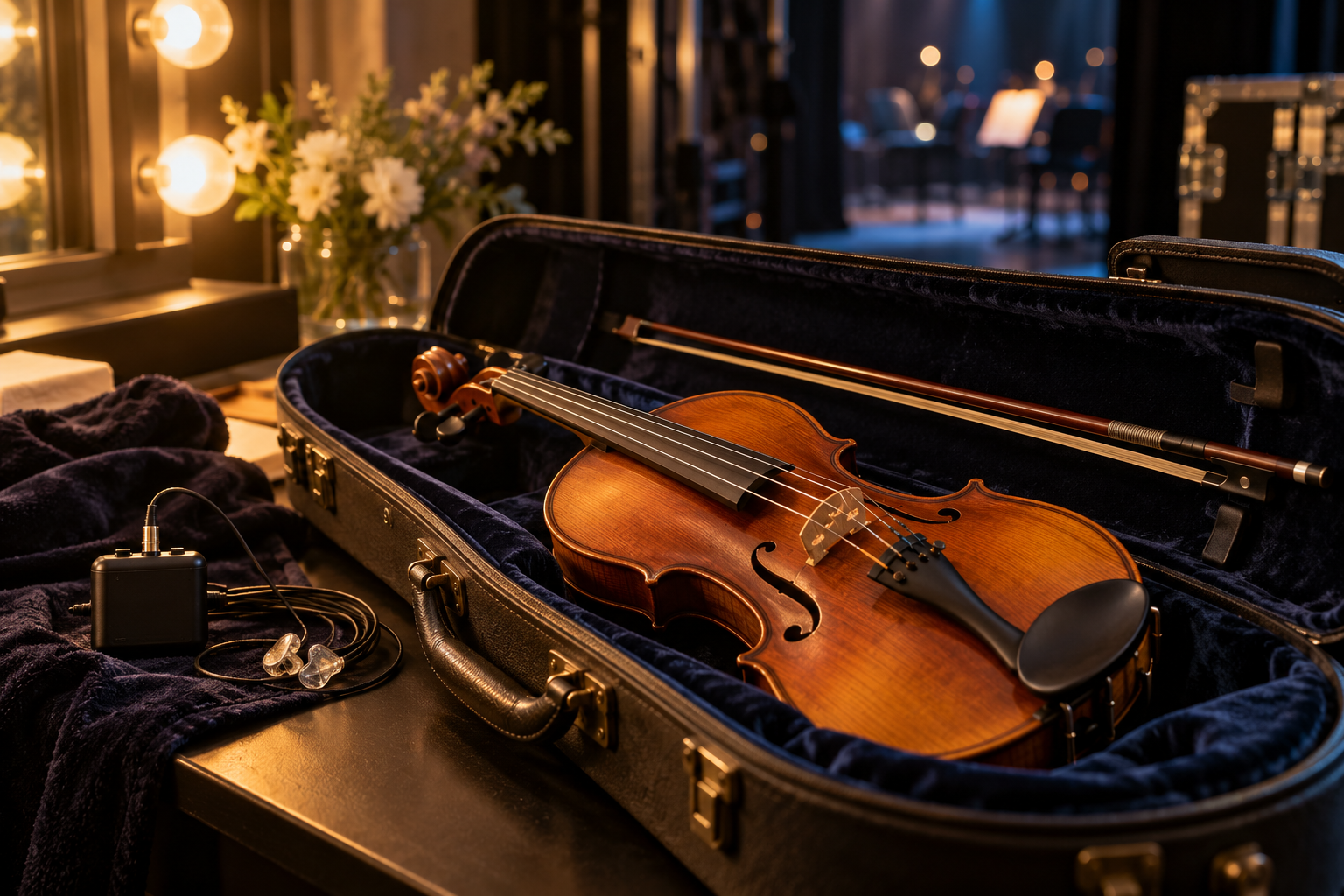
Original AI-generated editorial image for Tanya Strings; it is not a photograph from the reported events.
What should violin audiences take from this week?
Watch how Kopatchinskaja and Gabetta shape contrast in Tokyo, listen for Ehnes’s Dvořák line in London, and notice how Abrami gives a recording more than one doorway. Presentation helps music find its people. Tanya Strings brings that performer-first thinking to world-class electric violin shows and creator-led content, combining musical personality with stagecraft that reads clearly in the room and on screen.