Violin News: Electric Premieres and Barcelona Brahms
Today’s violin news connects three versions of a live career: electric violin writing in a major hall, a newly made concerto entering the repertoire, and a classic concerto given a fresh international stage. On October 27, electric violinist Tracy Silverman joins American Composers Orchestra at Carnegie Hall for the New York premiere of Daniel Bernard Roumain’s America, To Us. In Opava, Roman Patočka premieres Ondřej Brousek’s Violin Concerto in D. And Julia Fischer has just played Brahms with the London Philharmonic in Barcelona. Tanya’s performer take: the strongest violin stories now make room for new sound, new work and durable repertoire at once.
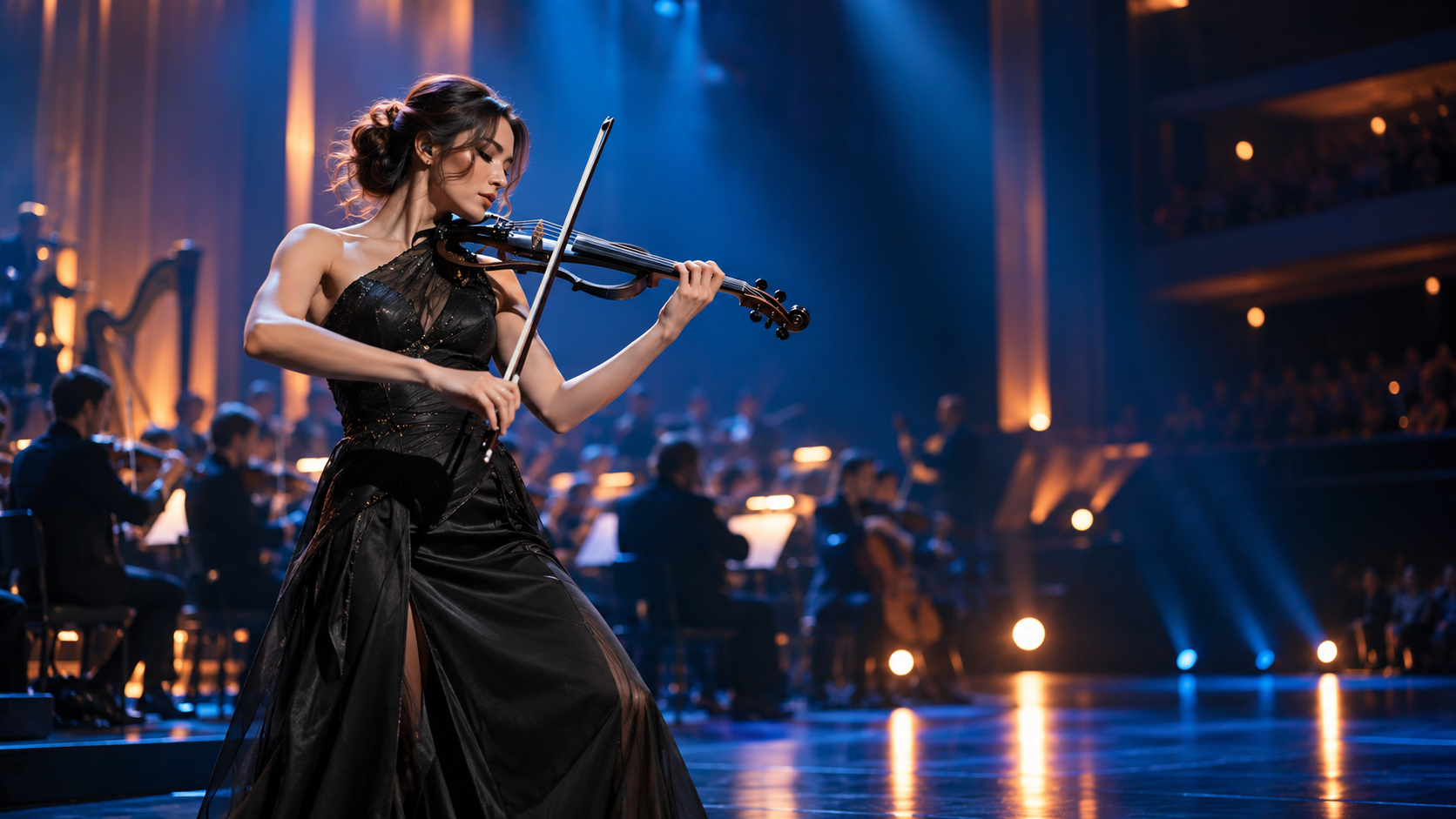
Original AI-generated editorial image for Tanya Strings; it is not a photograph from the reported events.
Why is Tracy Silverman’s Carnegie Hall appearance a useful electric-violin signal?
American Composers Orchestra’s Hello, America: We Gather Here reaches Carnegie Hall’s Zankel Hall on October 27 with conductor Kedrick Armstrong. The venue’s 2026–27 season announcement identifies a New York premiere of Daniel Bernard Roumain’s America, To Us for electric violins and orchestra. It also places Silverman among a cast that includes traditional instrumentalists, voices and new works built around gathering.
That detail matters. Here, the instrument is named in the work’s design and placed inside an orchestral conversation. Amplified strings can carry articulation, texture and personality without being forced into a crossover cliché.
What can working performers and planners take from it?
- Write the sound role into the brief: lead voice, processed atmosphere, rhythmic drive or a dialogue with acoustic strings.
- Give the sound team an early, simple stage plot and clear output plan; an electric violin deserves the same preparation as any featured soloist.
- Let the event story describe the musical reason for the electronics, not merely list the equipment.
Tanya’s take: a world-class electric violin performance starts with musical intention. The pedalboard and signal chain should clarify that intention for the room and for the camera.
What does the Opava premiere say about the value of a first performance?
In Opava on October 27, violinist Roman Patočka is scheduled to premiere Ondřej Brousek’s Violin Concerto in D with the Janáček Philharmonic Ostrava, conducted by Jiří Habart. The current listing from Czech Music Information Centre identifies it as a world premiere commissioned by the orchestra.
A premiere changes the performer’s job. There is no century of recordings telling listeners what the opening should feel like or how the final page “normally” lands. Patočka has to establish the work’s public identity in real time, while the orchestra learns how its own colour belongs to the score. For audiences, that uncertainty is not a drawback. It is the rare chance to hear a piece arriving rather than being compared with its past.
For a violinist building a programme, a new work need not be a large concerto. A commissioned intro or original transition can give an event the same feeling of occasion. Make the context legible: who made it, why now, and what listeners should listen for.
Why revisit Julia Fischer’s Barcelona Brahms this week?
On October 26, Julia Fischer joined Edward Gardner and the London Philharmonic Orchestra at Barcelona’s Palau de la Música Catalana. The official Palau listing pairs Brahms’s Violin Concerto with the Prelude from Pau Casals’s El Pessebre and Sibelius’s Fifth Symphony. The concert places a violin landmark inside a programme with both local resonance and symphonic scale.
Brahms does not need novelty to feel current. It demands long-breath phrasing, an alert relationship with the orchestra and the confidence to let the line grow instead of rushing toward the next technical landmark. That is good news for every kind of performer: a familiar title becomes distinctive through pacing, colour and the choices around it.
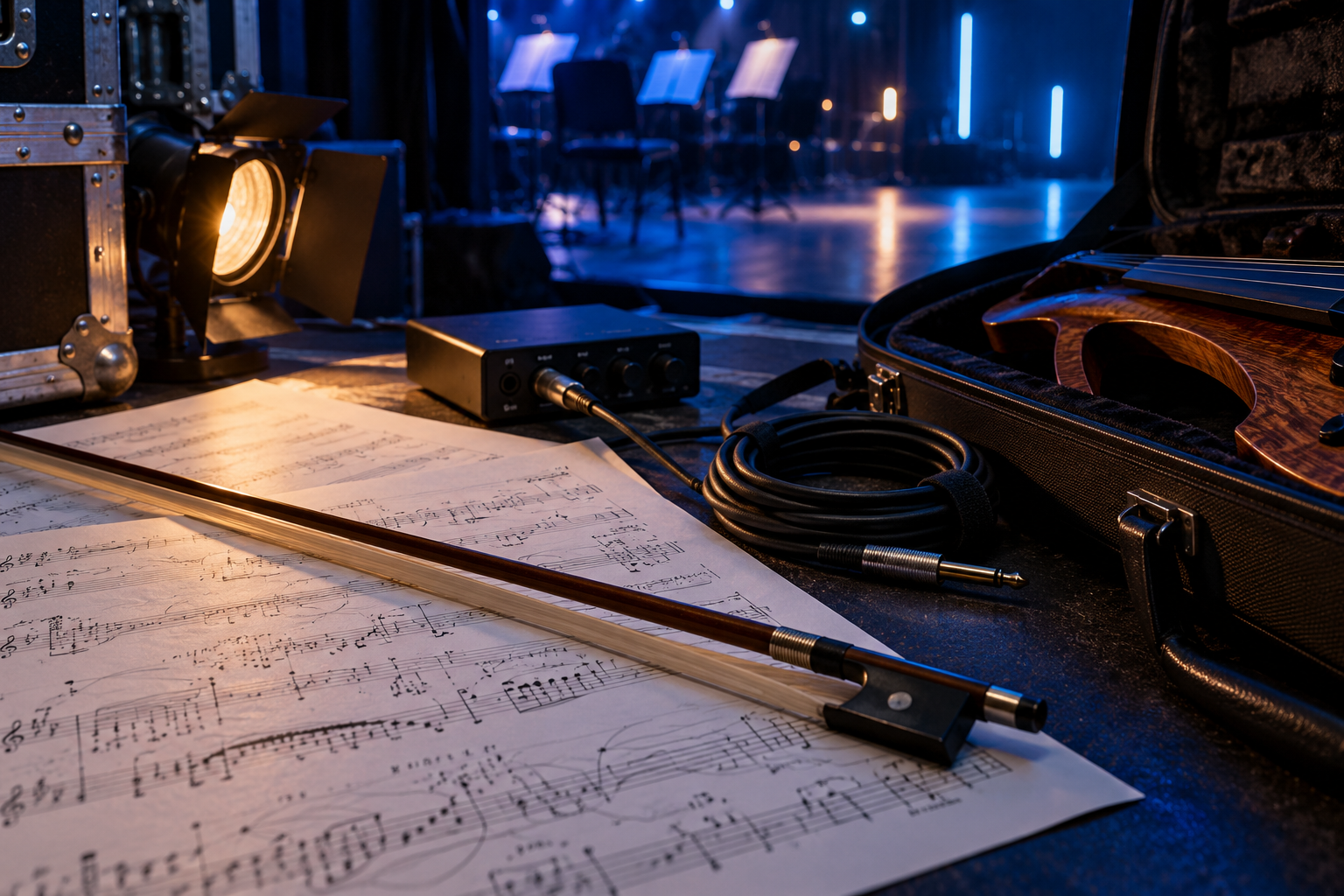
Original AI-generated editorial image for Tanya Strings; it is not a photograph from the reported events.
What should music fans watch next?
Follow how Silverman’s amplified voice sits in Roumain’s orchestral world, notice how Patočka introduces Brousek’s new concerto, and return to Fischer’s example of a classic work shaped by context. These events make a practical case for variety without compromise. Tanya Strings brings that same performer-first ambition to electric violin shows and creator-led content: a clear musical identity, disciplined stagecraft and a performance that gives audiences something real to remember.