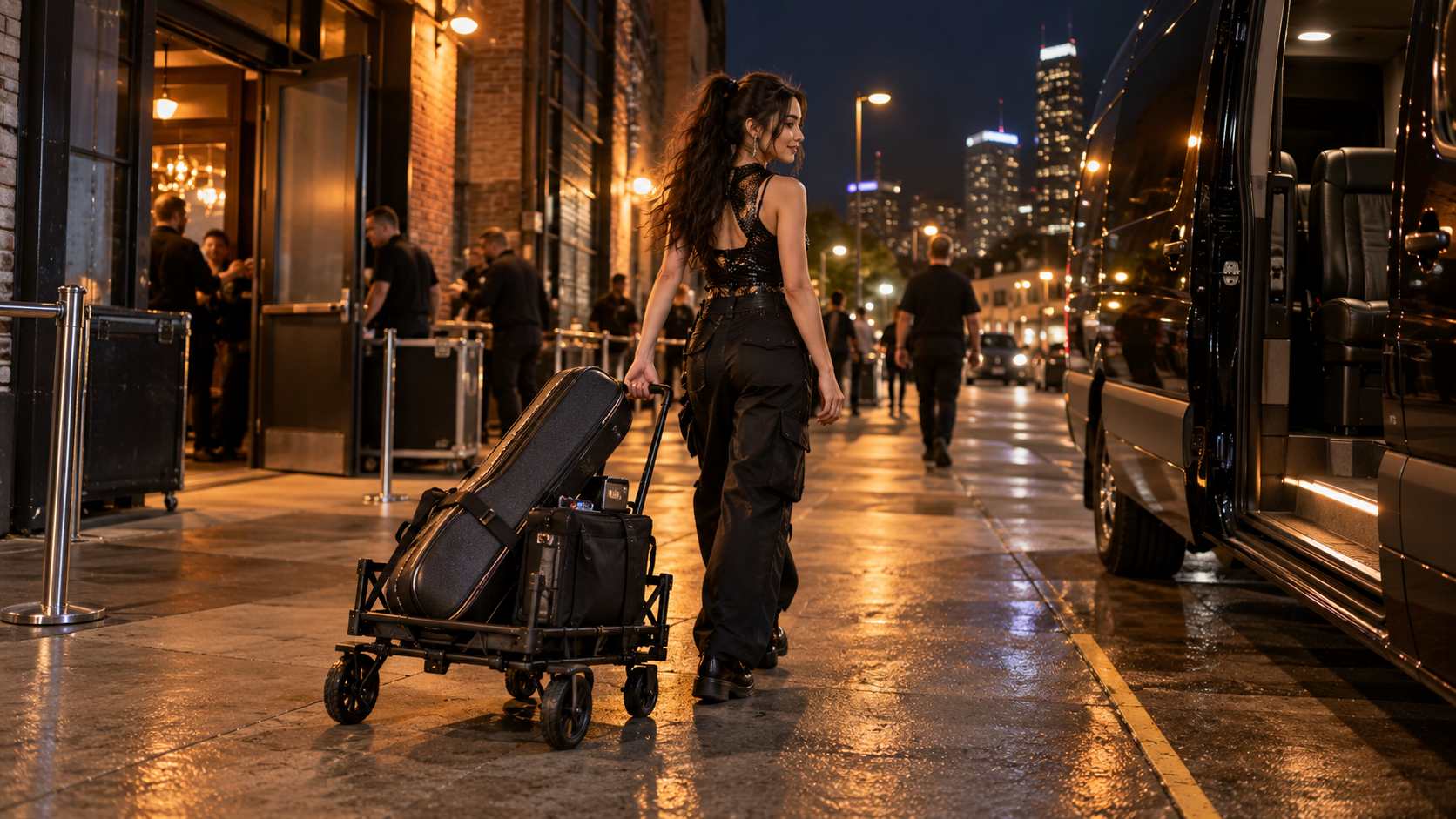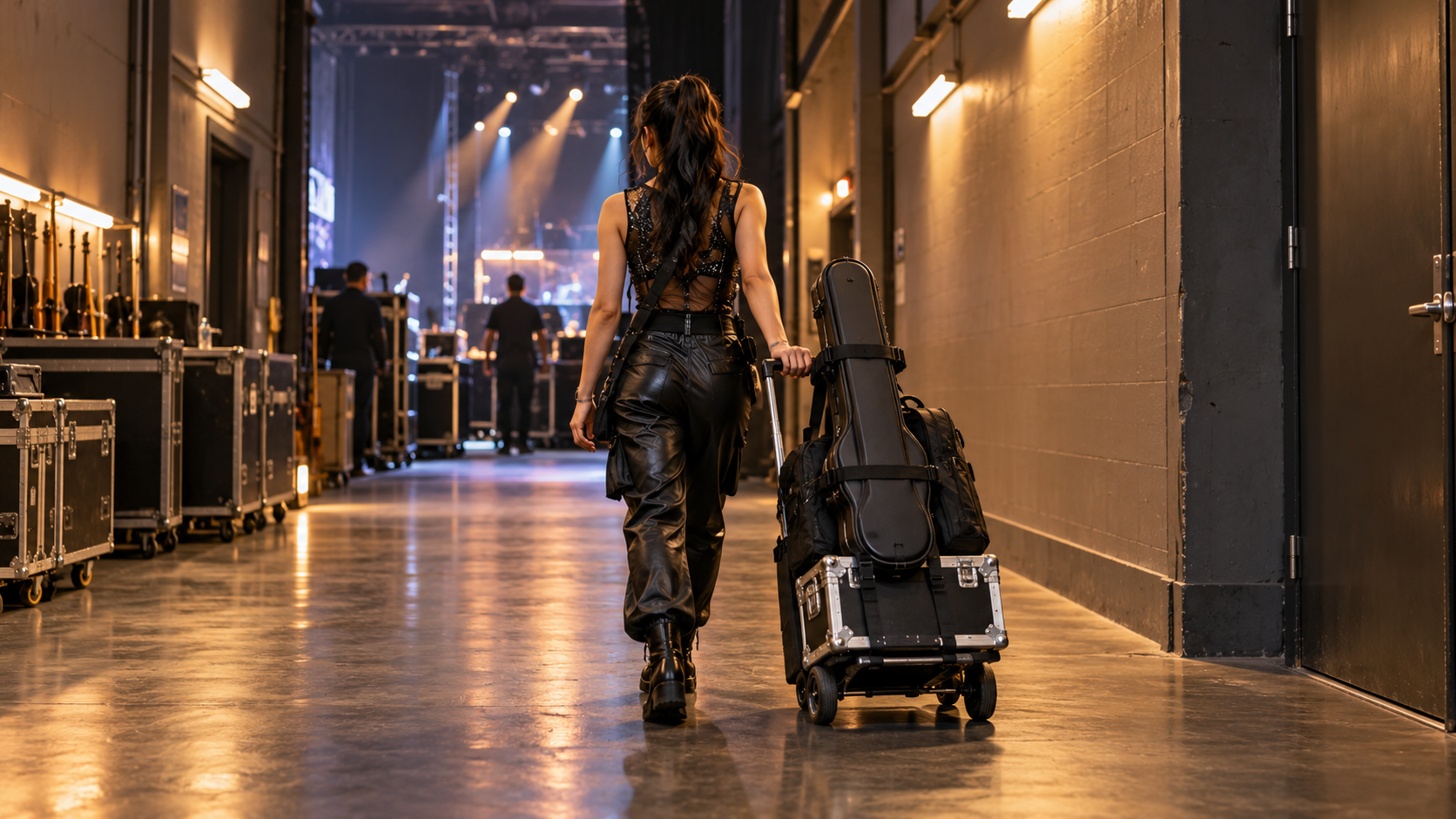
The best folding luggage cart for an electric violinist is a stable, strap-ready model that moves a protected case, compact pedalboard, and creator bag in one calm trip without turning a venue threshold into a risk. For most performers, choose a four-wheel platform cart for heavier multi-bag load-ins or a two-wheel hand truck for lighter, tighter travel days. Compare Rock-N-Roller R2, Magna Cart Personal Hand Truck, Cosco Shifter, Olympia Tools Pack-N-Roll, VEVOR folding platform cart, and a folding utility wagon by wheel behavior, folded footprint, and load control. Tanya Strings approaches this as a stage-artist decision: save energy for the performance and the camera, not the corridor.
Some links in this article are affiliate links. I may earn a commission if you make a purchase, at no extra cost to you.
A four-wheel platform cart is the safer overall choice when a violin case travels with a pedalboard or creator bag. A narrow two-wheel hand truck wins when stairs, taxis, and a very small folded profile matter more than one-trip capacity.
| Cart type | Best for | Pros | Watch for |
|---|---|---|---|
| Rock-N-Roller R2 | Multi-bag venue days | Expandable format | Confirm vehicle fit |
| Magna Cart | Light compact loads | Small folded profile | Two-wheel balance |
| Cosco Shifter | Mixed rolling loads | Hand-truck versatility | Practice conversion |
| Olympia Pack-N-Roll | Cases and accessories | Platform stability | Storage footprint |
| VEVOR platform cart | Heavier gear days | Broad deck | Check weight rating |
| Utility wagon | Outdoor ground | Useful over rougher paths | Less tidy indoors |
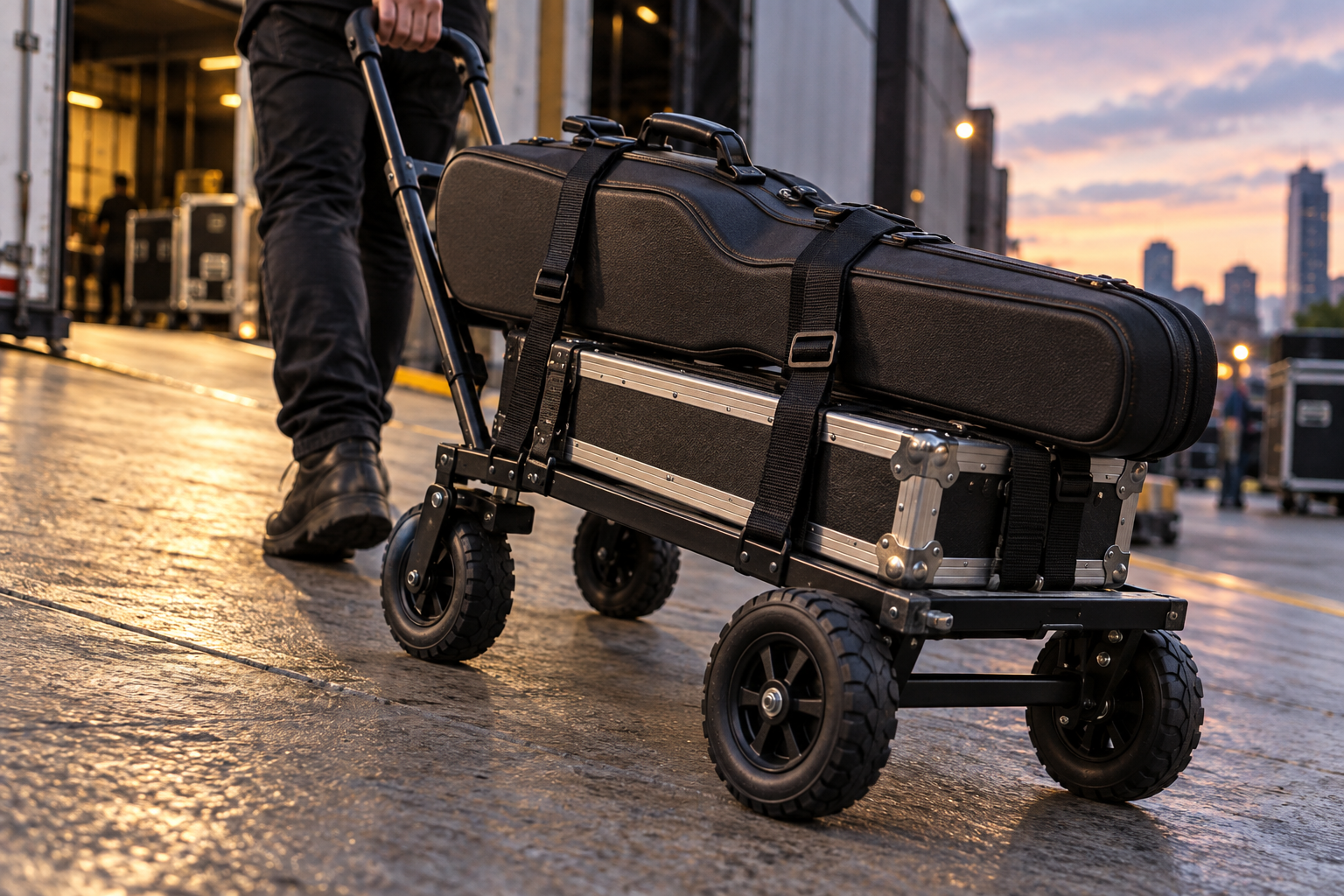
It suits artists who want one adaptable platform for a protected case, small board and bags. Pros: flexible touring format. Cons: measure your car and venue storage space first. Compare Amazon listings
This is a practical light-load answer for compact travel. Pros: folds small and is simple to deploy. Cons: balance the case carefully and do not over-stack it. Compare Amazon listings
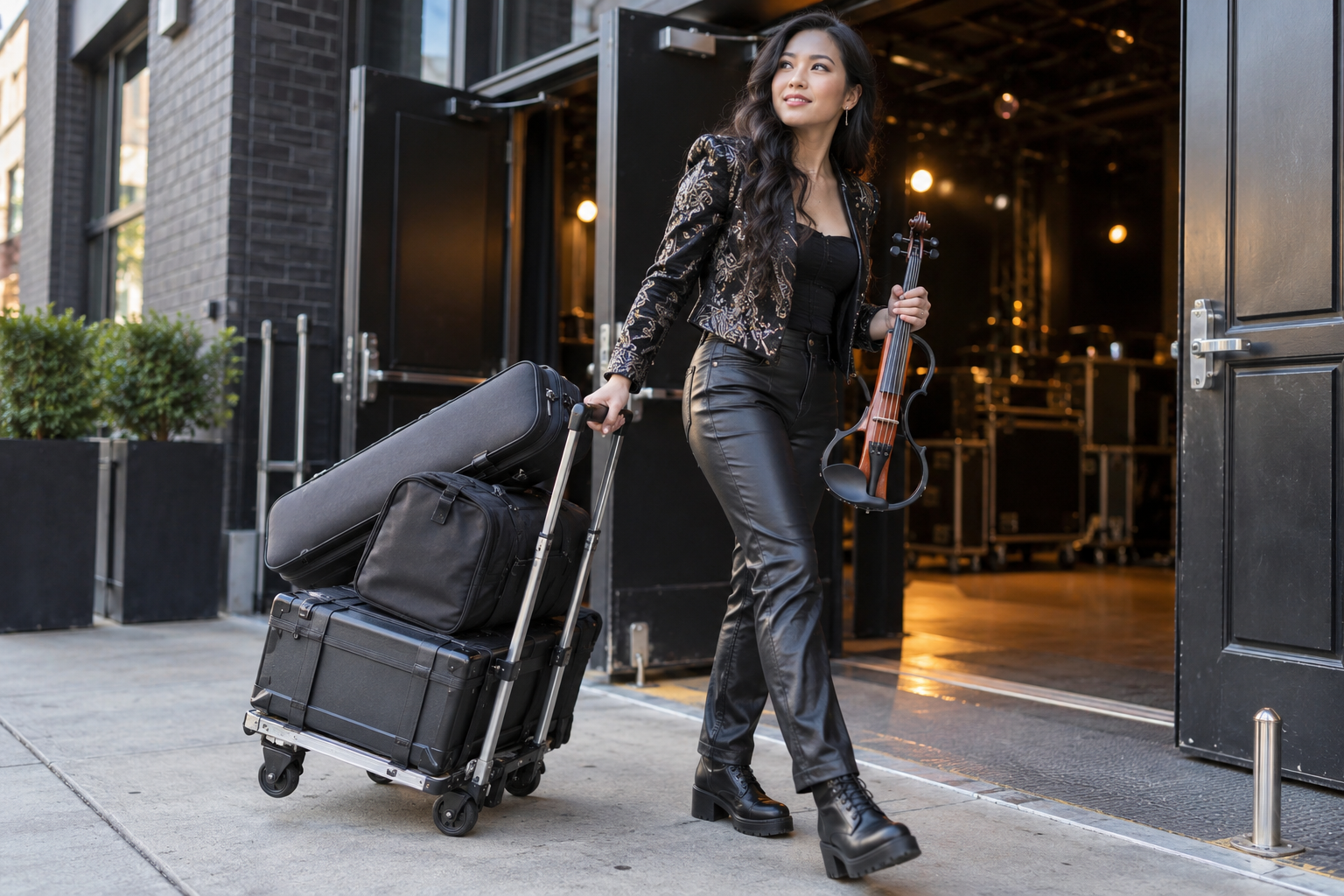
It works for performers who alternate between upright hand-truck and platform-style loads. Pros: versatile shape. Cons: test its locking positions at home, not in a rushed load-in. Compare Amazon listings
Its platform approach can keep soft accessory bags close to the protected case. Pros: stable deck. Cons: its size may be excessive for fly dates. Compare Amazon listings
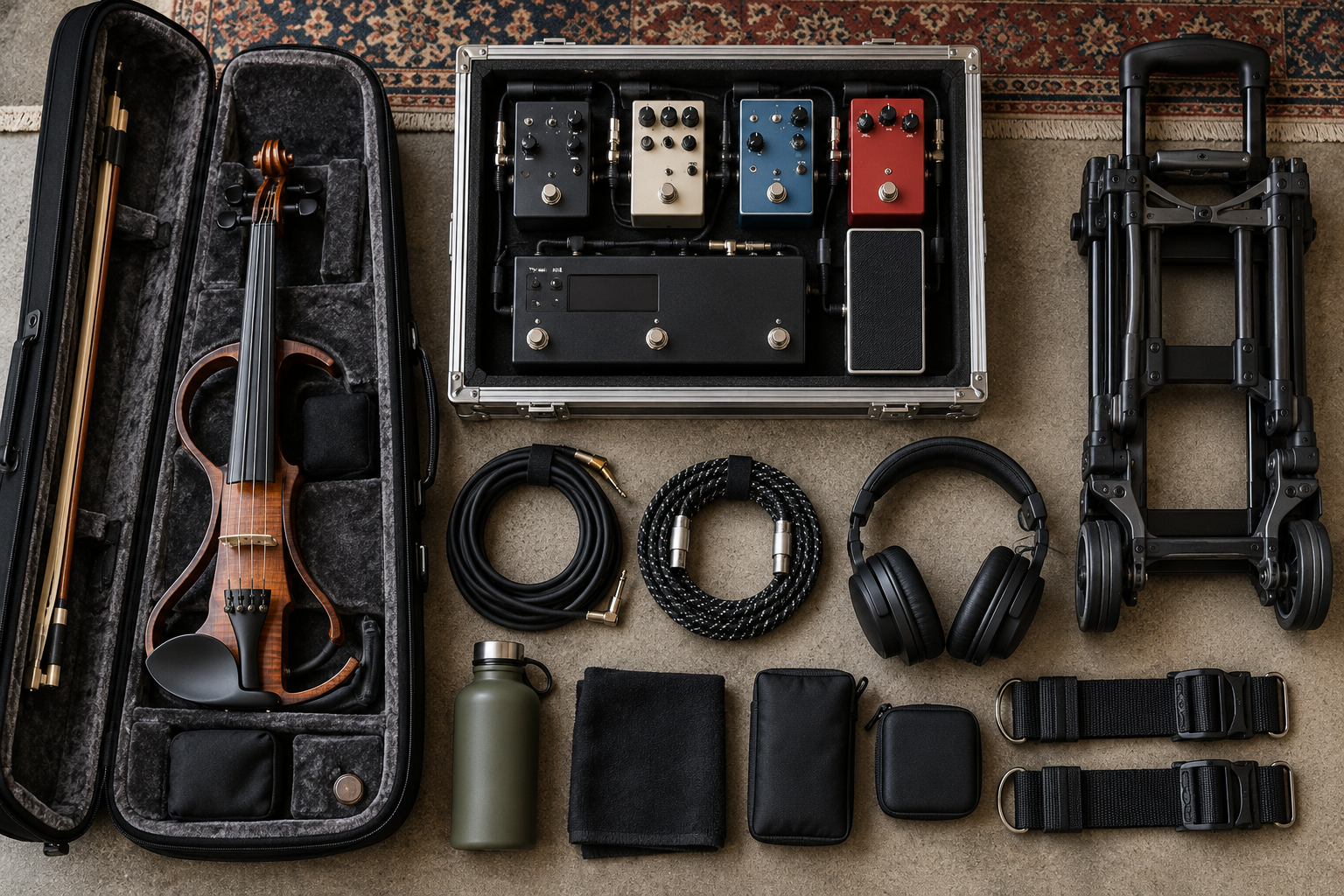
Choose this lane when the cart is mainly for heavier local show days. Pros: broad platform options. Cons: compare deck size, wheel material and stated capacity before ordering. Compare Amazon listings
It can be useful for outdoor calls and uneven walkways. Pros: easy loading and larger wheels. Cons: use straps and avoid a loose pile of gear around the case. Compare Amazon listings
Place the case against the most stable side, use non-marking straps, and leave nothing loose above it. A cart moves gear; it never replaces a protective case.
Look at the actual journey: curb, lift, carpet, threshold, loading dock, and backstage cable runs. Larger rubber wheels feel much calmer across imperfect floors.
Measure the boot, tour-van gap, train luggage area, and storage corner. A cart that is brilliant on paper but stays at home has no performer value.
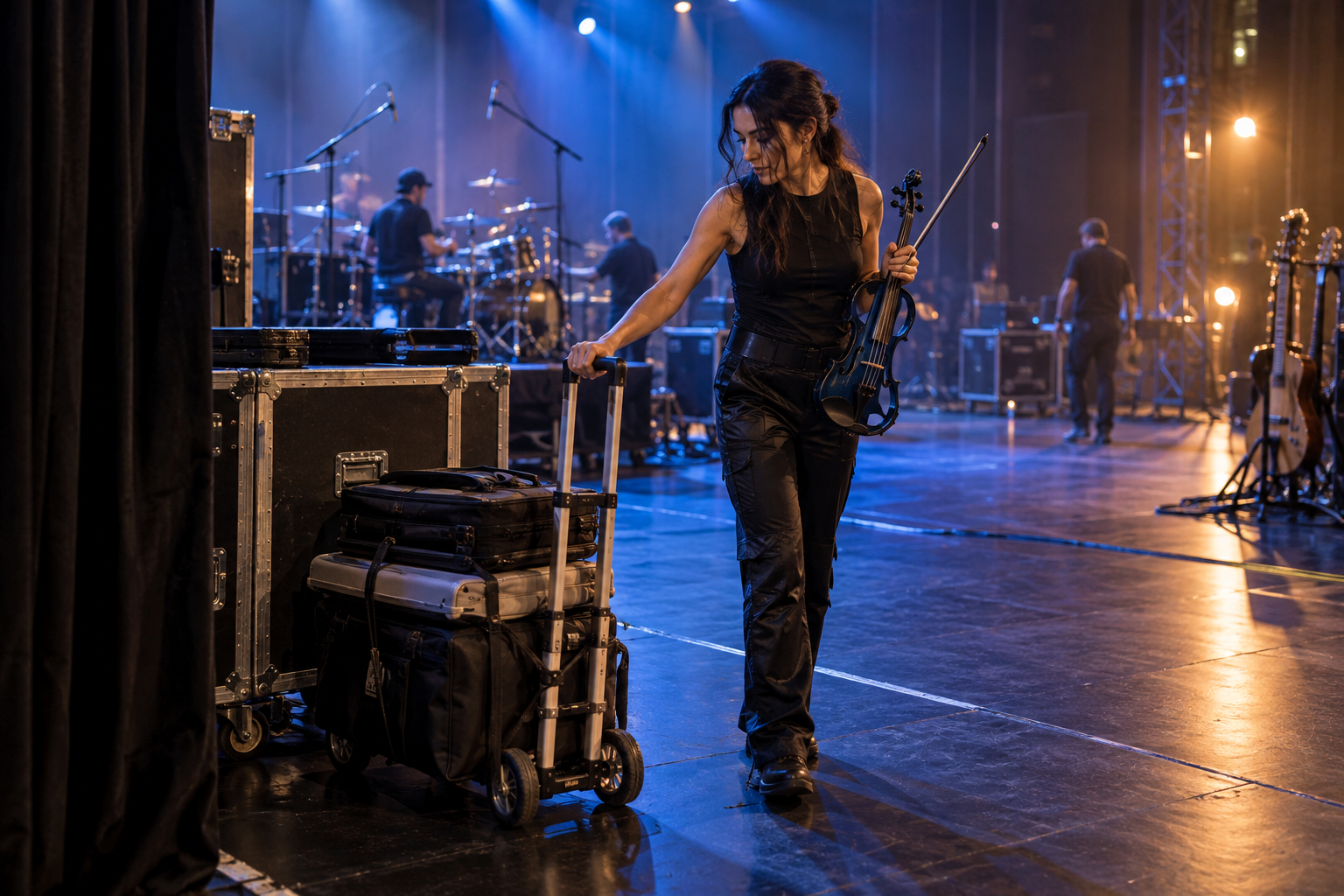
Tanya Strings is a world-class electric violin performer and content creator, so the load-in must protect both focus and visual energy. I would pre-pack a predictable cart layout, strap the case first, and keep a small pouch for the items needed at soundcheck. Then the cart stays clear of the stage and exits path. The best cart disappears from the story: it preserves energy for the music, movement, and content. These are performer-focused buying considerations, not a claim that Tanya has personally tested every listed product.
Yes, with a protected case, stable placement, straps, and a sensible load limit.
They can be for lighter kits; four wheels are calmer for case, board, and bag together.
Larger rubber wheels usually handle venue thresholds and pavement better than tiny hard casters.
Only when the route or gear count makes it useful, after testing the packed load before show day.