Violin News: Crossover, Stella Chen and Miso
Today’s violin news shows three ways string performance stays immediate: crossover artists are opening a festival in Hong Kong, Stella Chen is taking Barber’s concerto to Kansas City, and Miso String Quartet is programming Reich, Saariaho and new-music voices in Vigo. These are not the same kind of gig, and that is the point. Each asks players to make a clear artistic choice about sound, repertoire and audience. Tanya’s performer take: a world-class violin career is built around memorable live identity—whether the stage is a concert hall, a festival launch or a genre-fluid show captured for content.
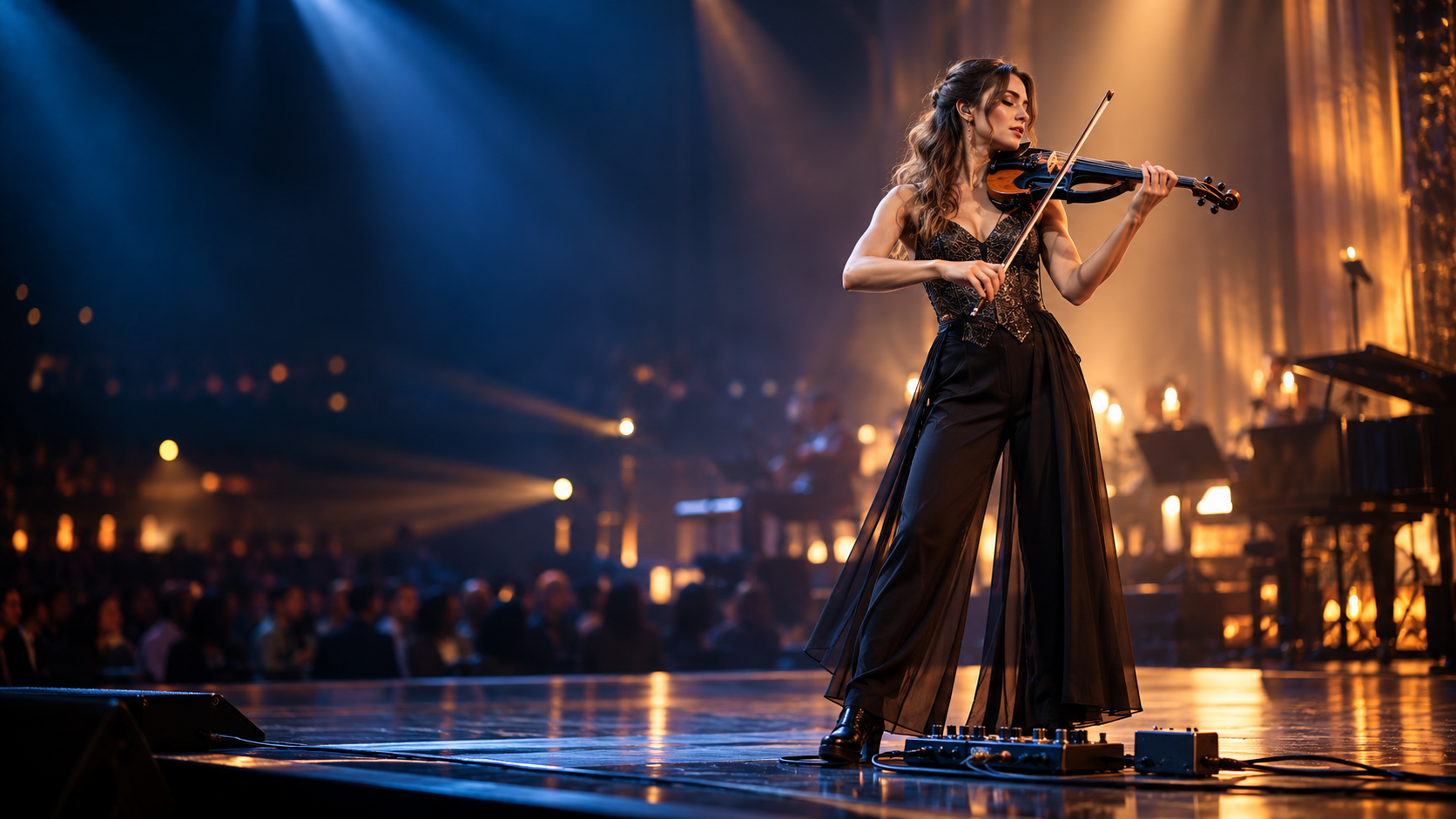
Original Tanya Strings editorial image; it is not a photograph from the reported events.
Why is Hong Kong’s new crossover festival worth watching?
The HKGNA Music Festival 2026 opened on October 30 and runs through November 19 under the theme “Breaking Boundaries, Inspiring Tomorrow.” Its opening concert at the East Kowloon Cultural Centre brings together violinist and singer Danny Koo, tenor Phillip Jeong, singer-songwriter Vicky Fung, conductor-violinist Andrew Ling, saxophonist Timothy Sun, young competition winners and the HKGNA Strings Ensemble. The festival also works with organisations supporting disabled young musicians.
That bill is useful evidence that “classical crossover” can mean more than adding a pop encore. The format connects voices, instruments, emerging artists and access in one event story. For a presenter, it supplies several entry points for audiences who may arrive for a singer, a violin feature or the collaborative energy of a mixed bill.
What can electric violin performers take from it?
- Build a set around a clear shared idea, not a random sequence of styles.
- Make collaborators visible in the content: one good rehearsal clip can explain a show faster than a poster.
- Let the live sound stay recognisably yours even when the genre changes.
Tanya’s take: crossover works best when the audience hears one strong personality travelling through several musical worlds.
What makes Stella Chen’s Barber weekend a strong concert-hall signal?
In Kansas City, violinist Stella Chen joins guest conductor Ludovic Morlot for Samuel Barber’s Violin Concerto on October 31 and November 1. The Kansas City Symphony listing places Barber between Sofia Gubaidulina’s Fairytale Poem and Prokofiev’s Sixth Symphony. That framing matters: the programme does not present the concerto as a solitary familiar hit, but as the lyrical centre of an evening with distinct emotional climates.
Barber’s solo line has the kind of vocal sweep that reaches newcomers quickly, while the finale demands unwavering rhythm and control. For music fans, this pairing offers a fresh way into the concerto. For event planners, it is a reminder that a recognisable work can anchor a bolder programme without flattening it into background entertainment.
Electric violinists can borrow the architecture, not the repertoire. Put the most singable melody where it earns attention, then contrast it with a tighter rhythmic section or a cinematic texture. The transitions need to feel deliberate; tone, backing tracks and lighting should be prepared as one dramatic arc.
Why does Miso String Quartet’s Vigo programme matter?
On October 31, the Miso String Quartet performed at Vertixe 14 in Vigo with a programme spanning Miguel Azguime, Doina Rotaru, Kaija Saariaho and Steve Reich’s Different Trains. Miso Music Portugal describes the new quartet as an ensemble built around the conversation between classic repertoire, twentieth- and twenty-first-century works, and new commissions.
Reich’s piece is especially relevant to performers who think about live technology. Its recorded speech fragments and rhythmic architecture make amplification, timing and listening central to the musical experience. A quartet does not need an LED wall or a huge production budget to feel contemporary; conviction about repertoire and precise ensemble coordination are already powerful production values.
What should performers, planners and fans notice next?
Watch for the practical decisions behind these events: how the Hong Kong festival packages crossover artists for a broad public, how Chen and the orchestra shape contrast around Barber, and how Miso makes a demanding contemporary programme legible. Tanya Strings approaches shows with that same performer-first mindset: refined violin craft, electric sound, original arrangements and creator-led storytelling designed for a real audience in the room and online.
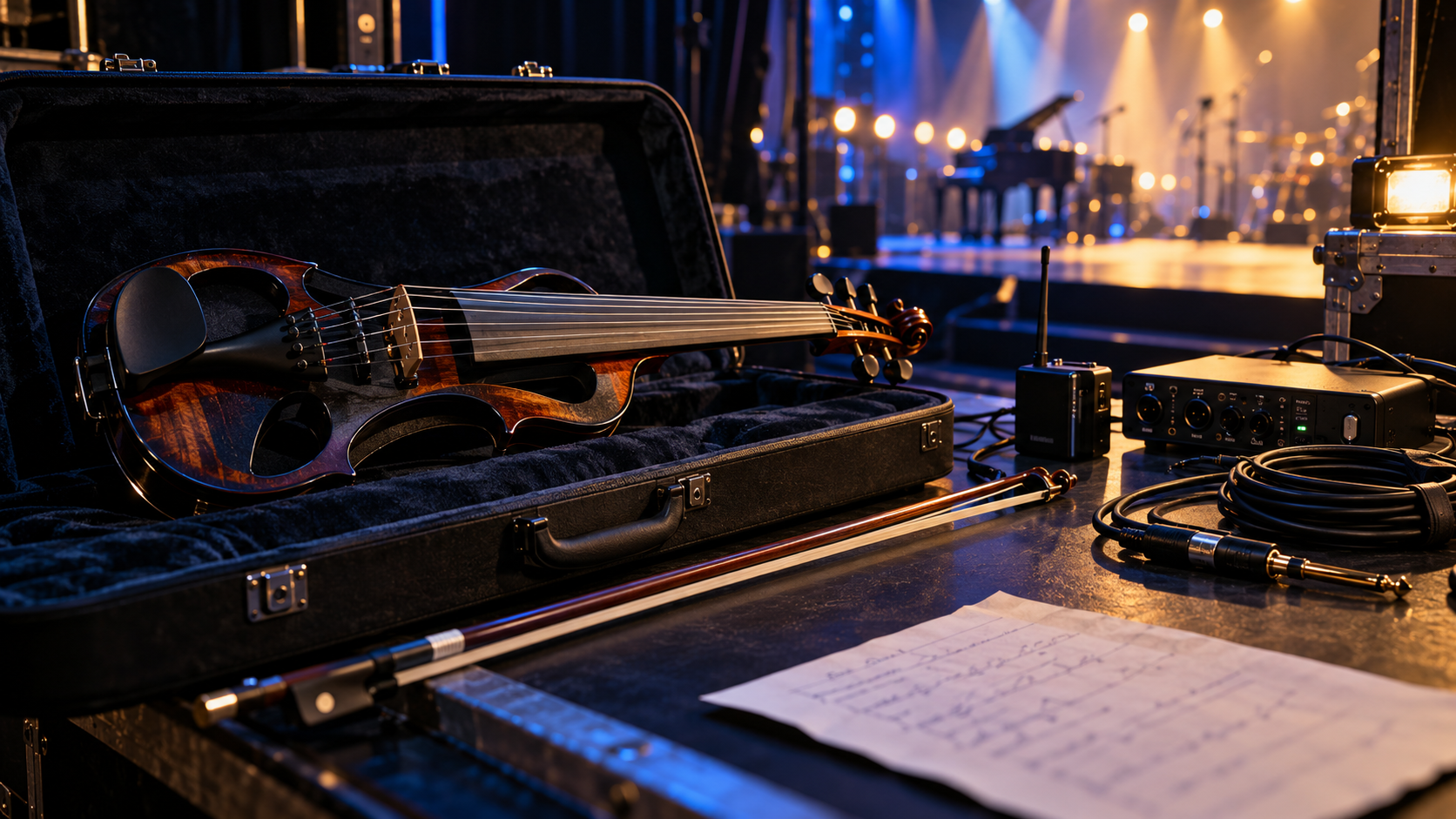
Original Tanya Strings editorial image; it is not a photograph from the reported events.