Tanya Strings · 2 November 2026
Best MIDI Pad Controllers for Electric Violinists
For an electric violinist who launches loops, backing parts, or short content cues, the best MIDI pad controller is the one that fits the actual stage workflow: compact enough to travel, clear enough to hit under lights, and dependable with the chosen laptop or hardware rig. The Akai MPD218, Novation Launchpad Mini MK3, Arturia BeatStep, Native Instruments Maschine Mikro MK3, Roland SPD::ONE WAV PAD, and Alesis SamplePad 4 cover six useful approaches. Tanya Strings would choose a controller only after mapping a small, repeatable set of performance actions and rehearsing it at full show tempo.
Some links in this article are affiliate links. I may earn a commission if you make a purchase, at no extra cost to you.
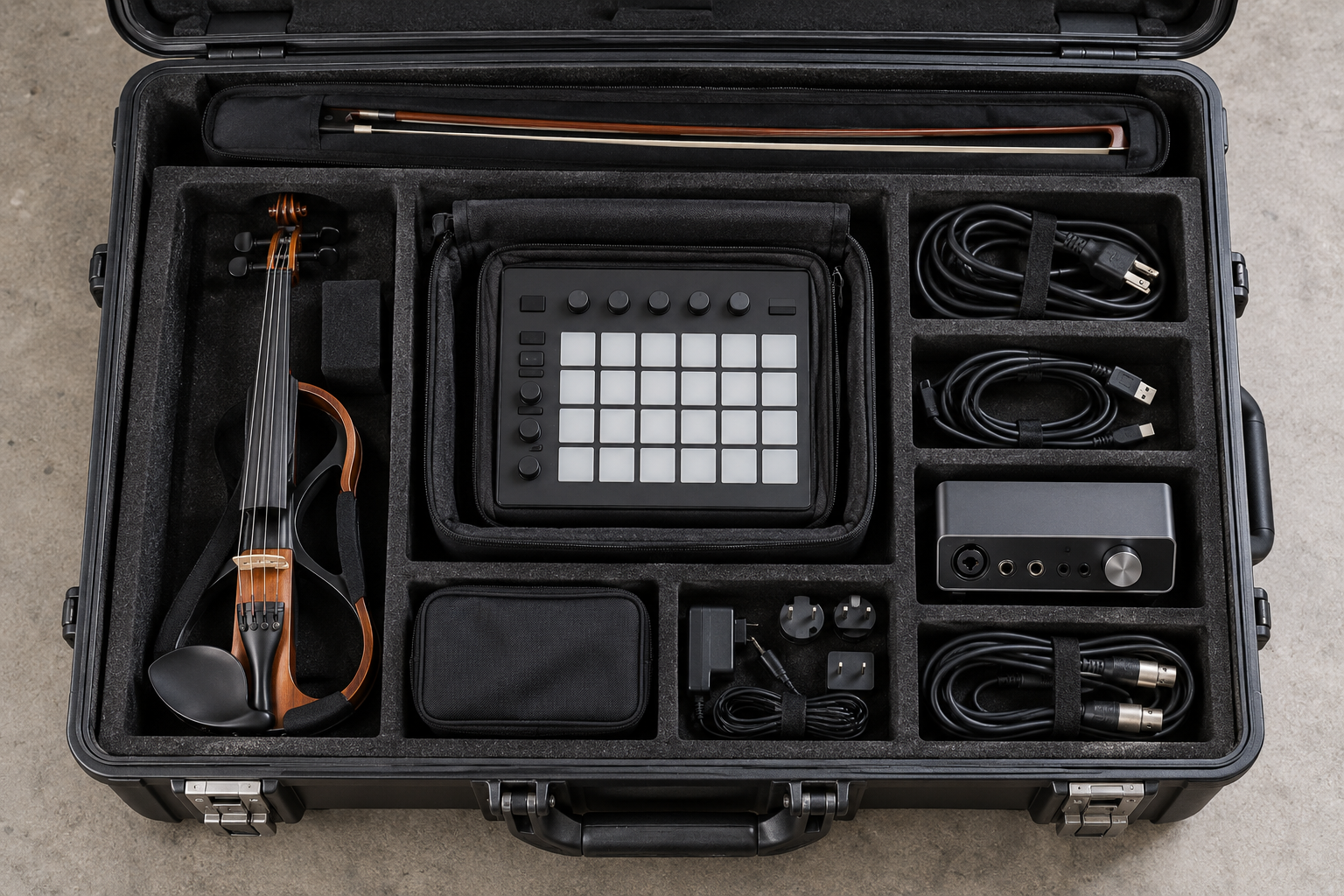
Which MIDI pad controller fits an electric violin performance rig?
A pad controller is not a replacement for the violin signal chain. It is a separate command surface for launching samples, scene changes, click tracks, or music layers through compatible software or hardware. Choose the number and layout of pads around what one hand can safely reach between phrases. Confirm USB, MIDI, power, and stand placement before buying.
| Controller | Best for | Why compare it | Watch for |
|---|---|---|---|
| Akai MPD218 | Finger-drummed samples | 16-pad performance format | Computer workflow |
| Novation Launchpad Mini MK3 | Clip and scene launch | Grid-based control | Software mapping |
| Arturia BeatStep | Compact hybrid control | Pads plus sequencing | Small-pad feel |
| Maschine Mikro MK3 | Detailed production rigs | Hands-on creative workflow | Setup depth |
| Roland SPD::ONE WAV PAD | Stick or hand triggers | Standalone-pad direction | Mounting and levels |
| Alesis SamplePad 4 | Simple sample playback | Four-pad hardware format | Rig footprint |
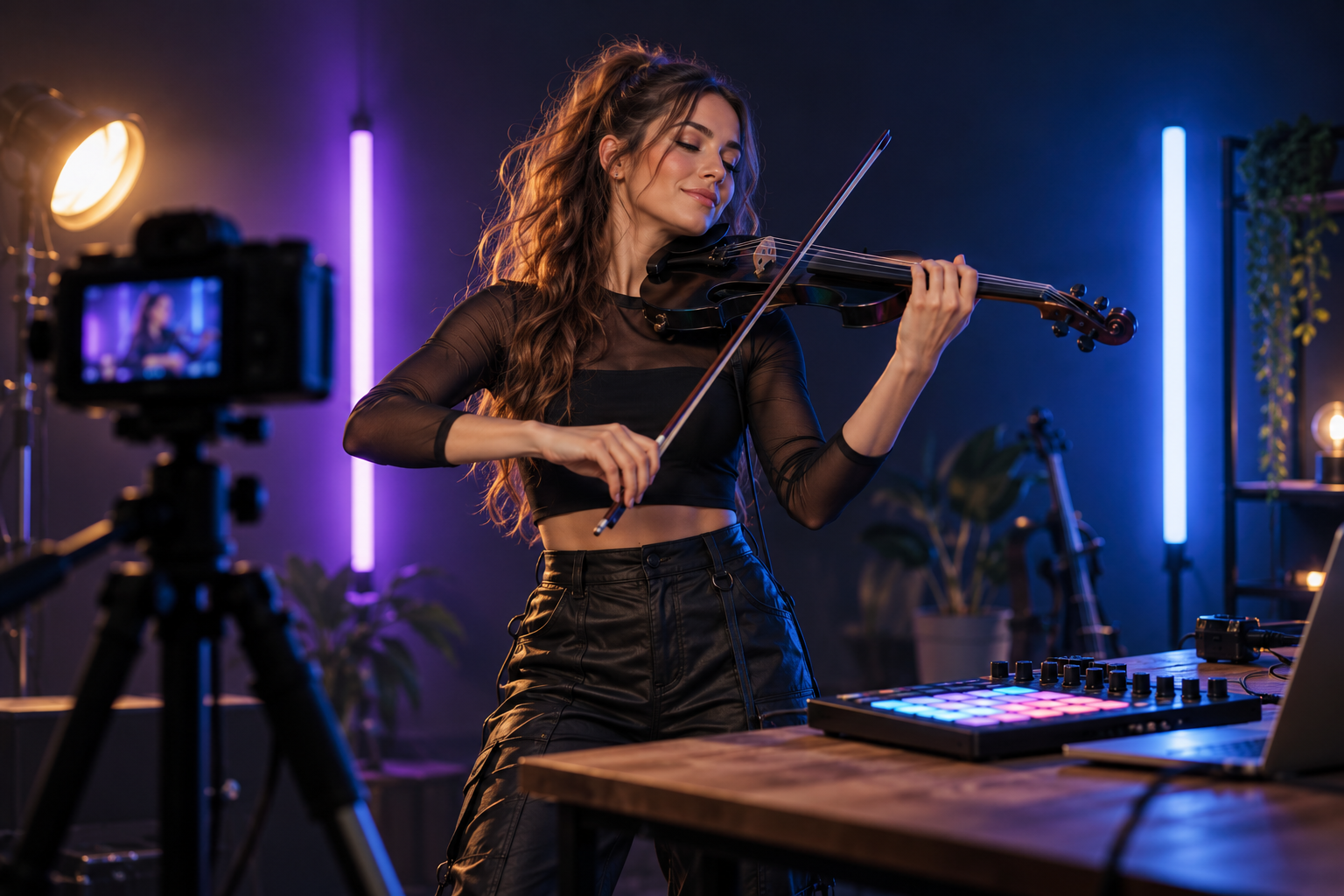
Which six MIDI pad controllers are worth comparing?
Why choose the Akai MPD218?
The Akai MPD218 is a sensible first comparison for a laptop-based violin rig that needs a familiar 16-pad layout. Pros: compact pad-focused format and plenty of trigger positions. Cons: it is a controller, not a sound source, so the computer, software, and audio output must be ready before the downbeat.
Compare Akai MPD218 listings on Amazon
When does the Novation Launchpad Mini MK3 make sense?
The Novation Launchpad Mini MK3 suits an artist who thinks in clip rows, sections, and visual grids. Pros: small footprint and an organized grid for launching prepared cues. Cons: make the colors and mappings meaningful in rehearsal; an attractive grid is not useful if you must stare at it during a violin entrance.
Compare Novation Launchpad Mini MK3 listings on Amazon
Who should consider the Arturia BeatStep?
Arturia BeatStep is worth a look when pads are only one part of a compact MIDI-control plan. Pros: hybrid control concept that can suit sequences and simple commands. Cons: its smaller format asks for careful testing with the artist’s hands, stand height, and performance timing.
Compare Arturia BeatStep listings on Amazon
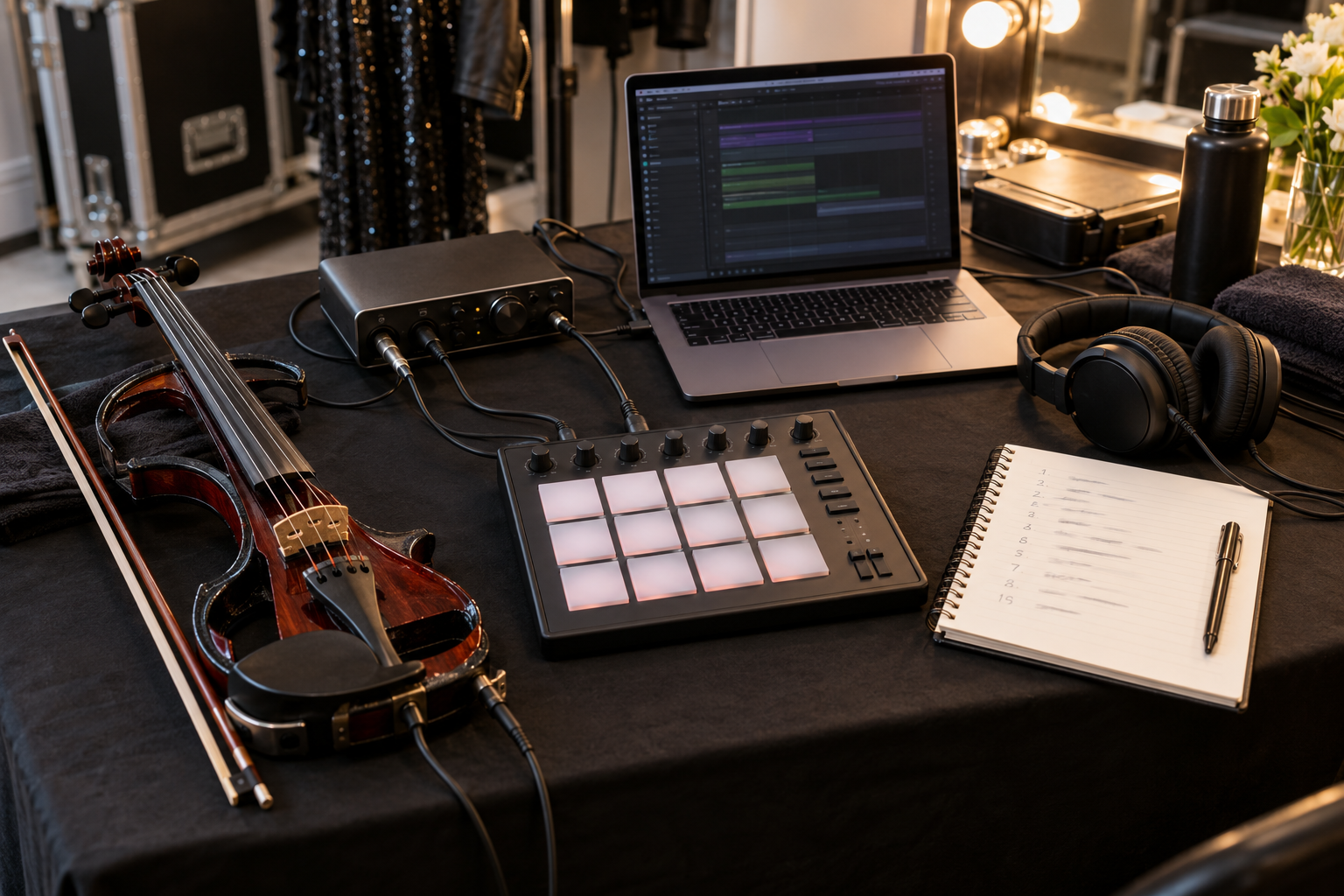
Is Maschine Mikro MK3 right for a performance setup?
Native Instruments Maschine Mikro MK3 fits the artist who also builds detailed backing parts and performance content away from the stage. Pros: a deeper creative workflow for prepared material. Cons: more options mean more rehearsal. Keep the live mapping simple enough that it still works when call time is tight.
Compare Maschine Mikro MK3 listings on Amazon
Why compare the Roland SPD::ONE WAV PAD?
The Roland SPD::ONE WAV PAD is the different option here: a physical pad approach that can work for an artist who wants an obvious, isolated trigger rather than a desktop grid. Pros: performance-oriented pad concept. Cons: check mounting, output routing, and trigger sensitivity with the actual show rig.
Compare Roland SPD::ONE WAV PAD listings on Amazon
When is an Alesis SamplePad 4 practical?
Alesis SamplePad 4 is a direct hardware-style comparison for setlists built around a modest number of dedicated sounds. Pros: four clearly separated pad positions. Cons: it deserves a realistic footprint check alongside the violin stand, pedals, monitor position, and safe cable routes.
Compare Alesis SamplePad 4 listings on Amazon

What should an electric violinist check before buying?
Will the controller do one useful job reliably?
Write the job in one sentence: launch an intro, call a click, trigger a texture, or change a backing-track section. If it cannot be explained simply, reduce the mapping before adding more pads. A clear performance system is more valuable than a crowded one.
Can the rig survive a fast changeover?
Test the exact cable, powered hub if needed, laptop connection, output routing, and stand position. Pack a labeled spare USB cable and save a backup of the session. Never run new mapping ideas for the first time at soundcheck.
Does the controller support the visual performance?
For Tanya Strings, an electric violin show is musical and visual. Put the pad where it can be reached without twisting the violin hold, blocking the camera, or creating a cable trip point. Rehearse the move just like a bow change or a pedal cue.
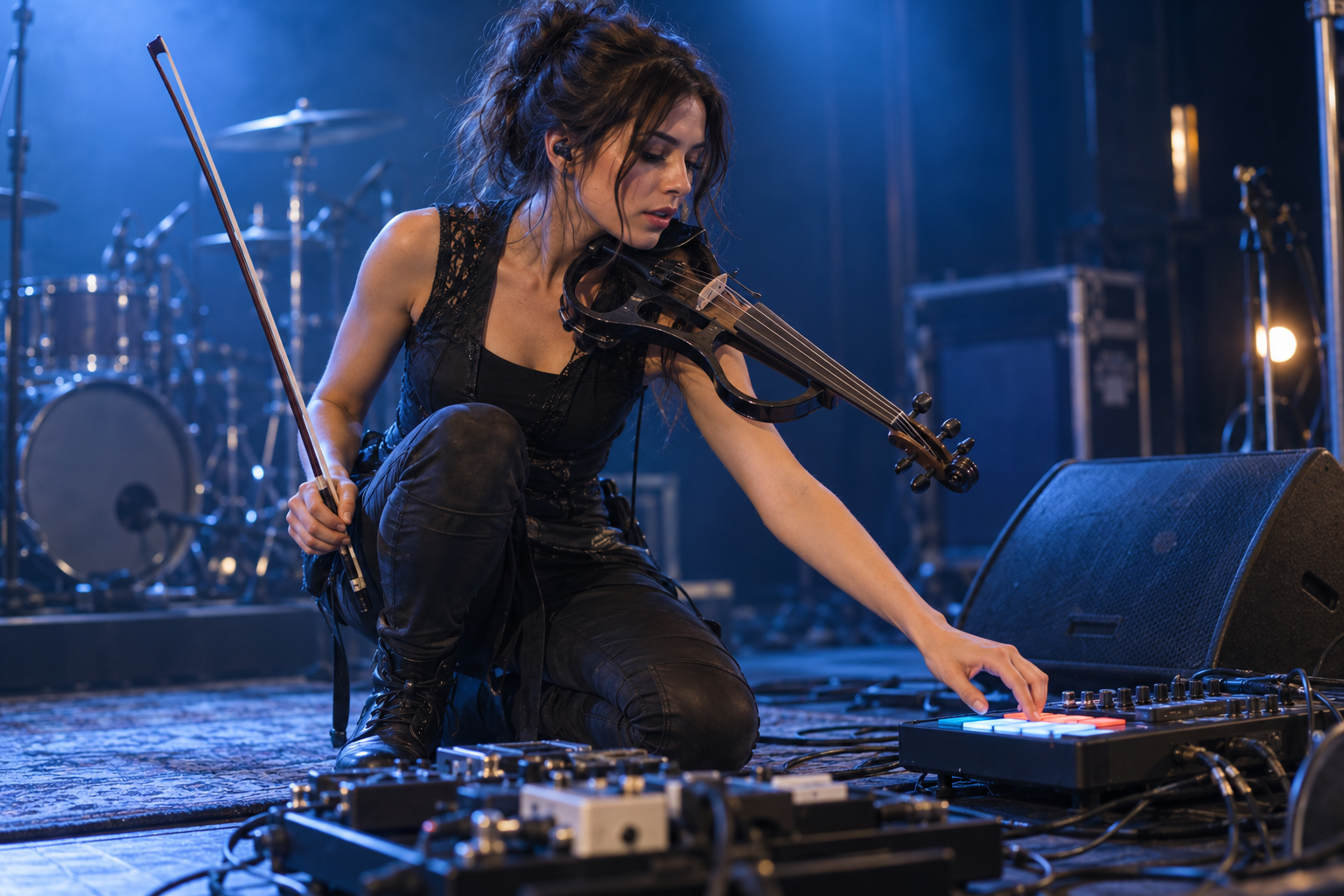
How would Tanya Strings use MIDI pads on a performance day?
Tanya Strings is a world-class electric violin performer and content creator, so a controller should support a confident stage moment rather than turn the set into a technology demonstration. I would pre-build a small cue bank, rehearse each trigger while playing, and leave a clean manual fallback. The artistic priority stays with the electric violin tone, phrasing, and connection with the room. These are performer-led buying considerations, not claims that Tanya has personally tested every listed product.
What do performers ask about MIDI pad controllers?
Can a MIDI pad controller connect directly to an electric violin?
Usually no. The controller sends MIDI and the violin sends audio, so a laptop, sound module, or other compatible rig connects the two worlds.
Which controller is easiest for a small live violin rig?
A compact USB model with clear pads is often the easiest start, once its software, power, and connection needs are confirmed.
Do I need a pad controller for looping?
No. A loop pedal can be simpler for audio looping; pads help when you need samples, click tracks, scenes, or pre-made layers.
How should a performer prepare MIDI cues for a gig?
Name each cue, rehearse its order, carry the required cable and power plan, and keep a safe manual fallback.