Stage Control · 2026-07-20
Best Pedal Loop Switchers for Electric Violinists Who Need Faster Scene Changes on Stage
The best loop switcher for most electric violinists is the BOSS ES-5 because it gives Tanya Strings the stage advantage that matters most: one clean press for multiple pedal changes, plus routing reorder, a parallel chain option, MIDI, and 200 memories in a body that still fits a realistic violin board. If your rig is stereo-first, the Morningstar ML10X is the stronger move. Voodoo Lab PX-8 Plus is the quiet touring pick, One Control Caiman Tail Loop is the compact value-MIDI option, and BOSS ES-8 or One Control OC10W only make sense when your show is already running a larger command-center setup.
Follow Tanya Strings on Google
Add the site as a preferred source to see more new violin posts from Tanya Strings in Google.
Affiliate disclosure: Some links in this article are affiliate links. I may earn a commission if you make a purchase, at no extra cost to you.

What is the best loop switcher for most electric violinists?
For most working performers, I would start with the BOSS ES-5. BOSS positions it as a compact programmable switching system with five loops, routing reorder, a parallel chain option, MIDI, and 200 patch memories. That is the exact zone where many electric violin rigs live. Tanya Strings does not need a rack-brain just to move from a cleaner verse sound into a bigger delay-and-reverb chorus. I need something compact enough for a real board, clear enough to trust at soundcheck, and powerful enough to remove pedal tap dancing from the middle of a live song.
My performer rule: buy a loop switcher when one foot press will save your posture, your timing, and your confidence, not when you only want the board to look more advanced.
Why does a loop switcher matter more for electric violin than many players assume?
Because electric violin performance already asks a lot from the body. You are managing intonation, bow contact, phrasing, visual presence, and often a more hybrid rig than an acoustic violinist ever needs. Once you add delay, reverb, amp simulation, expression control, or a wireless receiver, scene changes stop being a minor convenience issue. They become a performance-risk issue. A switcher is not about laziness. It is about turning a multi-pedal rig into something that behaves like a prepared instrument instead of a floor obstacle.
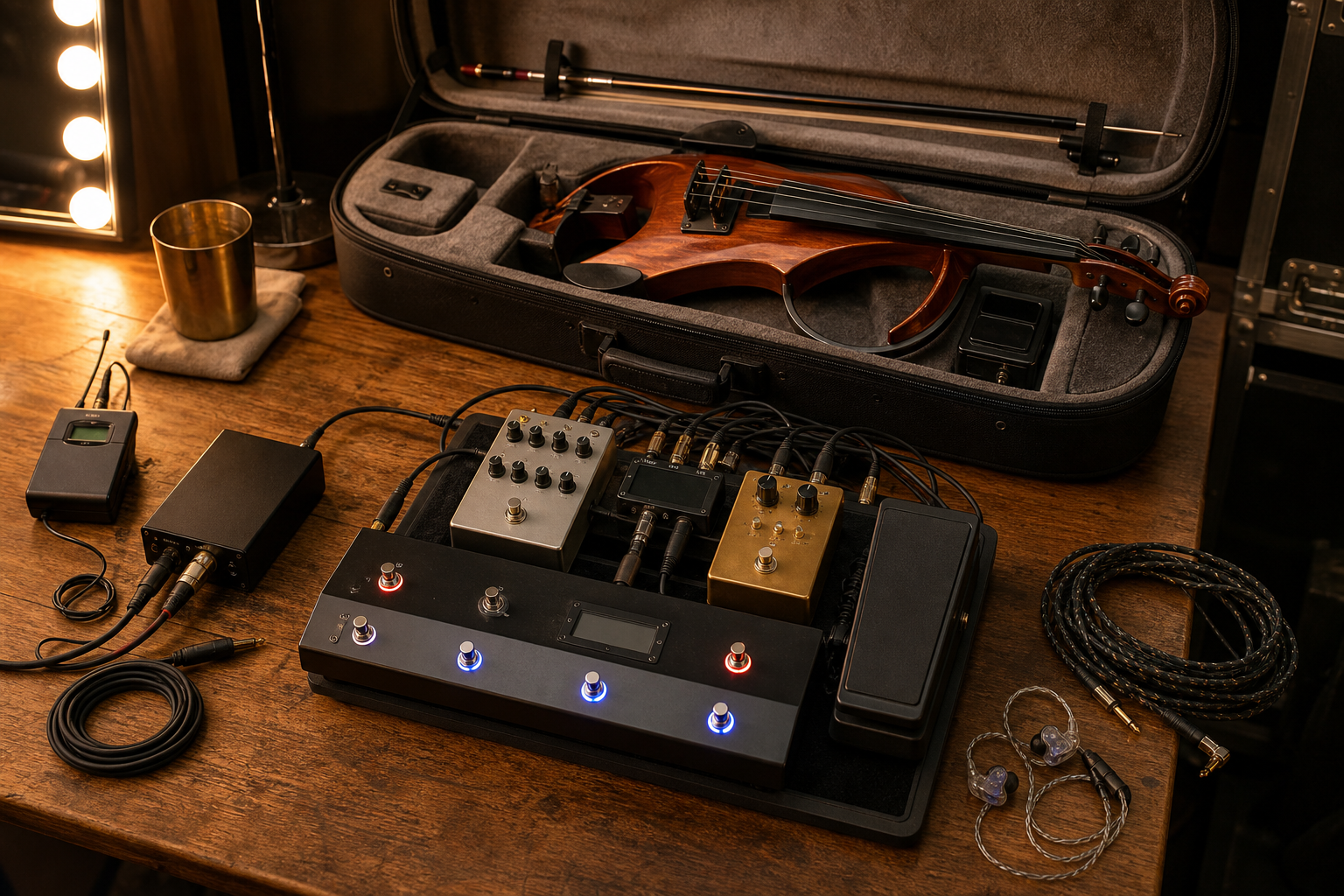
Which loop switchers are worth buying right now?
This shortlist stays focused on real stage usefulness for electric violin: compact preset control, cleaner routing, quieter switching, MIDI expansion, and honest reasons to spend more only when the show actually needs more.
| Product | Best for | Why Tanya would use it | Watch out for | Links |
|---|---|---|---|---|
| BOSS ES-5 | Most electric violinists who want the safest compact preset switcher | I trust it because it gives me five loops, reorderable routing, a parallel option, MIDI, and 200 memories without forcing the pedalboard into oversized territory. | If your rig already needs stereo routing or a much bigger command center, five loops can become tight. | Official · Amazon |
| Morningstar ML10X | Stereo violin rigs and performers who want deep reorderable routing | I would use it when the board needs stereo sends and returns, parallel ideas, preset spillover, and a smaller box than the larger floor switchers. | It rewards a more MIDI-literate workflow and is unnecessary if your setup is still simple and mono. | Official · Amazon |
| Voodoo Lab PX-8 Plus | Quiet touring boards that want simple true-bypass preset control | I like it when I want eight loops, silent switching, a trusted output buffer, and straightforward stage behavior instead of endless menu depth. | It is strong on reliability and tone, but not the deepest routing brain in the group. | Official · Amazon |
| One Control Caiman Tail Loop | Compact MIDI users who want more preset depth than a simple loop strip | I would buy it when I want five true-bypass loops, 150 presets, stored MIDI messages, and a tidy central strip that still fits a travel-friendly board. | The feature set is great value, but the larger mainstream ecosystem and tutorials are not as broad as BOSS. | Official · Amazon |
| BOSS ES-8 | Bigger multi-scene pedalboards that need more loops, control ports, and touring memory | I would move here when the live violin system is already large enough that eight loops, three control outs, two expression outs, and 800 patches save real time. | It is physically larger and only smart if the actual show is already command-center sized. | Official · Amazon |
| One Control Crocodile Tail Loop Wing OC10W | Premium advanced rigs that need up to 10 loops plus app-assisted programming | I would consider it when the board already behaves like a serious show system and I want 10 programmable loops, full MIDI, tuner mute, and remote iOS editing. | Expensive, specialized, and too much switcher for players who still have a compact mono board. | Official · Amazon |
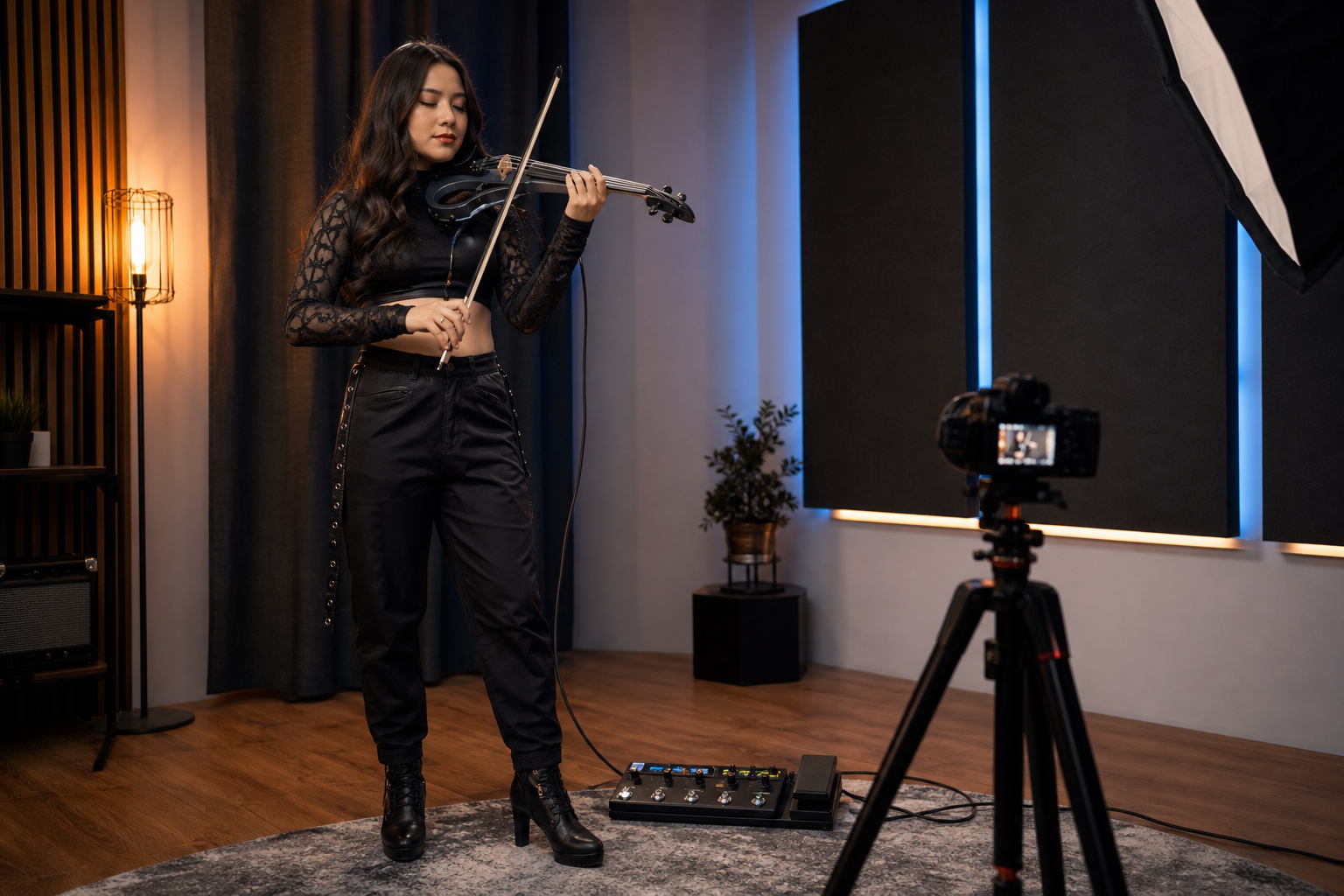
Why is BOSS ES-5 my best overall pick?
The ES-5 is the best overall answer because it lands in the most realistic part of the market for electric violinists. BOSS gives it five loops, MIDI, input and output buffers that can be stored per patch, routing reorder, a parallel chain, and a compact enclosure with 200 memories. That covers the exact problem many performers are trying to solve: a rig that is now big enough to need scene management, but not so huge that it needs a full board architecture project. Tanya Strings wants faster scene changes between rhythmic verses, wider choruses, and cleaner speech moments, not a control surface that takes over the entire floor.
Who should buy the ES-5 first?
Buy it first if your live setup already uses several pedals and you are tired of hitting two or three switches while still trying to look and sound composed.
- Pros: compact size, reorderable routing, parallel path option, MIDI, 200 memories, and strong stage practicality.
- Cons: less ideal for stereo-heavy boards and less expansive than true large-format switchers.
See the official BOSS ES-5 page · Find ES-5 options on Amazon
When should you buy Morningstar ML10X or Voodoo Lab PX-8 Plus?
Buy one of these when the main question is not just basic preset switching, but exactly how your routing and stage behavior need to evolve.
Why would Tanya Strings choose the Morningstar ML10X?
Morningstar frames the ML10X as a fully analog stereo reorderable switcher, and that is the main reason to care. It gives you five stereo send and return loops, can split those into up to 10 mono loops, supports series and parallel ideas, offers spillover trails, and includes MIDI I/O plus USB-C editor access. That is a strong fit when the violin rig already uses stereo ambience, stereo direct-tone tools, or a more content-heavy routing philosophy. I would buy ML10X when I need routing freedom more than I need a traditional large stompbox surface.
- Pros: stereo-ready architecture, deep reorder power, compact footprint for the capability, spillover support, and strong MIDI integration.
- Cons: more technical setup overhead and less reason to own it if the board is still mostly mono and simple.
See the Morningstar ML10X · Find ML10X options on Amazon
When is Voodoo Lab PX-8 Plus the smarter touring choice?
Voodoo Lab positions the PX-8 Plus as an eight-loop true-bypass programmable switcher with 36 onboard preset combinations, MIDI program changes, an insert point between loops 6 and 7, and an audiophile-quality output buffer. They also emphasize quiet switching and a hand-built USA touring build. That makes it attractive when what you want most is dependable stage behavior, silent switching, and simpler preset logic rather than the deepest routing laboratory. Tanya Strings would use it when the rig already sounds right and the next upgrade is reliability under pressure, not another layer of complexity.
- Pros: eight true-bypass loops, quiet switching, trusted touring reputation, useful buffer, and simple stage logic.
- Cons: fewer modern routing tricks than the most advanced reorderable systems.
See the Voodoo Lab PX-8 Plus · Find PX-8 Plus options on Amazon

When does One Control Caiman Tail Loop make more sense than BOSS ES-5?
The Caiman Tail Loop makes more sense when you want a compact strip with more built-in preset scale and stored MIDI behavior for the money. One Control says it gives you 150 presets, five loops, five MIDI PC and five CC messages per preset, direct and program modes, two latch outputs, and even six 9V DC outputs for powering effects. That is a compelling spec for travel-minded performers who want a serious control brain without immediately stepping into the size and price of a flagship board. I would look here when the board needs smart MIDI coordination with a disciplined footprint and the set still fits five loops.
- Pros: strong preset count, useful stored MIDI, compact format, true-bypass loops, and a value-oriented feature set.
- Cons: still a five-loop ceiling and not as universally familiar in backline or tech circles as BOSS.
See the One Control Caiman Tail Loop · Find Caiman Tail Loop options on Amazon
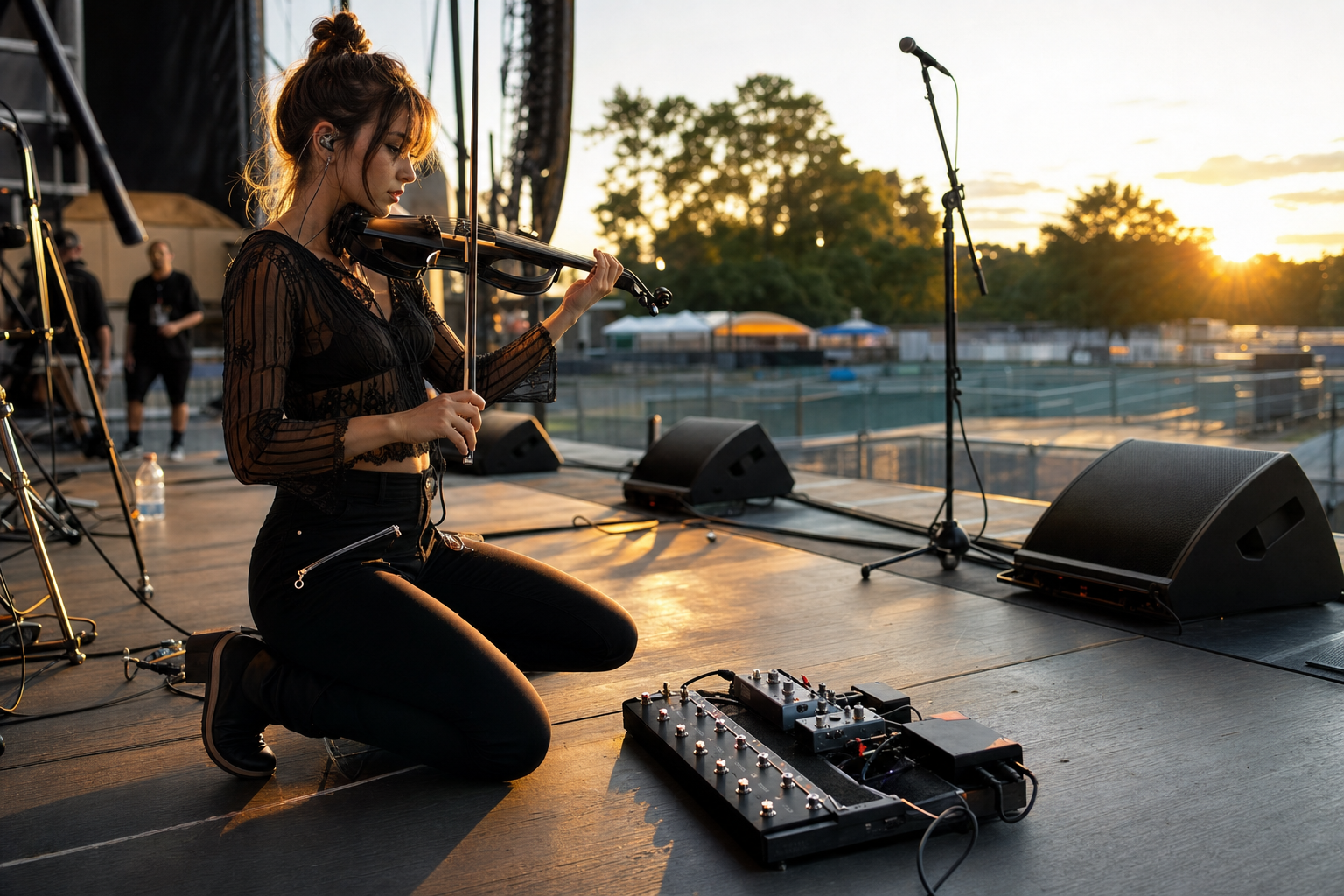
Who should step up to BOSS ES-8 or One Control OC10W?
You should step up only when the rig has already outgrown the compact class. BOSS gives the ES-8 eight effect loops plus a volume loop, three control outputs, two expression outputs, routing reorder, parallel chains, and 800 patch memories. One Control gives the OC10W seven serial loops plus three parallel loops for up to 10 programmable loops, tuner mute, 168 MIDI presets, and Bluetooth-linked iOS programming. Those are serious command-center features. Tanya Strings would only pay for them when the board already includes enough pedals, switching scenes, and external control demands that a smaller switcher is genuinely slowing the show down.
How do I think about ES-8 versus OC10W?
Choose ES-8 when you want a known touring-standard floor brain with deep control I/O and lots of memories. Choose OC10W when you want a more boutique premium route with up to 10 loops and remote app-based programming as part of the appeal.
- ES-8 pros: deeper control connections, huge patch count, strong touring pedigree, and excellent fit for larger boards.
- ES-8 cons: larger footprint and unnecessary bulk for smaller violin rigs.
- OC10W pros: 10-loop architecture, tuner mute, full MIDI, app-linked editing, and premium high-control identity.
- OC10W cons: expensive, specialized, and easiest to justify only on advanced rigs.
See the BOSS ES-8 · Find ES-8 options on Amazon
See the One Control OC10W · Find OC10W options on Amazon
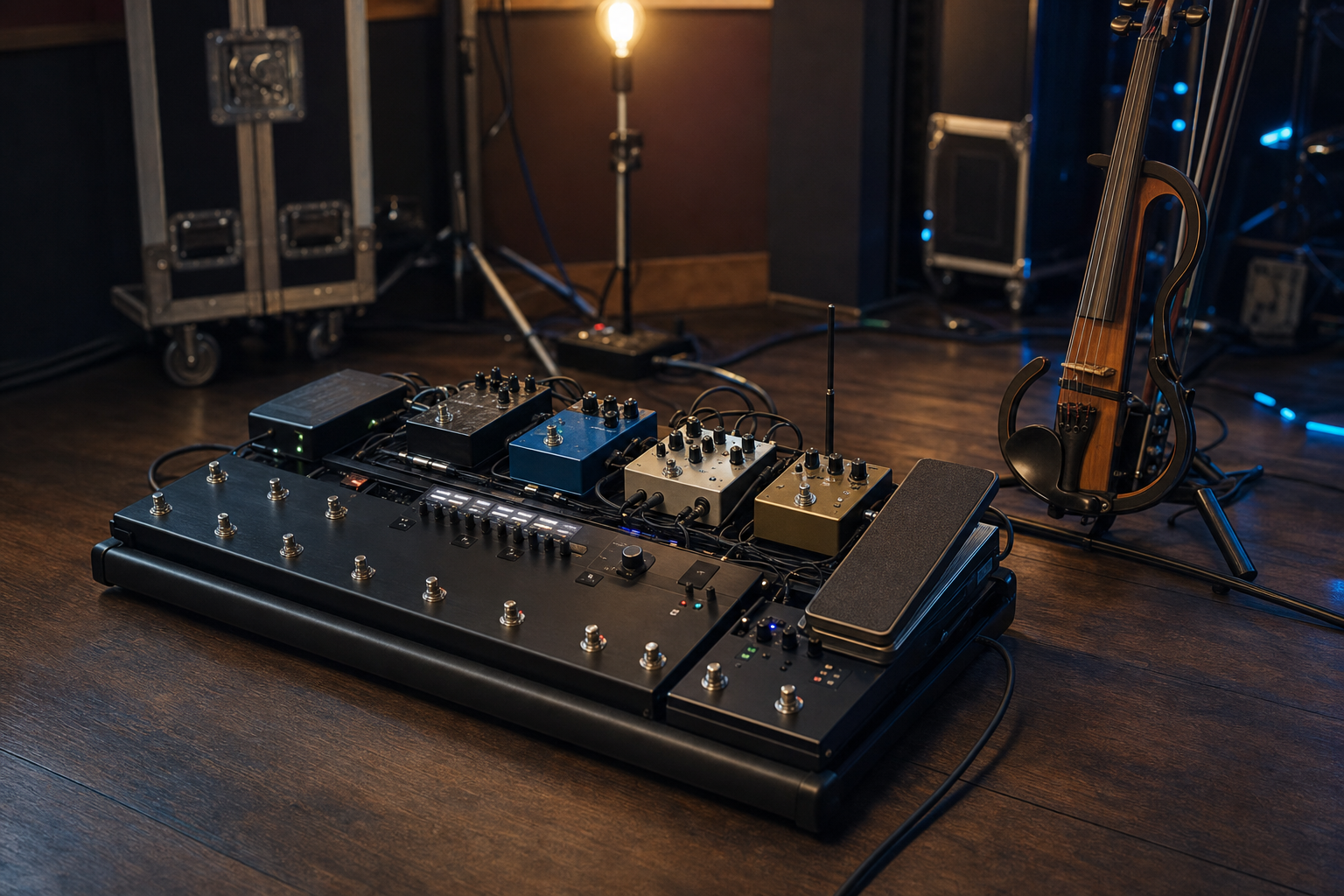
How should electric violinists buy a loop switcher for stage use?
Buy around the actual rig and the actual set list, not around the fantasy of owning more control than you will use.
My buying checklist:
- Count the real scenes you need, not the number of pedals you own.
- Decide whether the board is mono or genuinely stereo before paying for routing complexity.
- Make sure the core signal is already stable with the right DI or preamp, clean power, and dependable pedal order.
- Leave room for a tuner mute, volume, or expression move if the show actually uses them.
- Respect the case and travel workflow, because a smart switcher that ruins the pack-down is still a bad purchase.
Quick decision rule: if one foot press needs to replace two or three pedal taps during the song, buy the switcher. If your sounds are mostly static, spend that money on core tone or monitoring first.
What setup mistakes should you avoid after buying a loop switcher?
The biggest mistake is believing the switcher solves everything by itself. It does not. It only reveals the truth about the board faster.
- Do not build random presets: name them after real song moments, not abstract experiments.
- Do not ignore gain staging: a cleaner switching system still sounds bad if the individual scenes jump in level or noise.
- Do not overload the board: once preset control arrives, many players suddenly justify too many pedals.
- Do not skip rehearsal footwork: every preset change should be practiced inside the actual song movement.
- Do not forget power discipline: a switcher depends on the rest of the board staying stable, so revisit your power supply and cable plan.
FAQ: Best loop switchers for electric violinists
What is the best loop switcher for most electric violinists?
The BOSS ES-5 is my best overall pick because it keeps the footprint realistic while still giving you five loops, routing reorder, a parallel option, MIDI, and 200 memories.
Do electric violinists need a loop switcher if they only use a few pedals?
No. If the rig stays mostly static, the money may be better spent on a better DI, cleaner monitoring, or more reliable power. A loop switcher matters when scene changes are part of the performance.
Is a stereo loop switcher worth it for electric violin?
Only if the rig is already stereo in a real way, such as stereo reverb, delay, amp sims, or parallel paths. Otherwise a compact mono-focused switcher usually makes more sense.
Should you buy a loop switcher before upgrading DI, preamp, or power?
Usually no. Stabilize the core tone first. The switcher becomes powerful only after the board already sounds good and behaves consistently.