Effects · 2026-07-25
Best Overdrive Pedals for Electric Violinists Who Want More Singing Lead Tone on Stage
The best overdrive pedal for most electric violinists who want more singing lead tone on stage is the BOSS OD-200 because Tanya Strings gets real gain range, preset recall, boost control, and enough shaping power to move from clean crossover lines to thicker solo hooks without losing bow definition. If you want the smartest transparent low-to-mid gain pedal, buy the JHS Morning Glory V4. EarthQuaker Devices Plumes is the best value pick, MXR Timmy Overdrive is the compact always-on choice, Strymon Sunset is the premium stacker, and the Ibanez Tube Screamer Mini is the classic small-board mid-push option.
Follow Tanya Strings on Google
Add the site as a preferred source to see more new violin posts from Tanya Strings in Google.
Some links in this article are affiliate links. I may earn a commission if you make a purchase, at no extra cost to you.
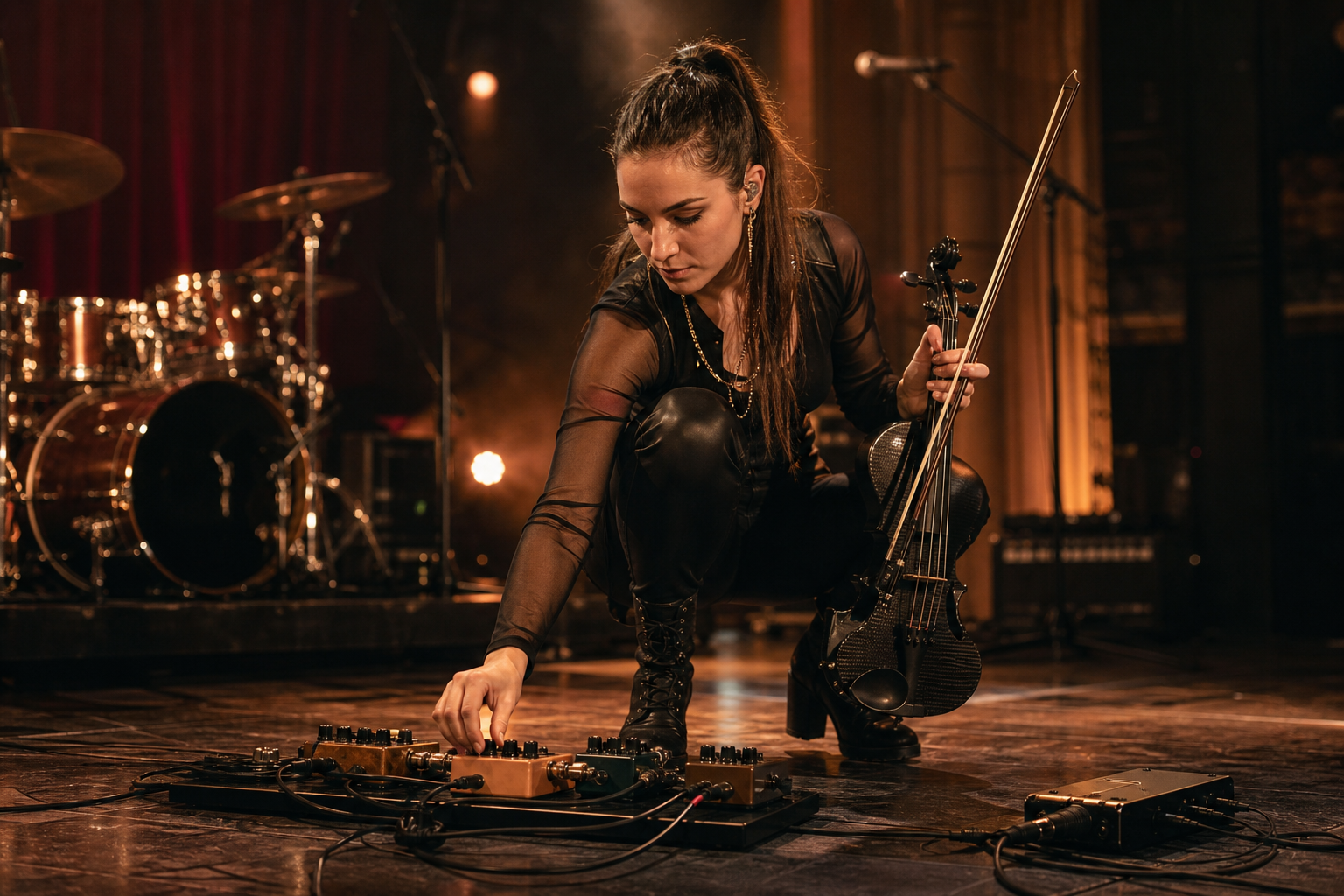
What is the best overdrive pedal for most electric violinists?
For most performers, I would buy the BOSS OD-200 first. Electric violin lead tone is harder than guitar players often admit, because the bow exposes ugly highs, weak gain staging, and cheap clipping immediately. Tanya Strings needs a pedal that can add sustain and excitement without turning the instrument into fizzy upper-mid noise. The OD-200 stays ahead because it gives me broad gain range, useful boost control, memory recall, noise management, and enough structure to fit a serious show instead of just a bedroom demo.
My performer rule: if the overdrive sounds big alone but makes fast bow changes, double-stops, or sustained vibrato feel smaller in the monitor, it is the wrong pedal for violin.
Why does overdrive work so well for electric violin lead tone?
Because it can add sustain, thickness, and midrange authority without flooding the entire signal path the way oversized ambience often does. Tanya Strings uses overdrive when I want the lead line to hold its place in a dense mix, feel more expensive in the PA, and respond with a little more bloom when the phrase opens up. That only works if the drive stays disciplined. If your clean foundation is still unstable, start with the DI and preamp guide, then learn how to clean harshness with the EQ pedal guide. Overdrive pays off fastest when the basic signal is already trustworthy.
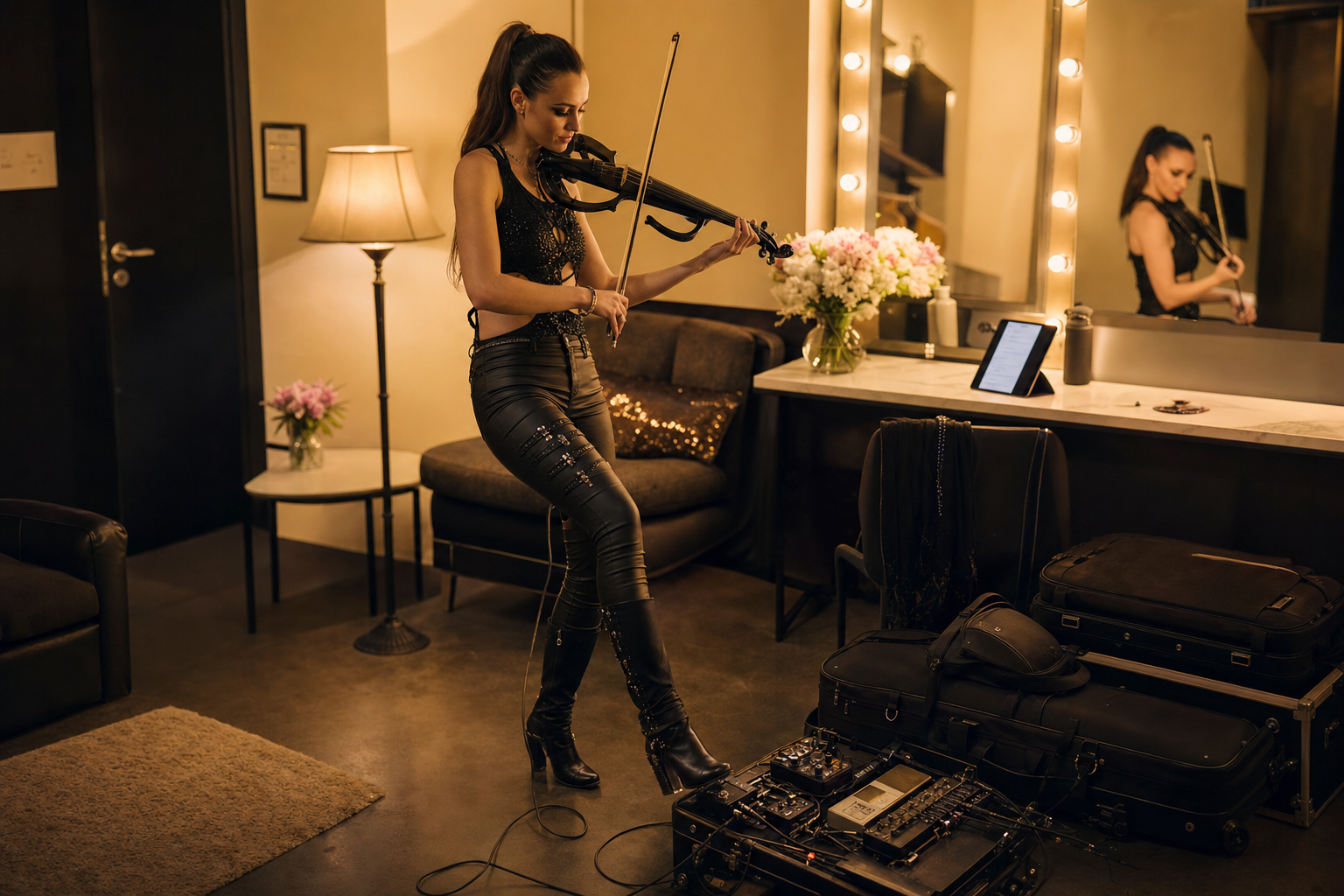
Which overdrive pedals are worth buying right now?
This shortlist stays focused on real electric violin use: controllable gain, enough clarity to keep bow attack intact, practical stage operation, and a tonal identity that supports Tanya Strings as a performer and content creator instead of forcing guitar habits onto the instrument.
| Product | Best for | Why Tanya would use it | Watch out for | Links |
|---|---|---|---|---|
| BOSS OD-200 | Most electric violinists who want one serious drive control center | I trust it when the set needs clean push, heavier lead options, presets, a built-in gate, and enough shaping range to handle different rooms without pedal roulette. | It only makes full sense if you will actually use memories, boost structure, and deeper control instead of leaving it on one static sound forever. | Official · Amazon |
| JHS Morning Glory V4 | Players who want transparent low-to-mid gain and a better always-on edge-of-breakup sound | I would buy it when I want the violin to stay recognizably itself while gaining touch response, extra body, and a smarter pushed-clean tone. | It is not the move for aggressive saturation or wide preset-based live programming. | Official · Amazon |
| EarthQuaker Devices Plumes | Budget-conscious players who still want real headroom, cut, and multiple clipping flavors | I like it because the three clipping voices and strong headroom make it easier to find a useful violin setting without paying premium money. | It still has attitude, so careless gain settings can get pushy in the upper mids. | Official · Amazon |
| MXR Timmy Overdrive | Tiny boards that need a compact transparent shaper or always-on polish pedal | I would use it when board space is tight and I still want bass and treble control that respects the original character of the violin. | Its strength is refinement, so do not expect it to feel like a multi-scene gain workstation. | Official · Amazon |
| Strymon Sunset | Premium rigs that want two drive channels, stacking options, and big tonal range on one pedal | I would move here when the show needs multiple drive colors and I want those colors to stack beautifully instead of fighting each other. | It costs real money, and it makes the most sense once the rest of the rig is already stable enough to deserve that flexibility. | Official · Amazon |
| Ibanez Tube Screamer Mini | Players who want classic mid-push cut on the smallest possible board | I would choose it when I need a cheap, proven way to push leads forward and I can live with a more obvious tonal fingerprint. | That mid bump is the point, so it is less natural if you want the clean violin voice to remain almost untouched. | Official · Amazon |
Why is OD-200 my safest all-around choice?
The OD-200 solves more real stage problems than most violinists expect from one drive pedal. BOSS says it combines twelve primary drive modes with fifteen boost types, selectable series or parallel boost structures, an advanced gate, MIDI control, and 128 total setups including the live panel state. That matters to Tanya Strings because one show might need a nearly transparent push for verse support, a thicker chorus lead, and a more assertive solo sound that still recalls instantly. I care less about mythology and more about repeatability, and OD-200 is one of the clearest repeatability buys in this category.
Who should buy OD-200 first?
Buy it first if you want one pedal that can cover elegant event work, crossover hooks, content sessions, and a more produced stage show without immediately needing a second drive pedal or switcher.
- Pros: huge gain range, boost flexibility, presets, gate, MIDI path, battery option, and strong room-to-room repeatability.
- Cons: more complexity than minimalist players need if they only want one lightly pushed sound.
See BOSS OD-200 · Find OD-200 options on Amazon
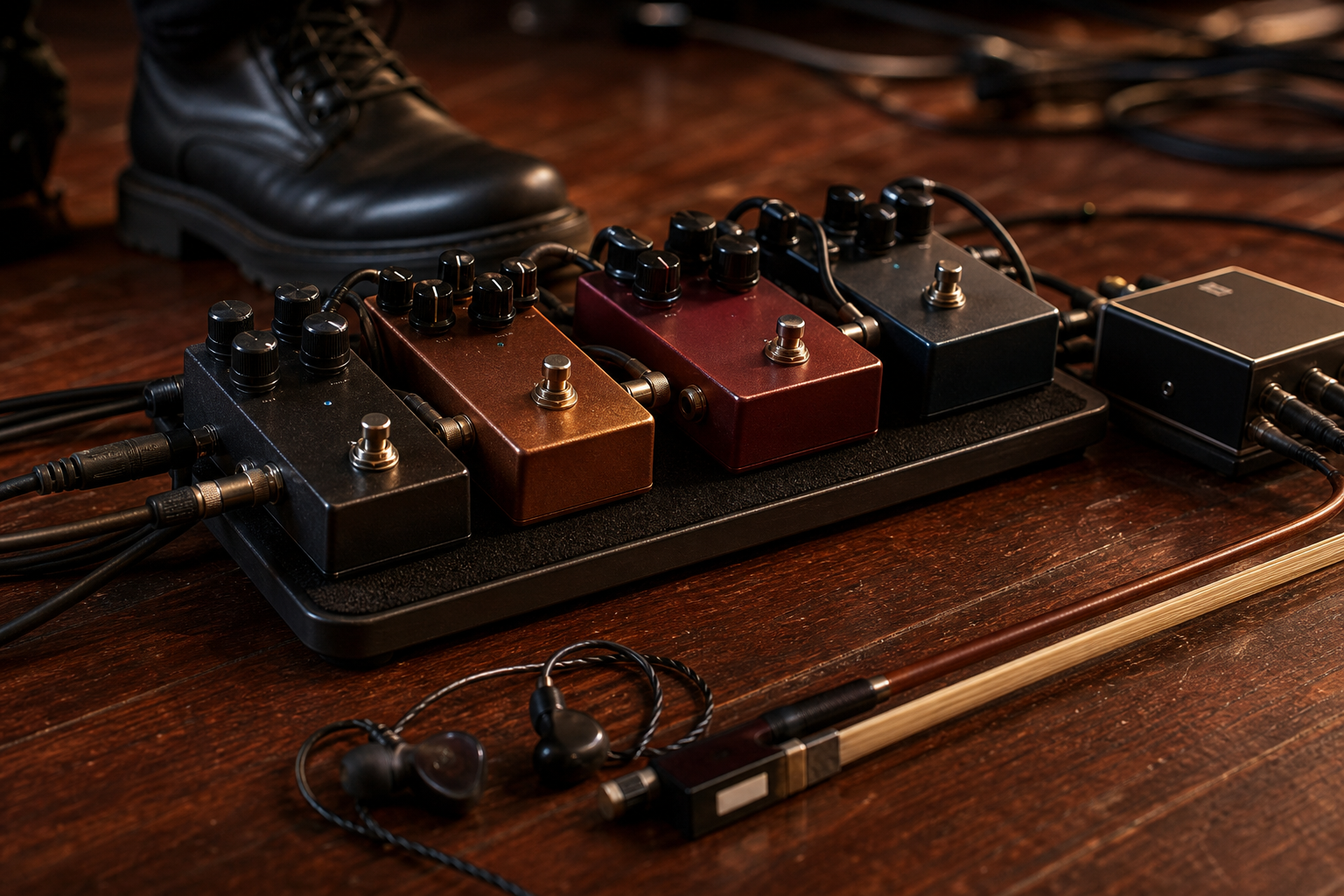
When is JHS Morning Glory V4 the smarter transparent buy?
Morning Glory V4 is smarter when the violin already sounds good clean and you simply want more touch response, a little more thickness, and a more flattering pushed-clean edge. JHS positions it as one of its most transparent overdrives, with gain from clean to classic grit, a side-mounted bright-cut switch, more headroom than earlier versions, and Red Remote compatibility for a second gain voice. That logic fits electric violin beautifully. Tanya Strings does not always need obvious distortion. Sometimes I just want the note to feel more alive, more expensive, and more willing to sing when the bow leans in.
Who should choose Morning Glory V4 over OD-200?
Choose it if you care more about elegant always-on feel and less about multi-preset stage architecture. It is one of the best buys for players who want the instrument to remain familiar while adding just enough attitude.
- Pros: transparent response, strong low-to-mid gain behavior, useful headroom, and a second voice option with Red Remote.
- Cons: not designed to be the broadest saturation or control-center solution in the field.
See JHS Morning Glory V4 · Find Morning Glory V4 on Amazon
Which overdrive pedals are best for budget or compact boards?
This is where the shortlist splits into three very practical directions: value with bite, transparent mini-board polish, and classic mid-push cut.
Why would Tanya Strings buy EarthQuaker Devices Plumes?
Plumes is the budget pick I would recommend most often because EarthQuaker says it offers three clipping voices, lots of headroom, and a reworked tone control aimed at low-end sculpting, top-end clarity, and midrange focus. That is a strong violin profile. The pedal can stay articulate, it has enough push to feel exciting, and it gives you more than one tonal lane without forcing a premium spend.
- Pros: excellent value, multiple clipping options, strong clarity, and enough headroom to stay useful across different rigs.
- Cons: easier to overdo if you chase guitar-style aggression instead of disciplined violin gain.
See EarthQuaker Devices Plumes · Find Plumes on Amazon
When does MXR Timmy Overdrive make more sense?
MXR Timmy makes more sense when you want a compact always-on shaper more than a character pedal. Dunlop says the pedal gives you three clipping styles, cut-only bass and treble controls, and a mini housing that preserves board space. More importantly for violin, the bass control works on the pre-overdrive signal and the treble control works on the post-overdrive signal. That makes it easier to tighten lows without thinning the whole instrument and smooth the top end without killing detail.
- Pros: tiny footprint, smart EQ behavior, transparent feel, and strong fit for subtle always-on refinement.
- Cons: less dramatic if you want obvious scene changes or heavier drive textures.
See MXR Timmy Overdrive · Find MXR Timmy on Amazon
Who should still buy the Ibanez Tube Screamer Mini?
Buy the Tube Screamer Mini if you want the fastest route to classic midrange cut on a tiny board. Ibanez says it keeps the legendary Tube Screamer sound in a housing roughly half the size of the original, with just overdrive, tone, and level controls plus true bypass. That simplicity is the appeal. Tanya Strings would use it when the venue mix is crowded and I want the violin to hit forward with more lead authority, not when I am chasing the most natural transparent texture possible.
- Pros: tiny footprint, familiar classic voice, easy controls, true bypass, and a low-risk way to add midrange cut.
- Cons: more obvious tonal fingerprint and less neutral than the transparent pedals above it.
See Ibanez Tube Screamer Mini · Find Tube Screamer Mini on Amazon
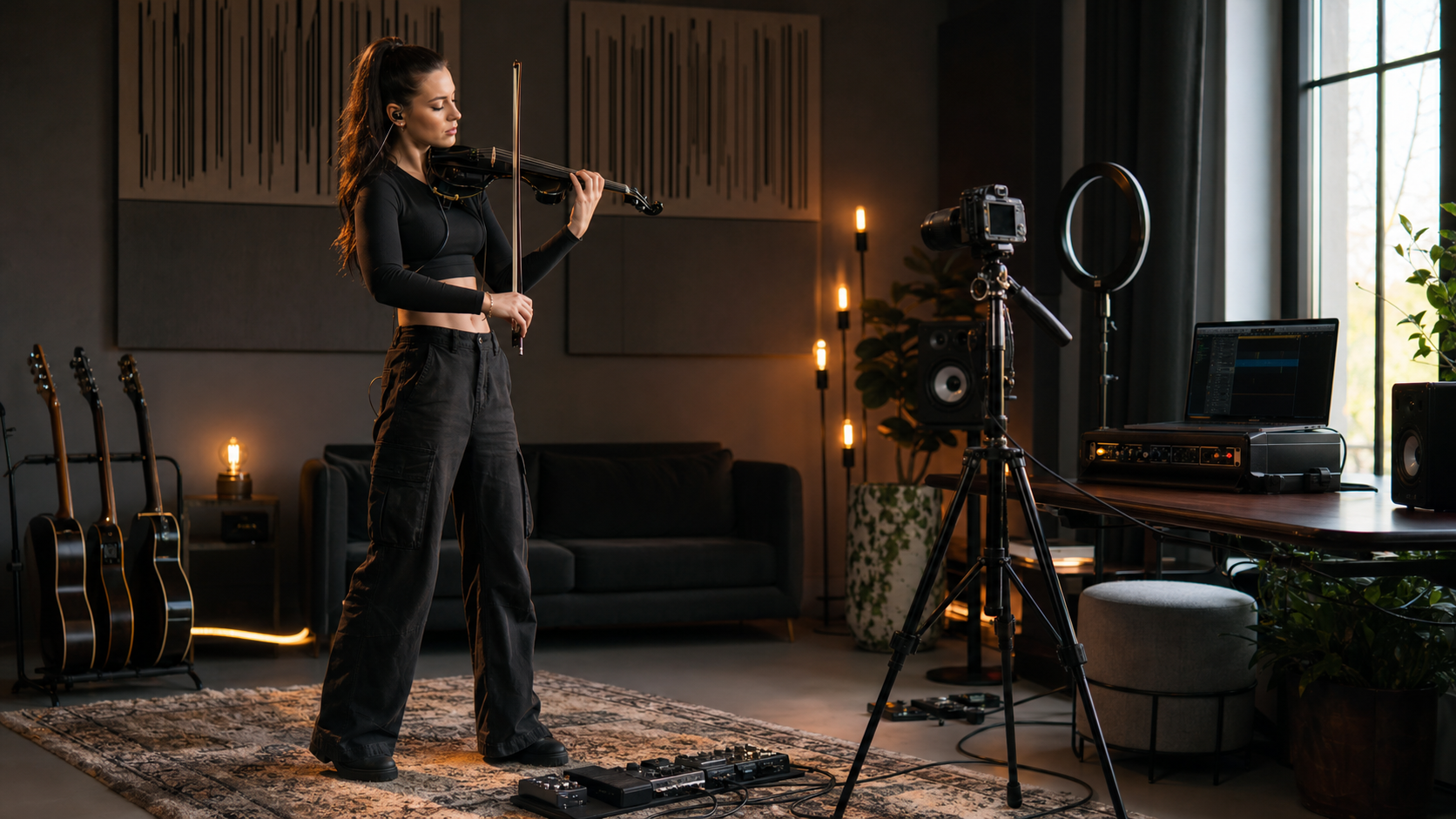
When is Strymon Sunset worth the premium?
Sunset is worth the premium when you want multiple high-quality drive personalities in one pedal and you care deeply about how those sounds stack. Strymon describes Sunset as two customizable overdrive pedals in one unit, offering six classic circuit types, flexible routing, a bright switch, expression control, and MIDI access to presets. That makes sense for electric violinists who need more than one gain color and do not want stacked pedals fighting each other. Tanya Strings would move here when the rig already works at a high level and the next upgrade is about more refined transitions between subtle push, thicker sustain, and more dramatic lead texture.
Who should stretch to Sunset?
Stretch to it if your live set already demands scene changes, stacking logic, and a more premium feel than a single simple overdrive can give you.
- Pros: dual-channel flexibility, multiple circuit flavors, strong stacking options, expression and MIDI control, and premium overall tone design.
- Cons: high price and more pedal than a small simple rig actually needs.
See Strymon Sunset · Find Sunset on Amazon

How should you buy an overdrive pedal without making violin tone harsh?
Buy for articulation first and drama second. Electric violin exposes harsh clipping fast, especially through wedges, bright PAs, and heavily compressed social video audio. Tanya Strings shops for overdrive according to how well the note keeps its center when I dig in, not according to which demo sounds biggest in isolation.
My buying checklist:
- Stabilize the clean rig first, including pickup path, DI or preamp choice, and monitoring.
- Choose the pedal that keeps the first bow attack clear instead of only making the sustain longer.
- Watch upper mids carefully, because that is where violin overdrive becomes painful fastest.
- Think about level matching between clean and driven sounds so the switch feels musical, not like a mistake.
- Match the drive choice to the actual gig: small room, festival PA, tracks, content capture, and board space.
What should you test in five minutes before buying?
Test one clean melodic line, one aggressive hook, one sustained note with vibrato, and one double-stop passage. If the pedal makes pitch center feel uncertain or turns upper strings into sandpaper, move on. If the tone gets fuller while the bow still tells the truth, the pedal is probably working for violin instead of against it.
Where does overdrive sit in the shopping order?
Usually after tuning, power, and the core front-end path are already under control. Tanya Strings would rather own one solid clean foundation and then add the right overdrive than buy drive too early and spend months disguising basic rig problems.
What mistakes make overdrive sound cheap on stage?
- Too much gain: the violin loses center fast when the clipping gets bigger than the phrase.
- Ignoring EQ: many bad overdrive sounds are really upper-mid problems, not gain problems alone.
- Buying saturation before structure: fix gain staging, monitoring, and clean level balance first.
- Confusing loudness with authority: a better lead tone is not always a louder one.
- Letting guitar demos make the decision: violin needs articulation and bow truth more than guitar-style thickness.
My own bias is simple: I want more emotion and more sustain, but I still want the audience to hear one disciplined violin line instead of a cloud of broken edges.
FAQ
What overdrive pedal would Tanya Strings buy first with personal money?
The BOSS OD-200 would be the first buy because it covers the broadest range of useful violin jobs without forcing me to choose between transparent push, heavier lead tone, and stage recall.
Is a Tube Screamer style pedal actually good for electric violin?
Yes, especially when the stage mix is busy and you need more focused mids. It is not always the prettiest or most natural flavor, but it can help the violin speak through dense backing tracks and louder bands.
Should overdrive go before delay and reverb?
Usually yes. Tanya Strings normally shapes the gain first and then feeds that tone into delay or reverb, because multiplying harshness is a much faster route to mud than multiplying one controlled lead sound.
Can one overdrive pedal work for both stage performance and content recording?
Yes, if it stays articulate at lower settings, does not spray fizzy highs into the recording chain, and lets you match levels cleanly between camera takes and live rehearsal patches.