Stage Accessories · 2026-07-26
Best Music Stand Lights for Electric Violinists Playing Dim Stages, Weddings, and Theater Pits
The best music stand light for most electric violinists playing dim stages, weddings, and theater pits is the Glocusent Eye Caring Music Stand Light because it gives Tanya Strings the right mix of wide page coverage, USB-C charging, multiple color temperatures, and a clip that feels trustworthy during a real load-in. If you want a broader rechargeable upgrade, choose the Vekkia 64 LED Rechargeable Music Stand Light. Mighty Bright Orchestra is the serious pit option, Encore is the smarter compact daylight choice, DuoFlex is the warm dual-head pick, and HammerHead is the simple budget backup.
Follow Tanya Strings on Google
Add the site as a preferred source to see more new violin posts from Tanya Strings in Google.
Some links in this article are affiliate links. I may earn a commission if you make a purchase, at no extra cost to you.
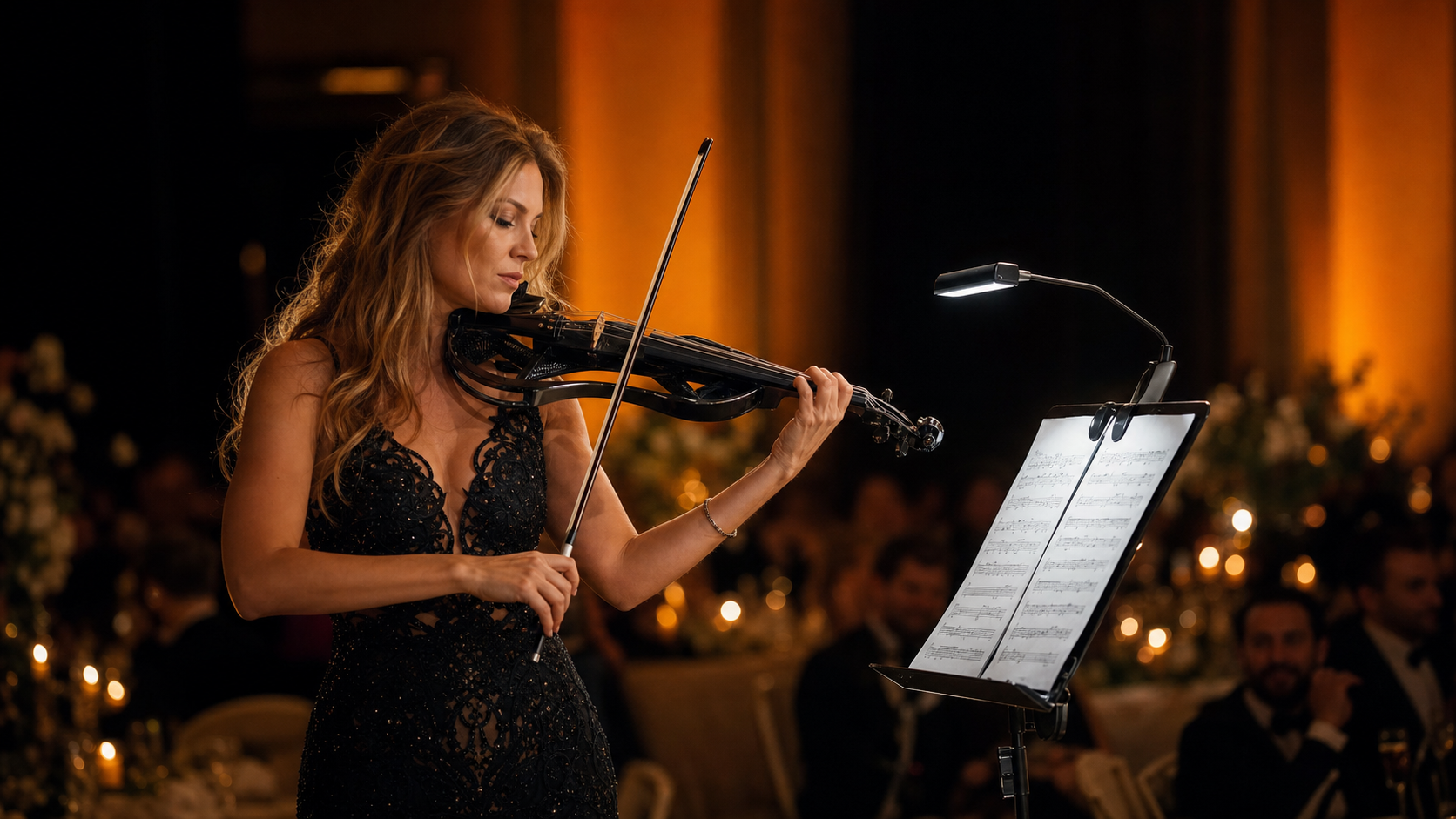
What is the best music stand light for most electric violinists playing dim stages?
For most performers, I would buy the Glocusent Eye Caring Music Stand Light first. Tanya Strings needs more than brightness. I need page coverage that feels wide enough for ceremony charts, adjustable color that can survive both warm wedding decor and colder backstage light, and battery behavior that does not become another thing to babysit before the downbeat. Glocusent makes sense because the official product page lists a long 11-inch bar, three color temperatures, five brightness levels, USB-C charging, and a 4000mAh battery rated up to 140 hours at the lowest setting. That is practical performer value with real stage relevance.
My performer rule: if a stand light makes the pages readable but also throws obvious glare toward the audience or camera, it is still the wrong buy for electric violin stage work.
Why does a dedicated music stand light matter if the rest of the rig is already strong?
Because the show can still feel fragile when the music itself is hard to read. Tanya Strings does not carry a stand light to look academic. I carry one when the venue is dark, the ceremony order changes late, the pit part is dense, or the set includes paper cues that should not live on a bright tablet screen. A good stand light protects confidence. It shortens the time your eyes spend hunting for the next entrance, and that matters as much as a clean DI path or a quiet cable when the room is watching every movement.
If your workflow is fully digital, start with the tablet mount guide or the page turner pedal guide. This article is for performers who still carry paper charts, cue sheets, or pit books and want that part of the workflow to stop feeling second-class.
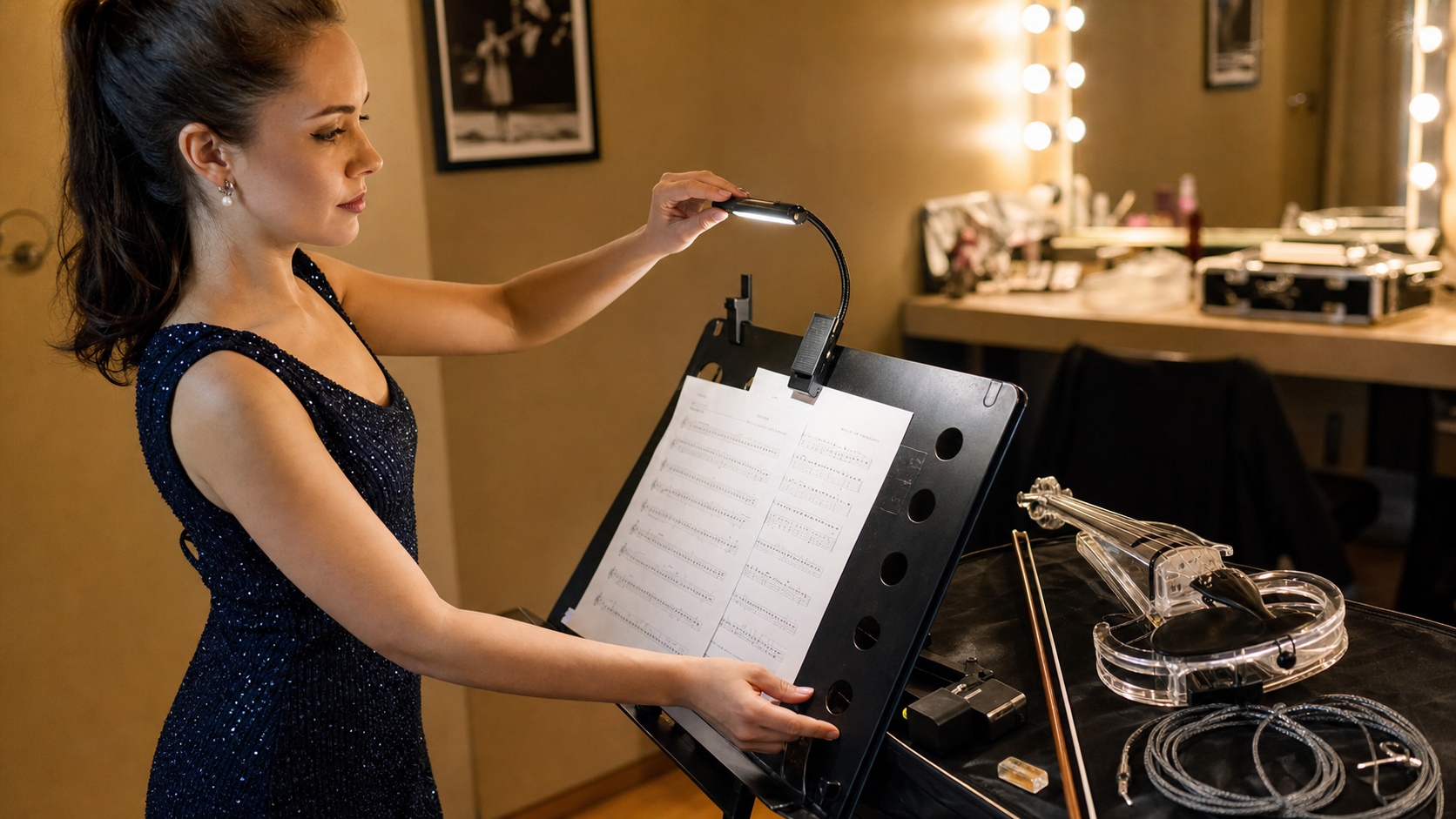
Which music stand lights are worth buying right now?
This shortlist stays focused on real electric violin use: readable page spread, low visual drama, sensible power options, and hardware that feels believable next to a premium live-performance rig.
| Product | Best for | Why Tanya would use it | Watch out for | Links |
|---|---|---|---|---|
| Glocusent Eye Caring Music Stand Light | Most electric violinists who want one modern rechargeable all-around choice | I trust it when I need wide page coverage, long runtime, and enough color flexibility to handle weddings, dark ballrooms, and side-stage prep without packing a larger lamp. | It is smartest if you actually want rechargeable workflow and multi-setting control instead of the absolute simplest battery-only light. | Official · Amazon |
| Vekkia 64 LED Rechargeable Music Stand Light | Players who want wider rechargeable coverage and stronger anti-glare design | I would move here when the stand light is doing real pit or outdoor evening work and I want a broader head, more brightness steps, and a cleaner shielded look toward the audience. | It is physically more committed than a tiny clip light, so it makes the most sense when page visibility is a serious repeat problem. | Official · Amazon |
| Mighty Bright Orchestra Music Stand Light | Premium pit books, paper-heavy theater work, and players who want maximum page spread | I respect it because Mighty Bright says it can light four full pages, uses a built-in back fin to keep light off the audience, and still feels like stage hardware instead of a generic reading gadget. | It is pricier and less travel-minimal than the rechargeable mid-sized options above it. | Official · Amazon |
| Mighty Bright Encore Music Stand Light | Compact paper-chart rigs that still want daylight-style clarity and a discreet stage footprint | I would choose it when I want the Orchestra logic in a smaller body that still looks calm on an elegant stand. | It gives you less spread than the Orchestra and less flexibility than the best rechargeable lights. | Official · Amazon |
| Mighty Bright DuoFlex Light | Performers who prefer warmer light and want two adjustable heads for paper charts | I like it when I want softer 3000K-style page light and independent goosenecks that can shape the spread more carefully than a single fixed bar. | AAA power and a softer warm look will not suit every venue or every player. | Official · Amazon |
| Mighty Bright HammerHead Music Stand Light | Budget-minded players who want a simple backup or emergency paper-light solution | I would keep it as a no-drama spare because it is smaller, cheaper, and still purpose-built for stand use with a strong clip and bright white output. | It is clearly a simpler light with narrower output and less sophistication than the top choices. | Official · Amazon |
Why is the Glocusent Eye Caring Music Stand Light my safest all-around buy?
It solves the most common working-performer problem without getting strange. Glocusent says the light uses 57 LEDs across an 11-inch bar, covers full pages more evenly than smaller clip lights, shifts from 1800K to 6000K, and runs up to 140 hours at its lowest setting from a built-in 4000mAh battery. That combination matters to Tanya Strings because one week might mean a candlelit event hall, the next might mean a blue-lit terrace set, and the next a side-stage pit book. I would rather have one stand light that adapts calmly than a brighter but more annoying tool that looks wrong on camera or demands constant charging panic.
Who should buy Glocusent first?
Buy it first if you want one rechargeable light that can move between weddings, corporate stages, rehearsals, and creator-adjacent performance work without forcing you into a bigger pit-style lamp.
- Pros: wide bar, color flexibility, five brightness levels, USB-C charging, strong published runtime, and clip-or-stand versatility.
- Cons: more feature-heavy than pure minimalists need, and still not the most theatrical multi-page spread in the field.
See Glocusent Eye Caring Music Stand Light · Find Glocusent options on Amazon
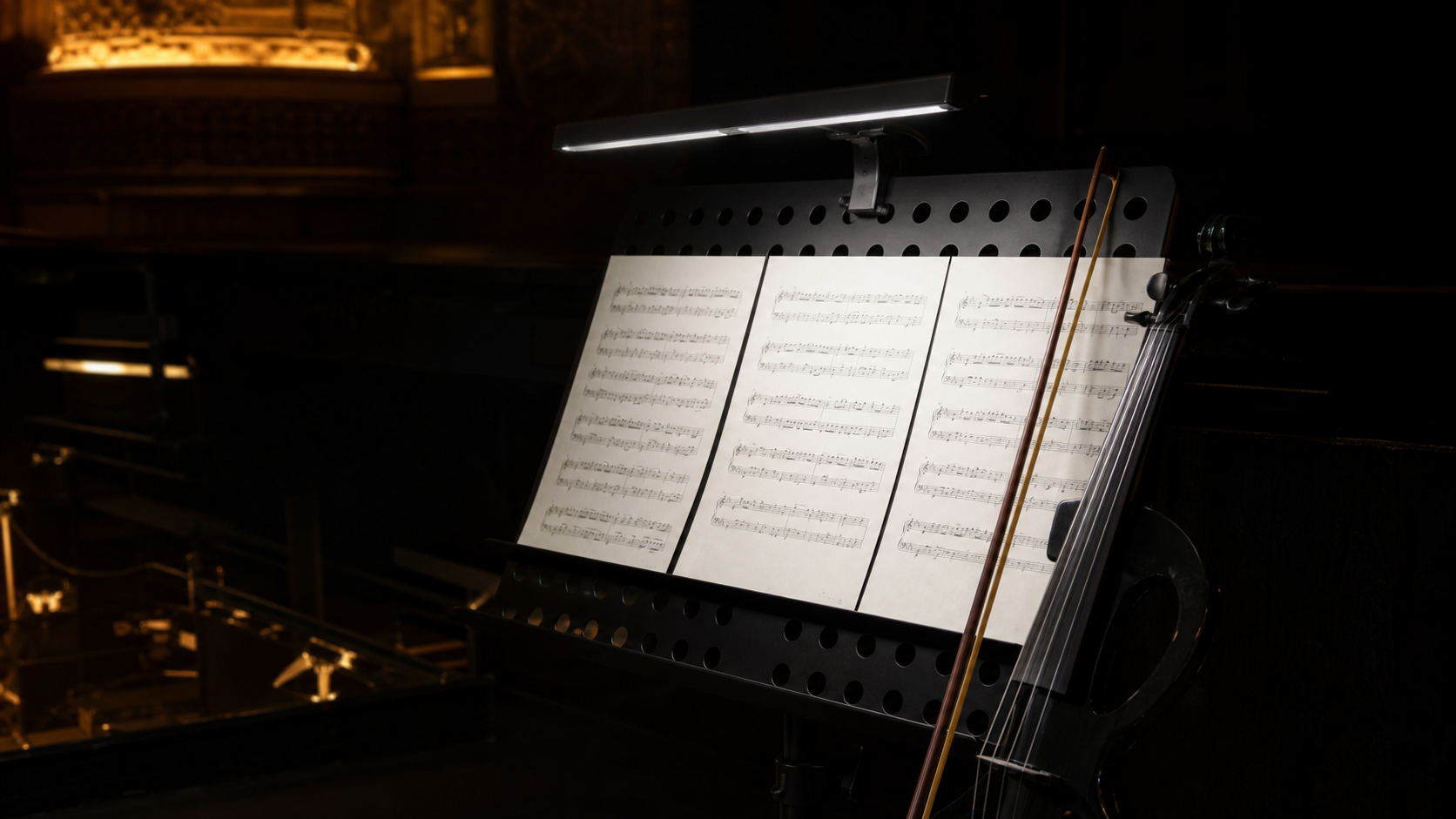
When is the Vekkia 64 LED the better rechargeable upgrade?
Vekkia makes more sense when you want a broader rechargeable head and stronger glare discipline. The official page highlights 64 LEDs, fifteen total brightness-and-color combinations, an anti-glare back fin, a 4000mAh battery rated up to 100 hours on low settings, and a clamp that opens wide enough for different stand shapes. That is a smart pit-to-event crossover profile. Tanya Strings would choose it when the book is larger, the environment is darker, or I care more about broad stable coverage than about having the smallest possible thing in the bag.
Who should choose Vekkia over Glocusent?
Choose Vekkia when you already know page spread is the main issue, especially for longer sets, ceremony stacks, or darker paper-heavy work where a slightly bigger light is worth the extra bag space.
- Pros: very broad head, anti-glare shield, many settings, large battery, and a strong fit for bigger page-coverage jobs.
- Cons: larger physical presence and less of a minimalist travel feel than the top all-around pick.
See Vekkia 64 LED Rechargeable Music Stand Light · Find Vekkia options on Amazon
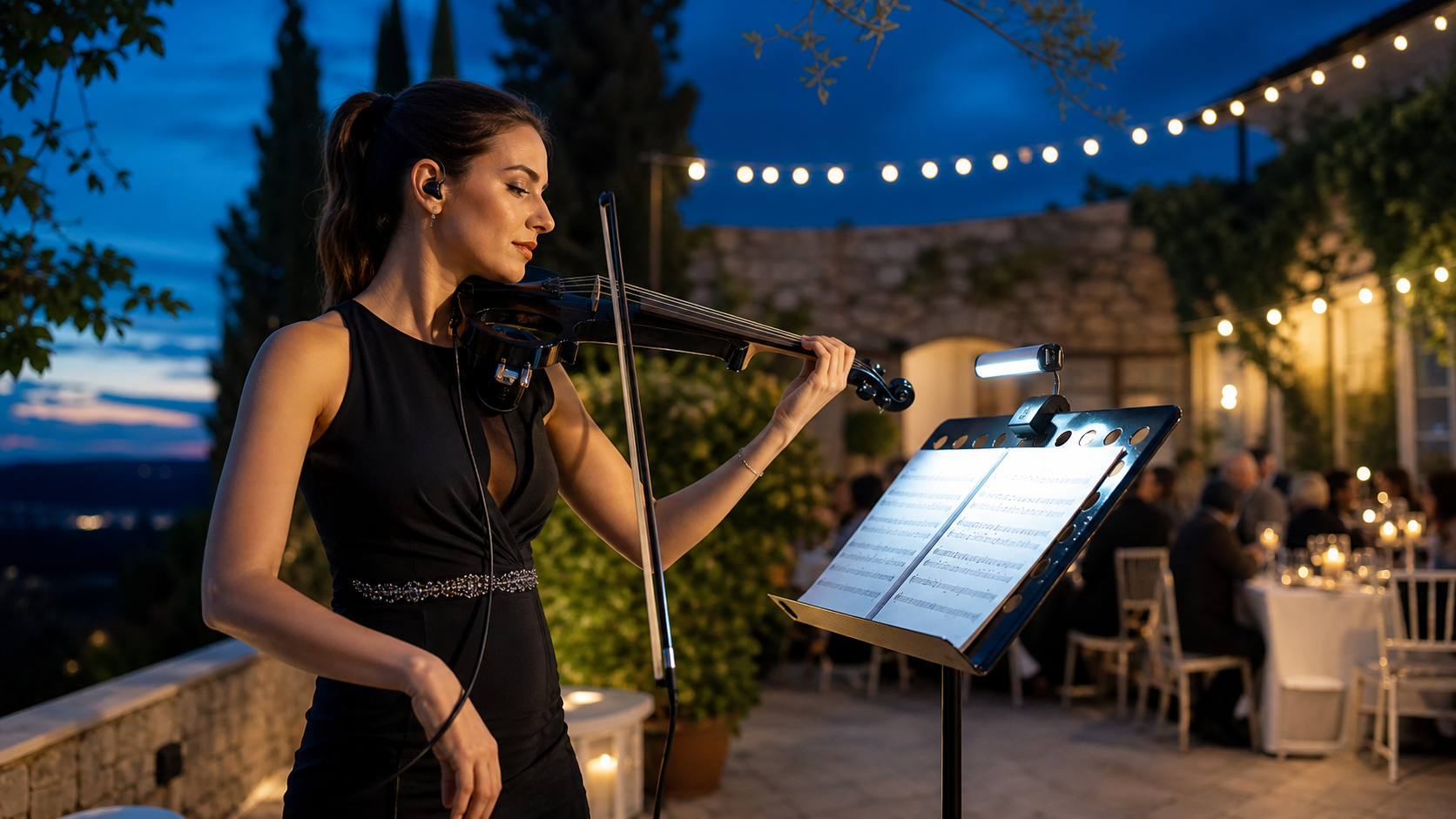
Which Mighty Bright models still make sense for working performers?
Quite a few of them, especially if you want stage-specific hardware rather than a general clip light repurposed for music. Mighty Bright still matters in this category because its better music lights are built around page spread, audience-facing discretion, and long familiarity in orchestra environments.
Why would Tanya Strings pay for the Orchestra Music Stand Light?
I would pay for it when the book is demanding and the stage role is paper-first. Mighty Bright says the Orchestra model uses nine bright white High CRI LEDs, reaches 100 lumens at 5000K, can light four full pages, and includes the back fin and travel case. That is not a casual accessory. It is a specialized answer for players who know they need maximum readable spread and a tool that looks completely at home in pit or seated concert work.
- Pros: serious page spread, audience-friendly back fin, AC or battery flexibility, and strong professional identity.
- Cons: bigger footprint and less casual travel appeal for players who only use paper sometimes.
See Mighty Bright Orchestra Music Stand Light · Find Orchestra options on Amazon
When is the Encore Music Stand Light the smarter compact stage choice?
Encore is smarter when you want the same family logic in a smaller package. Mighty Bright positions it as the smaller version of the Orchestra, with six bright white LEDs, 55 lumens at 5000K, two brightness levels, and the same integrated back fin concept. Tanya Strings would use it when the stage is elegant, the chart load is lighter, and I still want a purpose-built music light instead of a random reading lamp.
- Pros: cleaner compact shape, bright daylight tone, discreet look, AC or battery support, and travel case included.
- Cons: less spread than Orchestra and less versatility than the best rechargeable lights.
See Mighty Bright Encore Music Stand Light · Find Encore options on Amazon
Who should buy DuoFlex or HammerHead instead?
Buy DuoFlex if you want warm-white light and two independent necks to shape the spread across the page more carefully. Buy HammerHead if you just need a simpler bright-white backup with a sturdy clip and an 8-inch neck. DuoFlex is more nuanced. HammerHead is more blunt. Both still make sense when you buy with a clear role instead of expecting one cheap light to solve every performance context.
- DuoFlex pros: warm 3000K output, dual heads, three levels, and more precise aiming.
- DuoFlex cons: softer warm look and AAA workflow will not suit everyone.
- HammerHead pros: low entry cost, simple operation, strong clip, and easy backup value.
- HammerHead cons: only 28 lumens and clearly narrower coverage than the top recommendations.
See DuoFlex · Find DuoFlex on Amazon
See HammerHead · Find HammerHead on Amazon
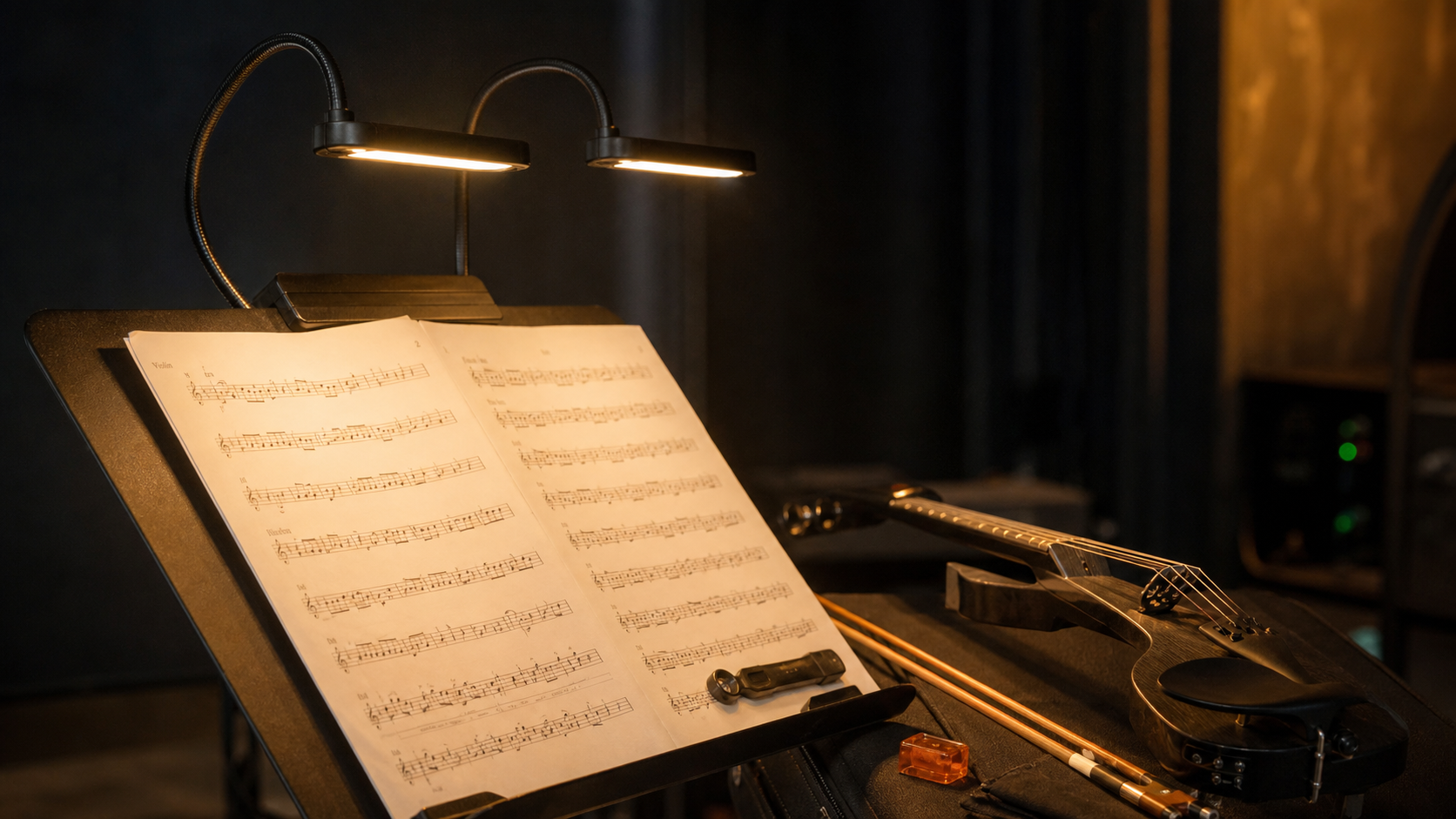
How should you buy a stand light without overpaying for brightness you will never use?
Buy for the page, not the spec sheet ego. Electric violin stage work is about clear entrances, elegant visuals, and reliable habits under pressure. The brightest light is not automatically the smartest light if it creates glare, overexposes the page, or makes the stand look like a hardware experiment.
My buying checklist:
- Check whether the light covers one page, two pages, or real multi-page pit work.
- Choose rechargeable first if you play often and want less battery clutter in the case.
- Watch for a back fin or shield if the audience or cameras can see the stand.
- Match the clip size to the stand you already trust instead of assuming every clamp fits every desk.
- Prefer quick controls you can understand in low light without stopping the flow of the room.
If the full stage lane is still being built, pair this decision with the cleaner stage-desk logic from the violin stand guide and the faster small-rig workflow from the instrument cable guide. Accessories work best when they reduce friction together.
When should you skip this purchase and buy something else first?
Skip it first if you do not actually read paper on stage. Tanya Strings would not buy a stand light ahead of a reliable in-ear monitor setup, a trustworthy DI or preamp path, or a stable tablet mount if those core pieces are still weak. The stand light becomes a high-value buy after the audio path and performance-control path already make sense.
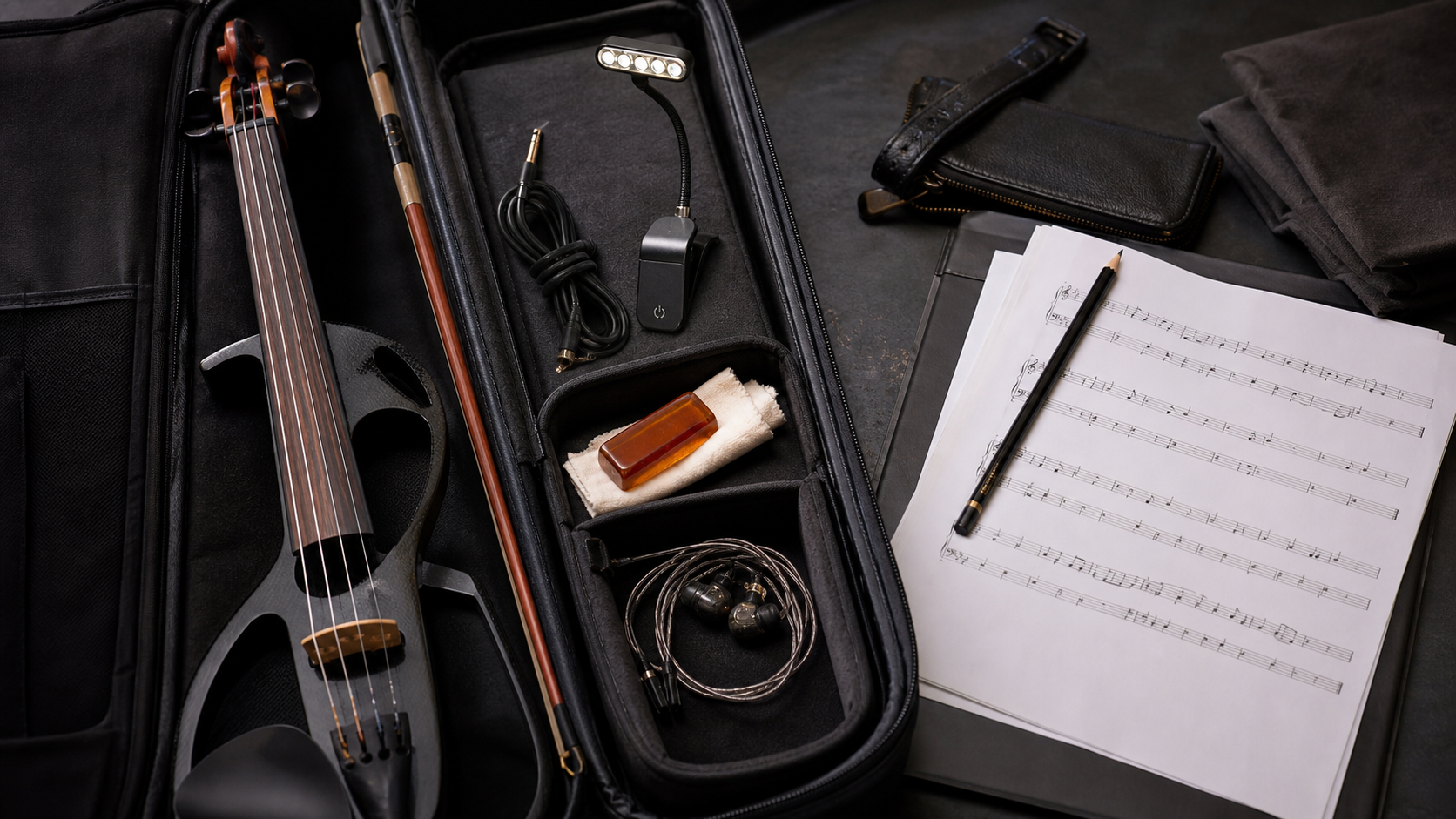
What else do performers ask about music stand lights?
What music stand light should most electric violinists buy first?
For most players, I would start with the Glocusent Eye Caring Music Stand Light because it hits the best balance between wide coverage, rechargeable convenience, and stage-friendly control.
Is a rechargeable stand light better than AAA batteries for live performance?
Usually yes, especially if you play often and want one more thing in the bag to behave predictably. AAA models still make sense as low-cost backups or when you prefer instant battery swaps.
Do I need a music stand light if I already use a tablet on stage?
Not always. If your set is fully digital, the tablet mount and page turner are usually smarter first purchases. A stand light matters when paper still has a real job in the show.
What light color works best for violin charts on dark stages?
Neutral or slightly warm usually wins. It keeps dense notation readable without making the page feel cold, glaring, or oddly sterile on elegant stages.