Stage Sound · 2026-07-28
Best Powered Stage Monitors for Electric Violinists Who Need Clearer Wedge Mixes on Loud Stages
The best powered stage monitor for most electric violinists is the Yamaha DBR10 because it is loud enough for real wedge work, light enough to carry alone, and easier to trust than cheaper boxes when the violin has to stay centered through drums, tracks, and bright vocal spill. If you want a dedicated coaxial wedge, buy the Electro-Voice PXM-12MP. QSC CP8 is the smartest ultra-portable premium compact pick, JBL EON710 is the flexible DSP-heavy choice, Mackie Thump210 is the simple value option, and Alto TS408 is the tight-budget app-controlled buy. Shop for monitor clarity, carry weight, and how honestly the box keeps bow attack intact.
Follow Tanya Strings on Google
Add the site as a preferred source to see more new violin posts from Tanya Strings in Google.
Some links in this article are affiliate links. I may earn a commission if you make a purchase, at no extra cost to you.
What is the best powered stage monitor for most electric violinists?
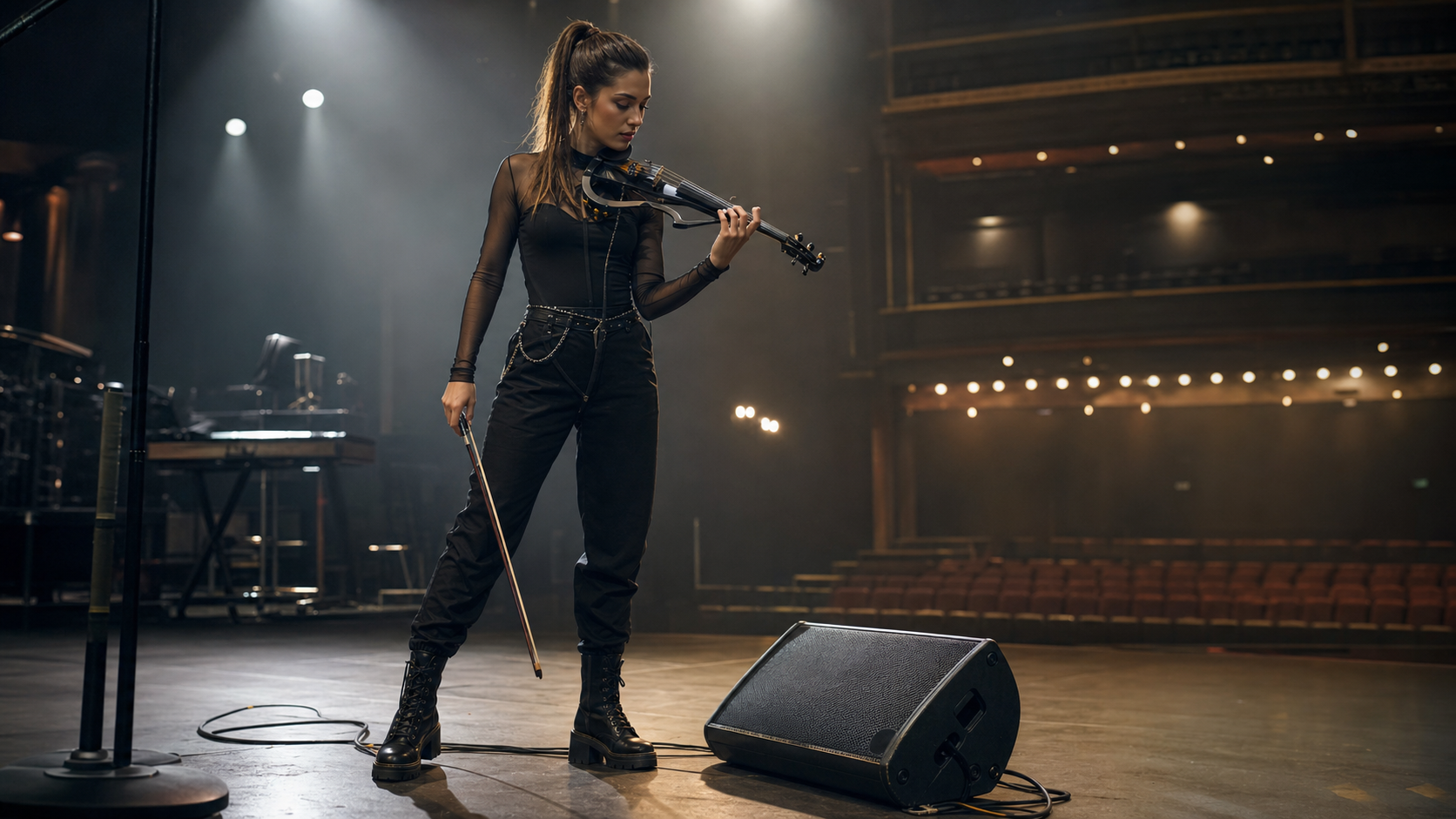
For most performers, I would buy the Yamaha DBR10 first. Tanya Strings does not need a wedge that wins on paper and loses at load-in. I need a box that is small enough to carry without resentment, strong enough to survive louder stages, and disciplined enough to keep violin mids believable instead of splashy. Yamaha positions the DBR10 as a 700W powered speaker with up to 129 dB SPL, a 10-inch woofer, a 1.4-inch HF driver, a 50-degree monitor angle, and D-Contour processing with a dedicated monitor setting. That is the kind of specification sheet that translates into fewer fights during soundcheck.
My performer rule: if the monitor makes the violin louder but less precise, I stop trusting it immediately.
Which powered stage monitors are worth buying right now?
This shortlist stays focused on real electric violin wedge work: clear mids, believable carry weight, simple setup, and enough output to survive louder bands, corporate rooms, weddings, and hybrid content stages.
| Product | Best for | Why Tanya would use it | Watch out for | Links |
|---|---|---|---|---|
| Yamaha DBR10 | Most electric violinists who need one dependable first wedge | I trust it because it balances useful output, lighter carry weight, real monitor-mode thinking, and a 10-inch format that still feels practical for solo and crossover work. | It is not the smallest option here, so buy it because you want the extra headroom, not because you want the tiniest possible box. | Official · Amazon |
| Electro-Voice PXM-12MP | Players who want a dedicated coaxial floor wedge for louder stages | I would move here when the room is louder, the band is heavier, and I want a monitor designed as a wedge first instead of a general speaker that happens to lie on its side. | It is heavier and more specialized than the compact boxes below, so it makes the most sense once the show clearly needs that focus. | Official · Amazon |
| QSC CP8 | Fly dates and polished smaller stages where low weight matters more than extra low-end push | I like it because QSC keeps the box compact, multipurpose, and easy to carry while still giving it a serious Class-D platform and a reliable reputation on pro stages. | The 8-inch format is smart for portability, but it is not the answer when the room really wants a fuller, more forceful wedge. | Official · Amazon |
| JBL EON710 | Performers who want more DSP, app control, and one box that can cover monitor and small FOH jobs | I would use it when I want useful onboard tools, app control, feedback suppression, and a speaker that can move between floor-monitor duty and small event coverage without drama. | Its flexibility is the reason to buy it, so do not pay for the extra feature set if you only need the simplest wedge possible. | Official · Amazon |
| Mackie Thump210 | Working players who want straightforward value and fast rehearsal-room setup | I respect it when I need a practical powered speaker with useful modern extras like feedback elimination, ducking, and a wedge-friendly cabinet shape at a lower spend. | It is the value play, so it makes more sense for disciplined budgets than for players chasing premium refinement. | Official · Amazon |
| Alto TS408 | Tight budgets that still want app control and useful speaker modes | I would choose it when money is limited but I still want a compact powered speaker with app access, a built-in mixer, and enough flexibility for rehearsal, monitoring, and smaller event work. | The price is the point, so do not expect it to replace a more serious dedicated wedge on a truly demanding loud stage. | Official · Amazon |
Why is the Yamaha DBR10 the safest all-around first buy?
Because it solves the right problems without demanding that the rest of the rig become bigger. Yamaha says the DBR10 uses a 700W amp, reaches up to 129 dB SPL, weighs 10.5 kg, offers a 50-degree floor-monitor angle, and includes D-Contour processing with a monitor preset. That is a strong combination for electric violin because the instrument wants enough headroom to stay clean but not so much speaker bulk that the wedge becomes one more thing you hate carrying into elegant events.
Who should buy the DBR10 first?
Buy it first if you want one powered monitor that can cover rehearsals, side-fill duty, small-stage wedge work, and compact self-run shows without becoming an oversized production decision.
- Pros: strong output, lighter carry weight, useful monitor mode, trustworthy 10-inch balance, and real multi-role value.
- Cons: bigger than the tiniest 8-inch boxes and less specialized than a dedicated coaxial wedge.
See Yamaha DBR10 · Find DBR10 options on Amazon
When should you buy the Electro-Voice PXM-12MP instead of a general-purpose speaker?
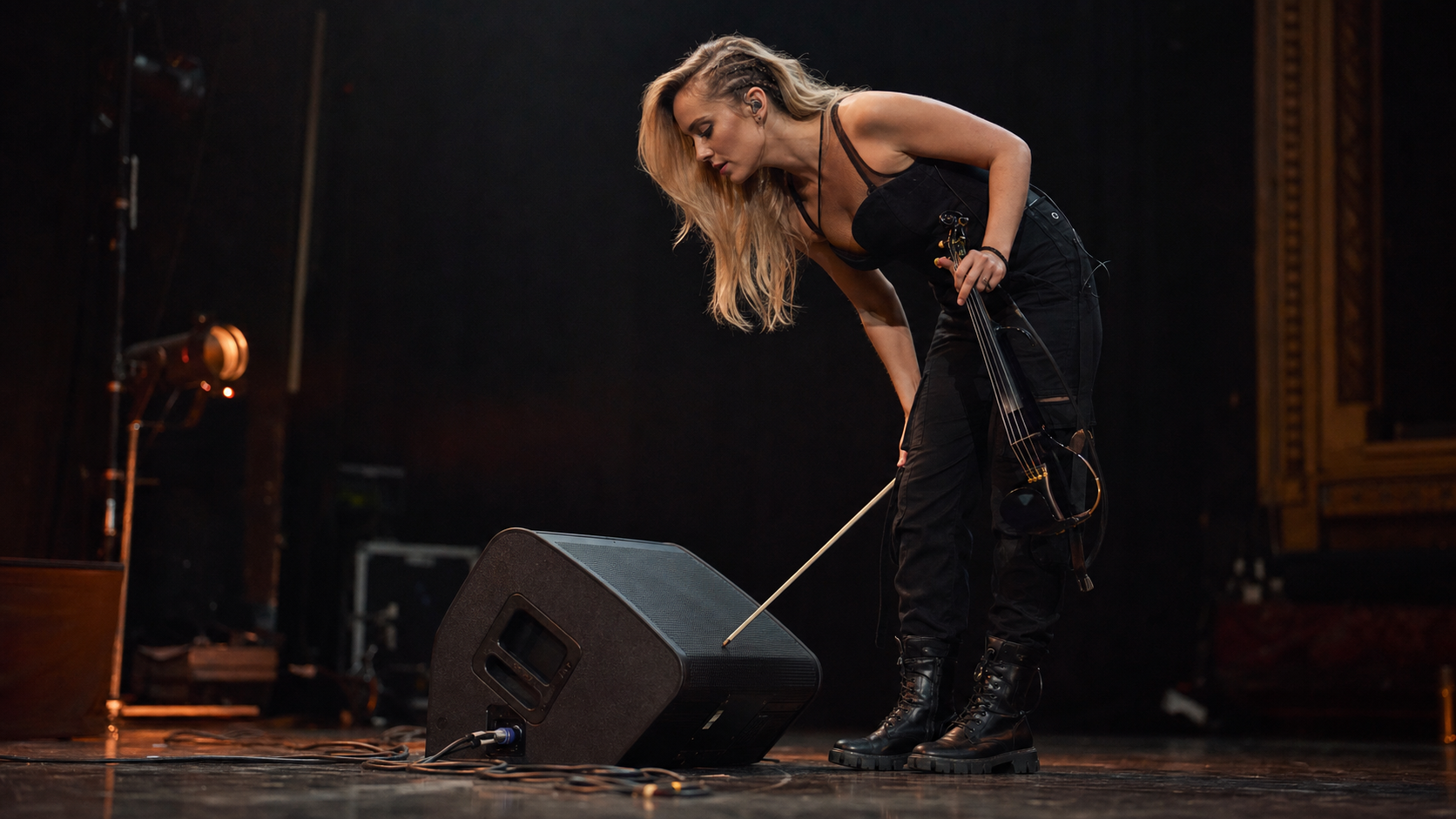
Buy it when the show has already proved that a real floor wedge is worth the extra size. Electro-Voice positions the PXM-12MP as a dedicated 12-inch coaxial powered monitor with 700W, up to 129 dB SPL, a 90 by 90 degree coverage pattern, and a 55-degree monitoring angle. It also gives you onboard QuickSmart DSP. Tanya Strings pays attention to that because a dedicated wedge often feels more believable on louder stages where the violin has to cut through drums, amplified keys, and crowd spill without becoming painfully sharp.
Why does a coaxial wedge matter for violin?
Because the note center feels easier to place when the monitor picture arrives as one coherent voice instead of as a small speaker pretending to be a wedge. I would move to the PXM-12MP when the stage is loud enough that clarity under pressure matters more than shaving a few kilos from the load-in.
- Pros: dedicated monitor design, coaxial focus, strong loud-stage behavior, useful DSP, and more serious wedge authority.
- Cons: heavier, bulkier, and easier to overspec for players who mostly work quieter events.
See Electro-Voice PXM-12MP · Find PXM-12MP options on Amazon
Why would Tanya pick QSC CP8 for fly dates and polished smaller stages?
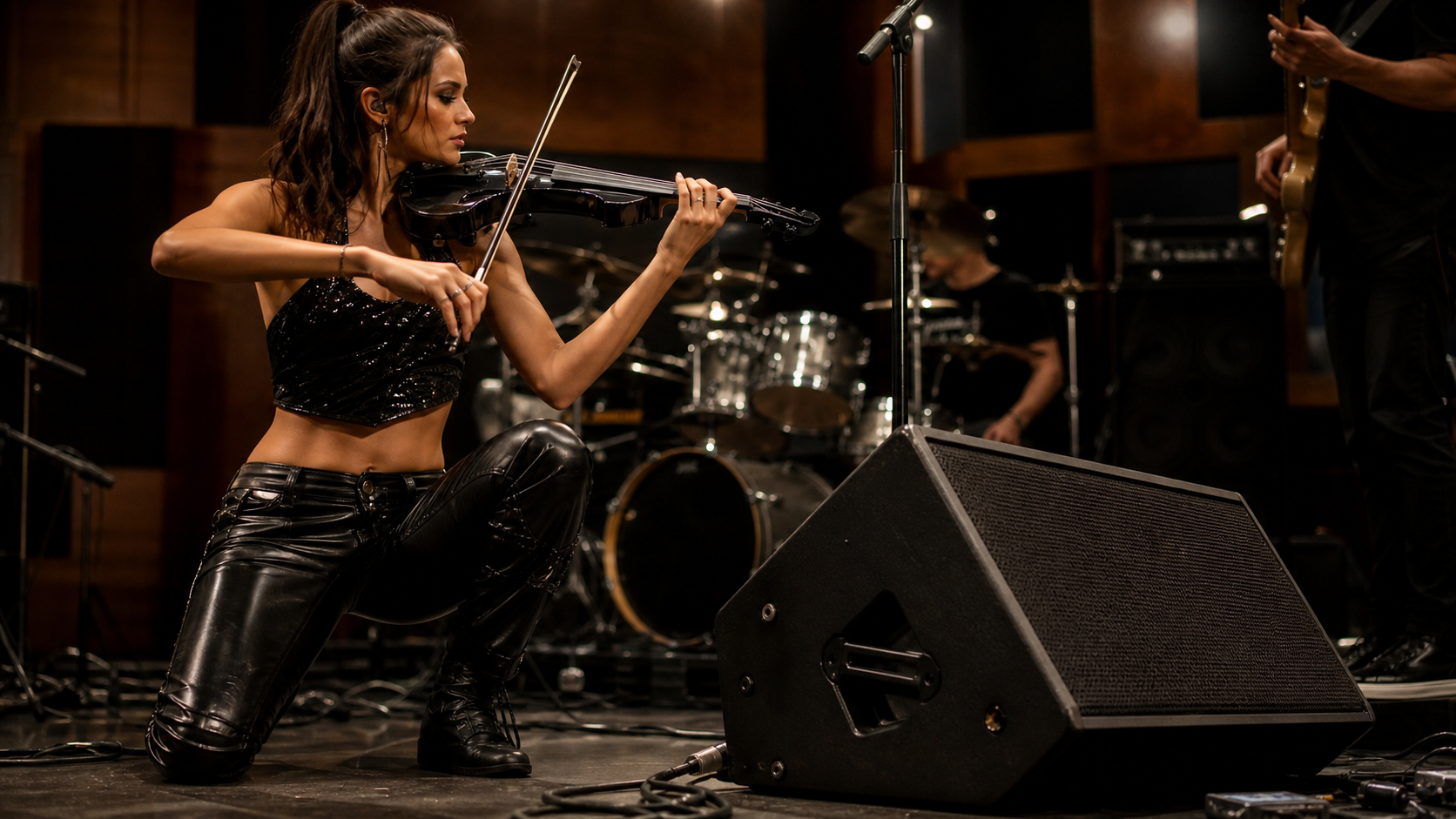
Because there are gigs where size and finish matter almost as much as raw output. QSC describes the CP8 as a compact 8-inch multipurpose powered loudspeaker with a 1000W Class-D amplifier, 90-degree DMT coverage, and a cabinet weight of about 21 pounds. That profile fits the kind of Tanya Strings date where I want the monitor to stay discreet, easy to move, and visually cleaner on elegant stages, content shoots, and travel-heavy work.
When is the CP8 better than a 10-inch box?
It is better when portability matters more than squeezing extra fullness from the wedge. If the stage is moderate, the set is disciplined, and you care about faster travel days, the CP8 makes a lot of sense.
- Pros: compact footprint, lighter travel logic, respected QSC platform, and easy small-stage placement.
- Cons: less body and margin than a stronger 10-inch or dedicated 12-inch wedge when the room gets aggressive.
See QSC CP8 · Find CP8 options on Amazon
When do JBL EON710, Mackie Thump210, or Alto TS408 make more sense?
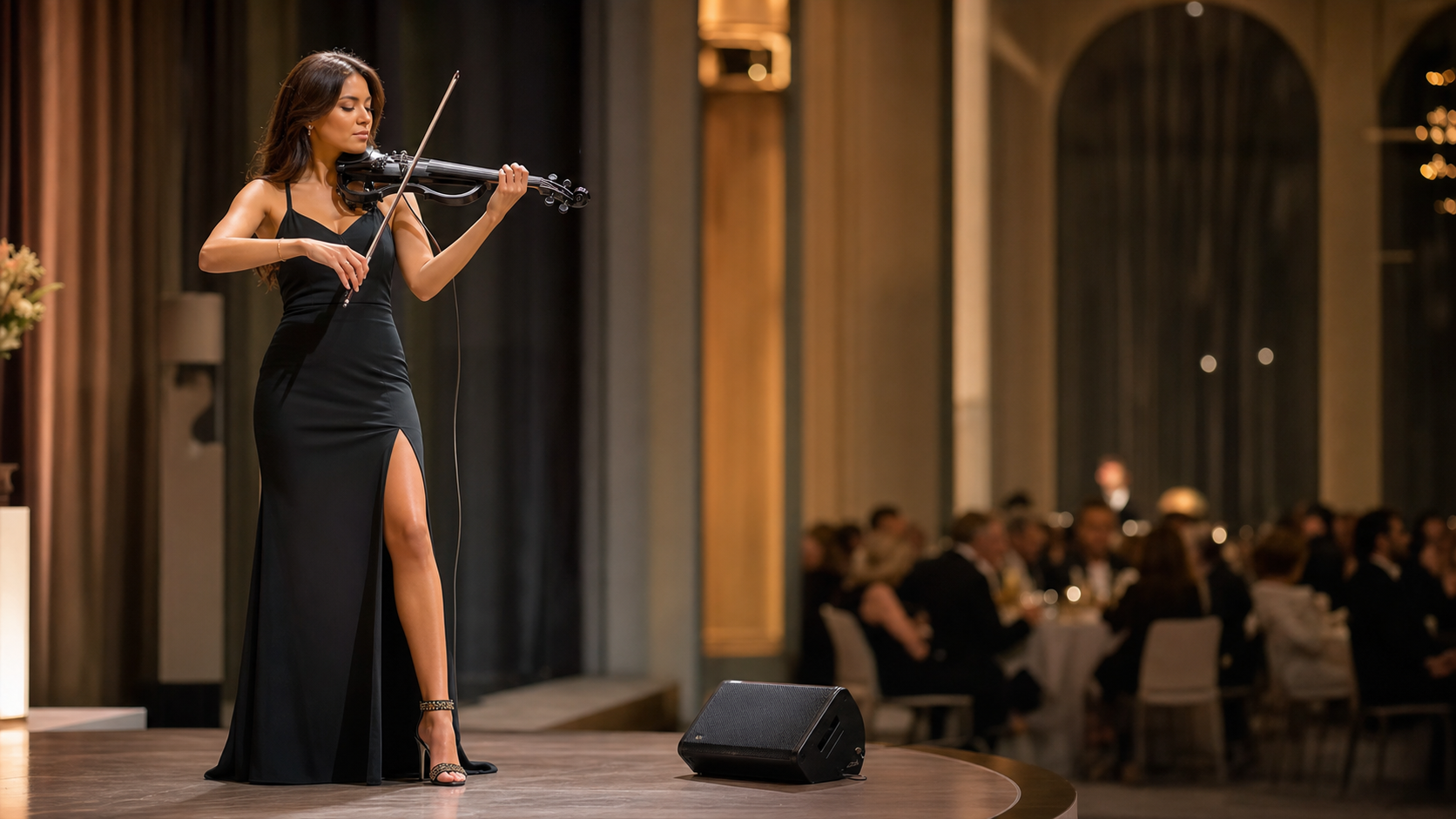
They make sense when you want more value or more flexibility without jumping into dedicated-wedge pricing. The JBL EON710 is the smartest option here if you care about DSP depth, app control, and one box that can cover wedge, stand-mounted speaker, and small event work. JBL says it delivers 1,300W peak or 650W RMS, up to 125 dB SPL, Bluetooth control, dbx and Lexicon processing, feedback suppression, and a three-channel digital mixer.
The Mackie Thump210 is the better fit when you want a simpler value speaker with useful live features and less menu thinking. Mackie says it offers a 1,400W amplifier, up to 127 dB SPL, Automatic Feedback Eliminator, Music Ducking mode, and a wedge-friendly cabinet. That is good working-player practicality.
The Alto TS408 is the tight-budget pick that still respects current workflow. Alto says it gives you 2,000W peak power, Bluetooth app control, a three-channel mixer, and built-in speaker-use modes. I would point it at disciplined solo performers who need one compact powered box to stretch across rehearsal, monitoring, and lighter live work.
- Buy JBL EON710 if you want the smartest all-around flexibility and app-driven control.
- Buy Mackie Thump210 if you want faster value with minimal overthinking.
- Buy Alto TS408 if budget pressure is real but you still want modern convenience.
See JBL EON710 · Find EON710 on Amazon
See Mackie Thump210 · Find Thump210 on Amazon
See Alto TS408 · Find TS408 on Amazon
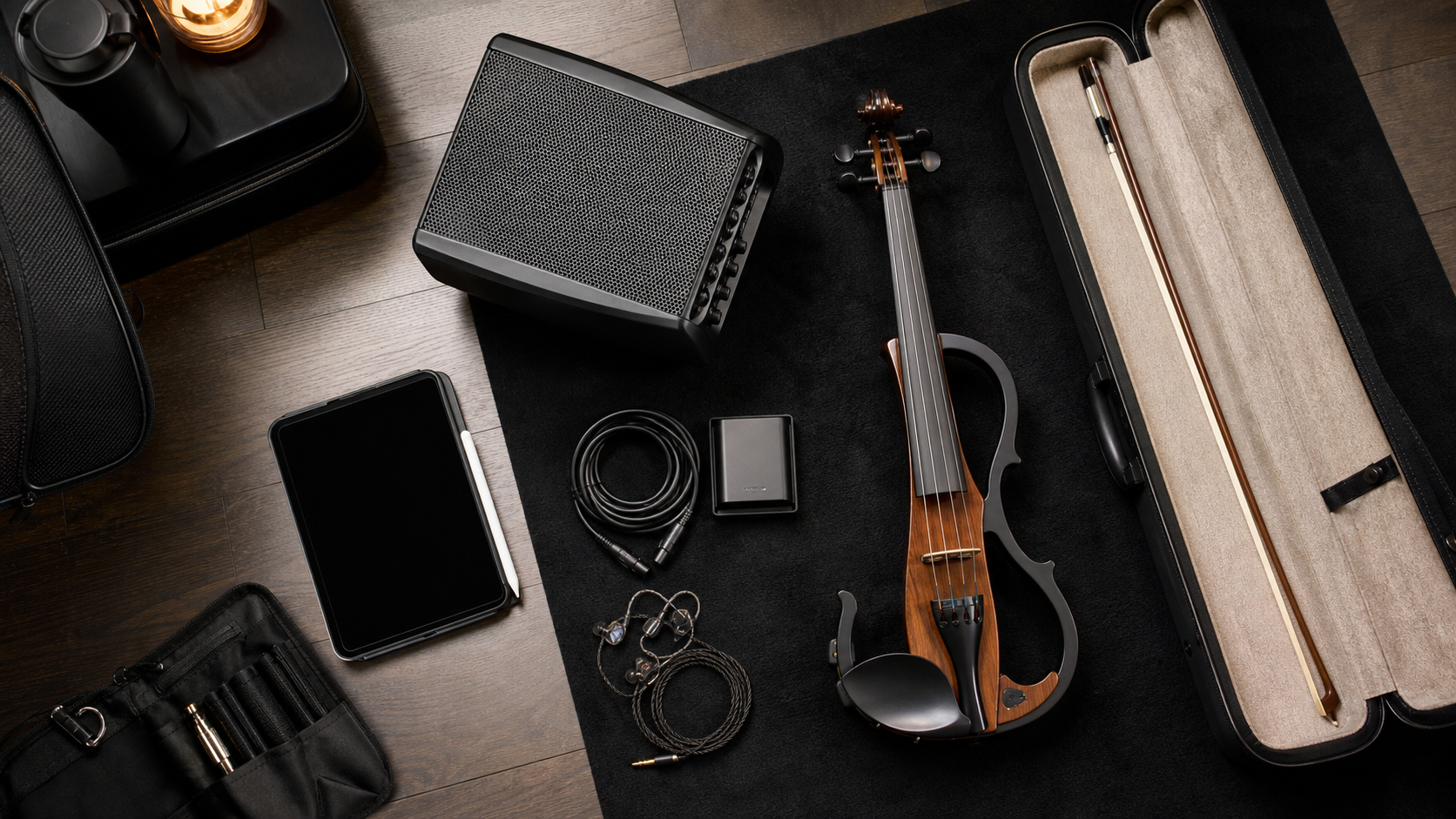
How should you buy a stage monitor without wasting money?
Buy around the real room, not the fantasy room. Electric violin tells the truth about wedges quickly because bowed articulation, pitch center, and upper-mid harshness all show up faster than guitar marketing suggests.
My buying checklist:
- Start with a strong 10-inch class speaker if you want the safest size-to-output balance.
- Move to a dedicated wedge only when louder stages really justify the extra bulk.
- Pay for DSP only if it will shorten soundcheck or help one speaker cover more jobs.
- Protect carry weight because the best monitor is still the one you bring without dread.
- Test for upper-mid honesty because electric violin gets ugly fast through splashy wedges.
This is the same mindset behind my in-ear monitor guide and my compact mixer guide. I want the monitoring path to remove stress, not add another technical hobby.
What mistakes make electric violin sound worse through wedges?
The biggest mistake is buying for loudness alone. Loud without shape is how the violin turns sharp, tiring, and harder to intonate. The next mistake is treating the monitor as a rescue purchase for a rig that still has a weak front end.
- Buying bulk before clarity: a bigger box does not automatically give a better bowed note center.
- Ignoring the input chain: fix pickup, DI, preamp, and gain staging before expecting the wedge to save everything.
- Overhyping low end: electric violin needs usable mids more than nightclub bass behavior.
- Skipping placement discipline: a good wedge still needs the right angle and distance to work.
Should you buy a stage monitor before upgrading something else in the rig?
Sometimes yes, sometimes no. If your venues already give you strong monitoring and your bigger problem is front-end harshness, a better DI or preamp may matter more first. If your note center keeps disappearing on stage, a better wedge can change the whole show faster than another effect pedal. Tanya Strings usually buys in this order: stabilize the dry signal, fix the monitor path, then add more color purchases like extra ambience, gain, or scene-control toys.
That buying order also overlaps with what I explain in my DI and acoustic preamp guide and my amp sim pedal guide. The core sound and the monitor trust have to be honest before the rest of the show grows.
FAQ
What powered stage monitor should most electric violinists buy first?
For most players, the Yamaha DBR10 is the safest first buy because it balances weight, output, and believable wedge behavior very well.
Is a dedicated coaxial wedge better than a compact powered speaker?
Sometimes. A dedicated wedge usually feels more focused on louder stages, while a compact powered speaker is smarter when you also need one box for rehearsals, small events, or side duties.
Should I choose an 8-inch, 10-inch, or 12-inch monitor for electric violin?
Start with a good 10-inch class monitor unless travel weight or very loud band work pushes you clearly smaller or larger.
Do I need a stage monitor if I already use in-ear monitors?
Not always, but a wedge can still matter for rehearsals, backup monitoring, or faster rooms where a full in-ear path is unnecessary.