Cables · 2026-08-14
Best Patch Cables for Electric Violin Pedalboards That Need Tighter, Quieter Stage Rigs
For most electric violinists building a compact live board, the smartest patch cable buy right now is the EBS PCF-DL because it stays exceptionally small, double-shielded, and easy to route when pedal spacing gets tight. Buy the BOSS BPC-4 if your pedals or switchers have cramped side jacks, choose D'Addario Custom Series Flat for secure Geo-Tip connections, and look at Ernie Ball, RockBoard, or MXR when value, pack options, or faster rewires matter more than absolute compactness. Tanya Strings treats patch cables as gig-saving infrastructure, not an afterthought.
Follow Tanya Strings on Google
Add the site as a preferred source to see more new violin posts from Tanya Strings in Google.
Some links in this article are affiliate links. I may earn a commission if you make a purchase, at no extra cost to you.

What are the best patch cables for most electric violin pedalboards?
For most working players, I would start with the EBS PCF-DL. EBS positions it as the original flat patch cable, describes the PCF Deluxe as refined and durable, and lists super-compact angled contacts, double shielding, and lengths from 10 to 98 cm. That matters to Tanya Strings because the real job of a patch cable is not glamour. It is faster soundcheck, less wasted board space, less connector stress, and fewer mystery crackles in the first song. This is one of those small purchases that quietly determines whether a rig feels professional or improvised.
My performer rule: if a patch cable forces me to spread pedals farther apart, hide a footswitch, or question the connection during line check, it is not really saving me money.
Which patch cables are worth buying right now?
This shortlist stays focused on real electric violin use: compact boards, quick setups, cleaner routing, and repeatable live reliability for performers and content creators who actually move their rig often.
| Product | Best for | Why Tanya would use it | Watch out for | Links |
|---|---|---|---|---|
| EBS PCF-DL | Most electric violinists who want the safest overall compact patch cable choice | I trust it because the super-compact angled contacts, double shielding, and wide length range make small boards easier to route without turning them into a puzzle. | It is not the bargain-bin option, so buy it when board efficiency and fewer routing headaches matter more than shaving every dollar. | Official · Amazon |
| BOSS BPC-4 | Pedals and switchers with especially tight side-jack spacing | I like it because the slim pancake plugs and gold-plated contacts solve the real-world fit problems that show up on dense modern boards. | The geometry is still classic pancake rather than ultra-flat ribbon, so it is a fit-first buy more than a universal answer. | Official · Amazon |
| D'Addario Custom Series Flat Patch | Players who want secure connections, low capacitance, and clean pedal spacing | I would use it when I want flat plugs, 30 pF/ft specs, and Geo-Tip connection confidence without going into a custom-cable rabbit hole. | The standard lengths are practical but not endless, so plan the board before you order. | Official · Amazon |
| Ernie Ball Flat Ribbon Patch Cables | Value-minded boards that still need low-profile routing and good pack options | I respect the length variety, multi-pack options, metal housing, and easy routing when I want to rewire a board quickly without overcomplicating the order. | The best value often comes in packs, so it makes the most sense when you are wiring more than one or two pedal connections. | Official · Amazon |
| RockBoard Flat Patch Cable | Boards that need unusual lengths or trickier routing paths | I would keep RockBoard in mind because the catalog goes from very short to very long lengths and stays intentionally flat, thin, and flexible. | The lineup is broad, so make sure you are buying the exact series and length your board really needs. | Official · Amazon |
| MXR 6-Inch Ribbon Patch Cable 3-Pack | Players who want straightforward short replacements and quick emergency rewires | I would buy it as a clean practical spare or starter pack because the oxygen-free copper conductors, spiral shields, and low-profile ends cover the basics well. | It is the simple problem-solver here, not the most specialized compact-routing system on the list. | Official · Amazon |
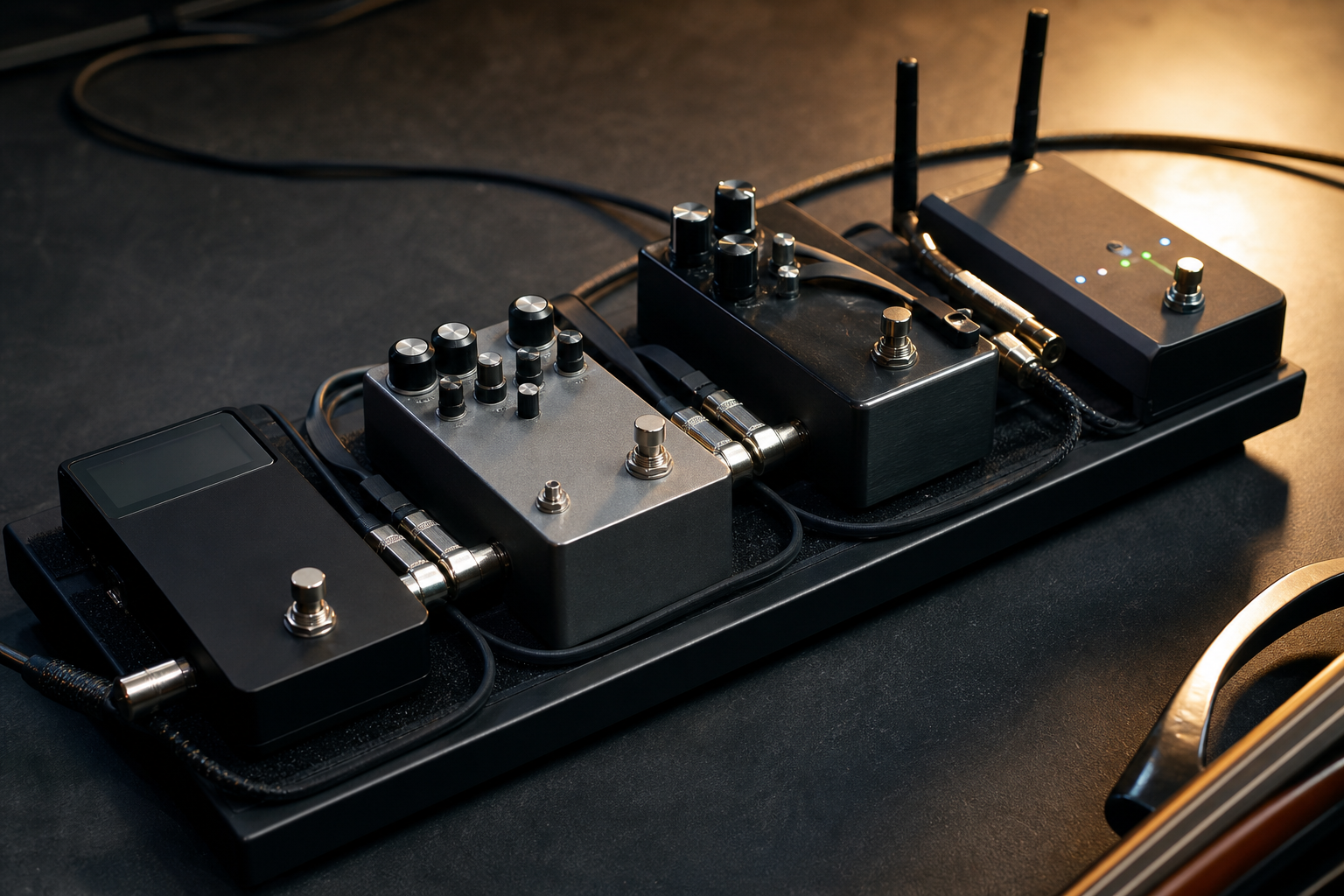
Why is EBS PCF-DL my best overall pick?
Because it solves the broadest real stage problem with the least compromise. EBS says the PCF-DL keeps the original flat-patch idea but adds refined construction, durable materials, 30 percent smaller super-compact angled contacts than the original PCF cable, and extremely well double-shielded design. For Tanya Strings, that reads like a board-efficiency tool, not just another accessory. I want my pedalboard to stay narrow, my foot access to stay clean, and my cabling to stay calm around wireless receivers, tuner pedals, and smaller effects boxes.
When would I buy it before everything else?
I would buy it first when the board is already good but still feels just a little too crowded, a little too noisy, or a little too slow to repair backstage. That is exactly where patch cables stop being invisible.
- Pros: very compact connectors, wide size range, double shielding, and strong fit for serious small-board stage work.
- Cons: higher-spend choice than basic backups and less compelling if your board is large and spacious anyway.
See the EBS PCF-DL · Find EBS PCF-DL options on Amazon

When should you buy BOSS BPC-4 or D'Addario Custom Series Flat instead?
Buy the BOSS BPC-4 when the real issue is jack spacing. BOSS describes custom slimline pancake plugs, oxygen-free copper, braided shielding, 24K gold-plated connectors, and a design aimed at dense pedal and switcher layouts. Tanya Strings sees that as a fit rescue for boards built around compact digital pedals, loop switchers, or side-jack layouts that punish bulkier connectors. It is the best answer when a cable needs to behave around the hardware first.
- BOSS pros: excellent fit for cramped jacks, gold-plated connectors, and a strong choice for dense modern boards.
- BOSS cons: narrower use case if your board simply wants the flattest possible routing everywhere.
See the BOSS BPC-4 · Find BPC-4 options on Amazon
When is D'Addario the smarter clean-signal choice?
The D'Addario Custom Series Flat Patch Cable makes more sense when you want a secure plug feel and very controlled cable specs without hunting through a sprawling catalog. D'Addario calls out a flat plug design, patented Geo-Tip plugs, two layers of shielding, low handling noise, and 30 pF/ft capacitance. I would use it when I want a board that feels disciplined and quiet without turning the cable choice into a whole separate hobby.
- D'Addario pros: secure connection feel, very low capacitance, flat spacing, and a clean premium all-around spec sheet.
- D'Addario cons: fewer stock length choices than some broader systems.
See D'Addario Custom Series Flat · Find D'Addario flat patch options on Amazon
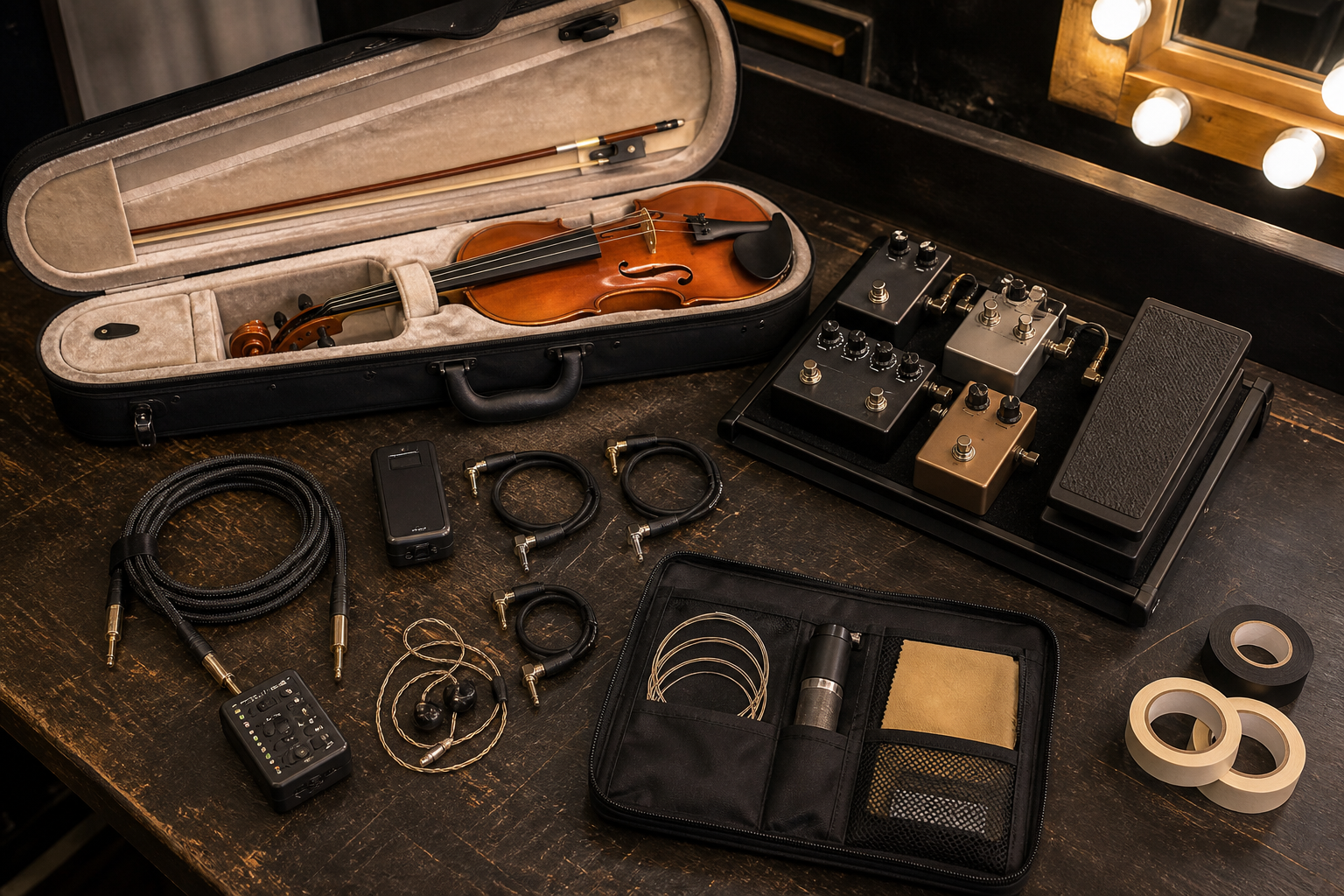
Which patch cables make the most sense for value packs and fast rewires?
Ernie Ball Flat Ribbon, RockBoard Flat Patch, and MXR 6-Inch Ribbon are the group I watch when a board needs practical options more than one luxury micro-solution. Ernie Ball gives a lot of length and pack variety, metal housing, and easy routing. RockBoard is excellent when one board needs odd lengths or a more custom path across the frame. MXR is my simple dependable spare-pack answer when I want short cables ready for emergency swaps.
Who should buy each of those three?
Buy Ernie Ball when you are wiring a full board from scratch and want smart pack choices. Buy RockBoard when your board geometry is awkward and you need exact lengths to keep the signal chain neat beside power supply routing. Buy MXR when you want affordable short replacements that are easy to keep in the case.
- Ernie Ball pros: great pack options, low-profile routing, metal housing, and board-friendly flexibility.
- Ernie Ball cons: strongest value comes when you actually need multiple cables.
- RockBoard pros: unusually deep length range, thin rectangular profile, and very useful for precise routing.
- RockBoard cons: you need to order carefully because the range is broad.
- MXR pros: simple short-pack value, oxygen-free copper, and a very practical spare-cable role.
- MXR cons: less specialized than the more routing-focused premium options.
See Ernie Ball Flat Ribbon · Find Ernie Ball options on Amazon
See RockBoard Flat Patch Cable · Find RockBoard options on Amazon
See MXR 6-Inch Ribbon Patch Cable 3-Pack · Find MXR patch cable options on Amazon
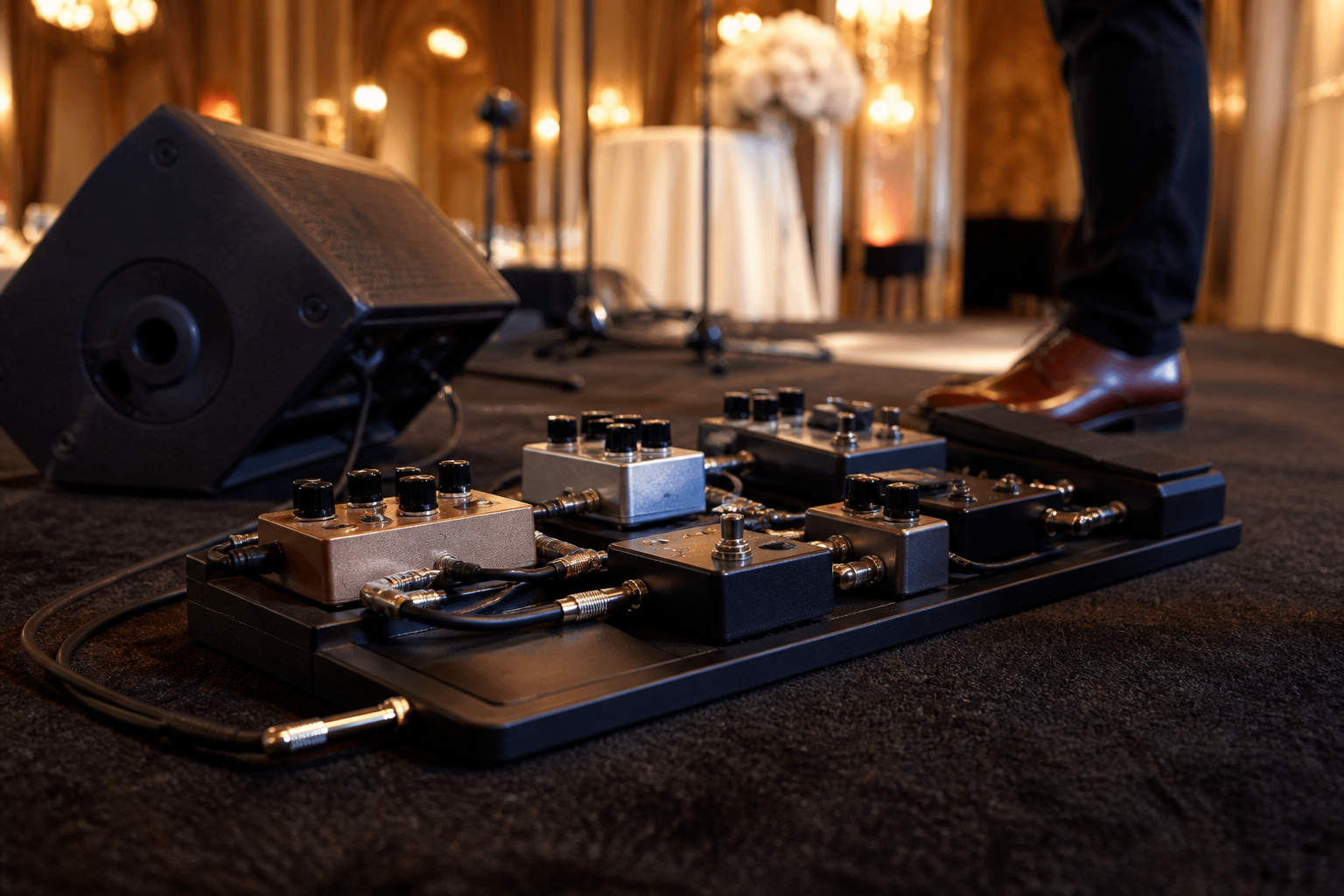
How should electric violinists choose patch cables for live rigs?
Choose by board geometry first, then by signal discipline. Tanya Strings does not buy patch cables to win internet arguments. I buy them because one bad short cable can waste more time than a whole new pedal is worth.
My buying checklist:
- Measure the real distance between jacks instead of guessing, especially on compact boards.
- Choose connector shape around pedal layout, not only around brand preference.
- Keep at least two spare short patch cables in the case next to the main instrument cable.
- Test every new cable by wiggling the plugs and playing at stage volume before the next show.
- Do not expect a hum eliminator to rescue a dying patch cable.
My buying order: first get the board physically tidy, then stabilize the patch cables, then worry about adding more pedals. Small rig discipline beats bigger rig chaos every time.

FAQ
What are the best patch cables for most electric violin pedalboards?
EBS PCF-DL is my best overall answer because it combines very compact connectors, strong shielding, and practical length options for dense live boards.
Are flat patch cables always better for electric violin rigs?
Not always, but they are often the easiest route when the goal is tighter spacing and cleaner board layout. Slim pancake options such as the BOSS BPC line still make sense for some jack layouts.
How many spare patch cables should I carry to a show?
I would carry at least two spare short patch cables and one slightly longer backup. That gives you a real way to solve a failure without rebuilding the whole board.
Do patch cables really affect stage reliability?
Yes. They affect fit, routing, noise, and emergency repair speed. Tanya Strings treats them as a core live-system decision, not as a leftover accessory buy.