Stage Comfort · 2026-09-05
Best Compact Stage Fans for Electric Violinists Performing Under Hot Lights
For most electric violinists, the best compact stage fan is the Vornado 133: its focused airflow can reach a standing performer without occupying much floor space. Choose the Honeywell HT-900 for a simple budget rig, the RYOBI 18V ONE+ Hybrid Fan when outdoor power is uncertain, or the DEWALT DCE512B for a rugged battery platform. A clamp fan suits tight side-stage placement, while the XPOWER FC-200 makes sense when airflow matters more than silence. I choose by noise, throw, stability, and power plan, then aim air below the bow arm.
Some links in this article are affiliate links. I may earn a commission if you make a purchase, at no extra cost to you.
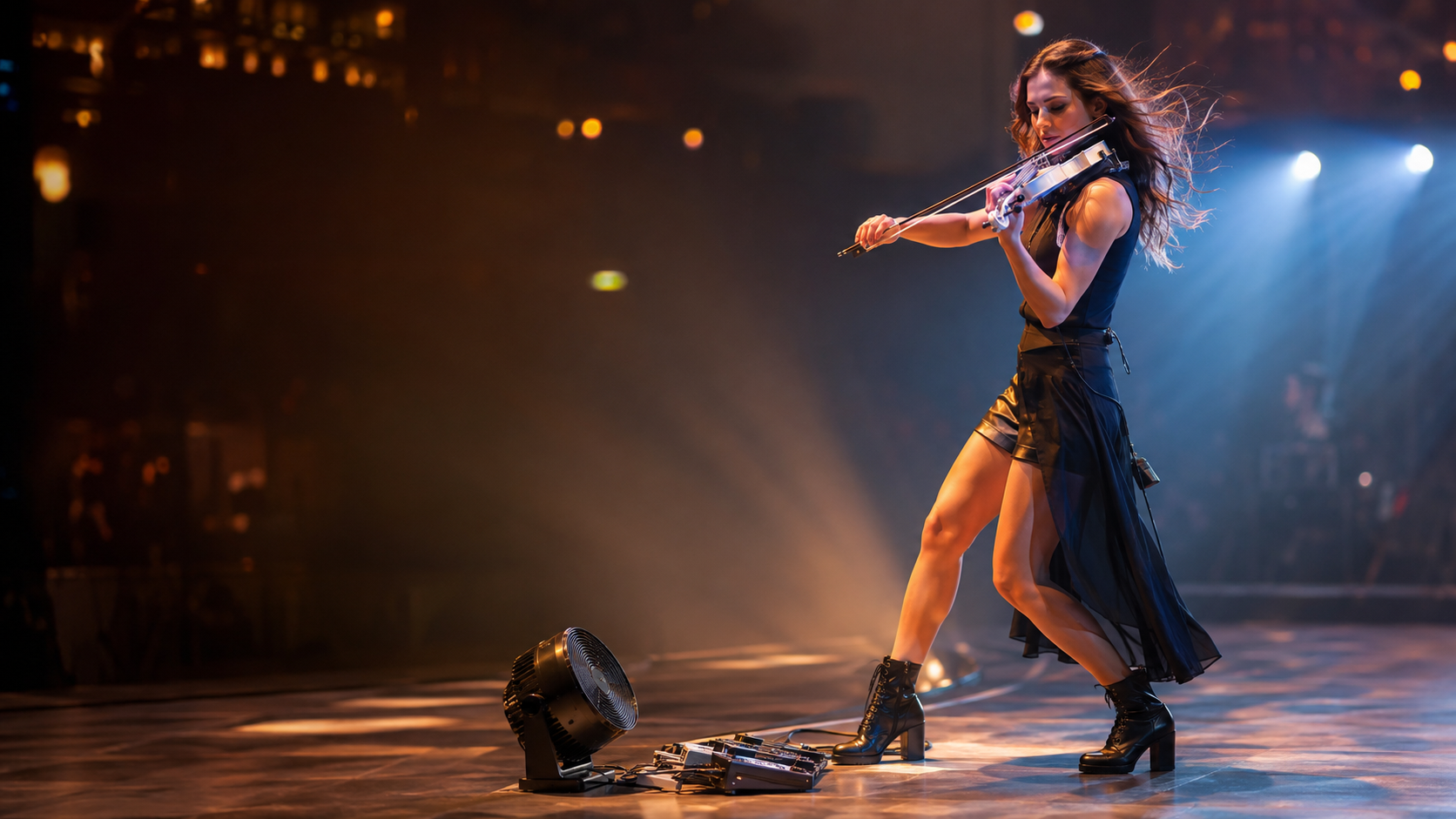
What is the best compact stage fan for most electric violinists?
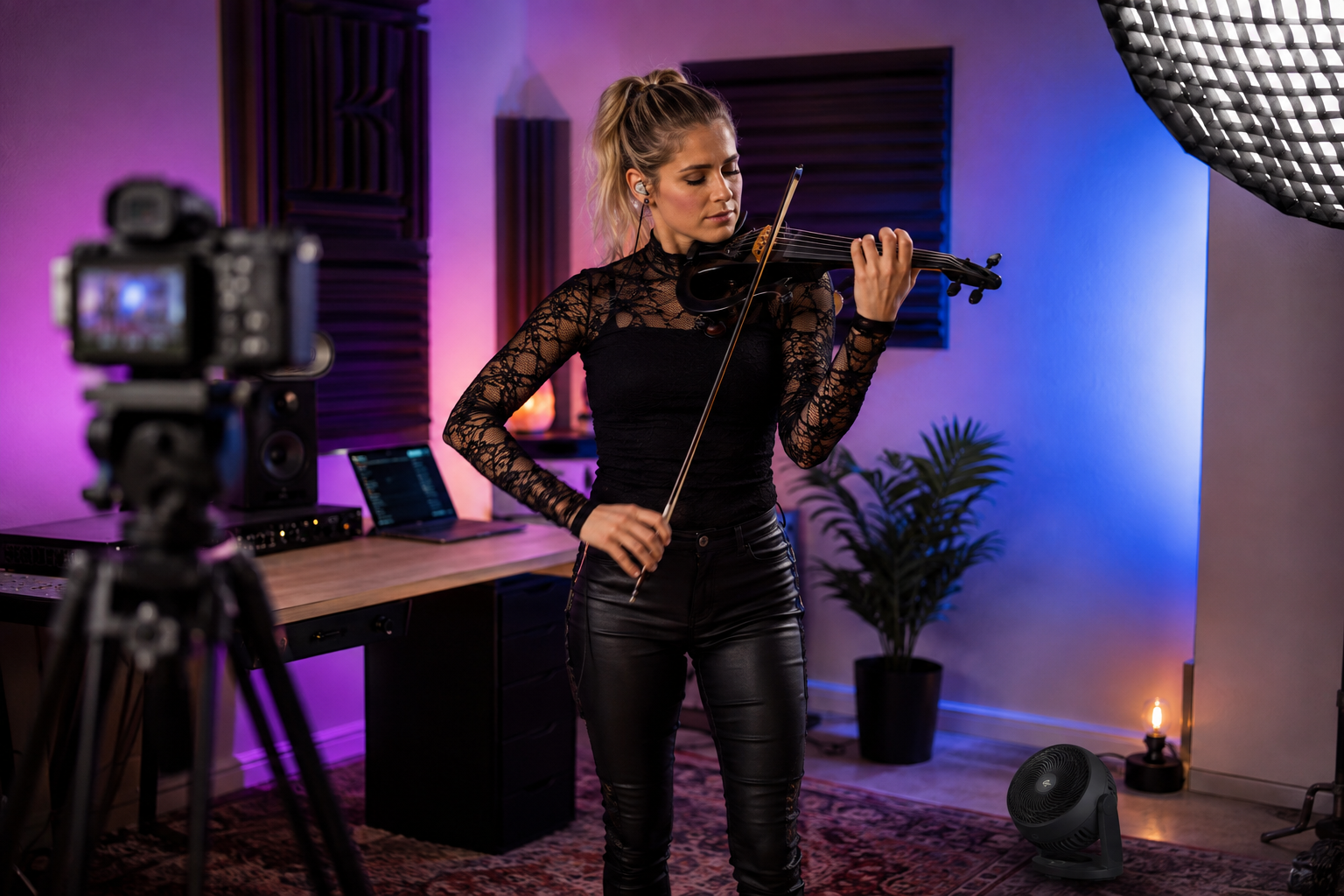
The Vornado 133 is my best overall wired pick. Its small footprint is easier to place beside a pedalboard than a pedestal fan, while the pivoting head lets me send air toward my torso rather than directly at my face or hands. That distinction matters on electric violin: air across the bowing arm, loose hair, or a lightweight costume can become a distraction. For a polished Tanya Strings performance, comfort gear has to disappear into the production rather than become the visual story.
Which compact stage fans are worth buying?
| Fan | Best for | Performer advantage | Tradeoff | Buy |
|---|---|---|---|---|
| Vornado 133 | Best overall wired fan | Focused airflow and compact floor footprint | Needs mains power | Amazon |
| Honeywell HT-900 | Budget indoor stages | Simple, light, and easy to replace | Less refined at higher speed | Amazon |
| RYOBI 18V ONE+ Hybrid | Outdoor and cable-free sets | Battery or mains flexibility | Best value only if you own compatible batteries | Amazon |
| DEWALT DCE512B | Touring and rugged stages | Durable cordless placement | Battery and charger may cost extra | Amazon |
| COMLIFE clamp fan | Tight backstage positions | Flexible placement without floor space | Clamp security must be checked | Amazon |
| XPOWER FC-200 | High-output airflow | Strong circulation for very hot venues | More audible and visually prominent | Amazon |
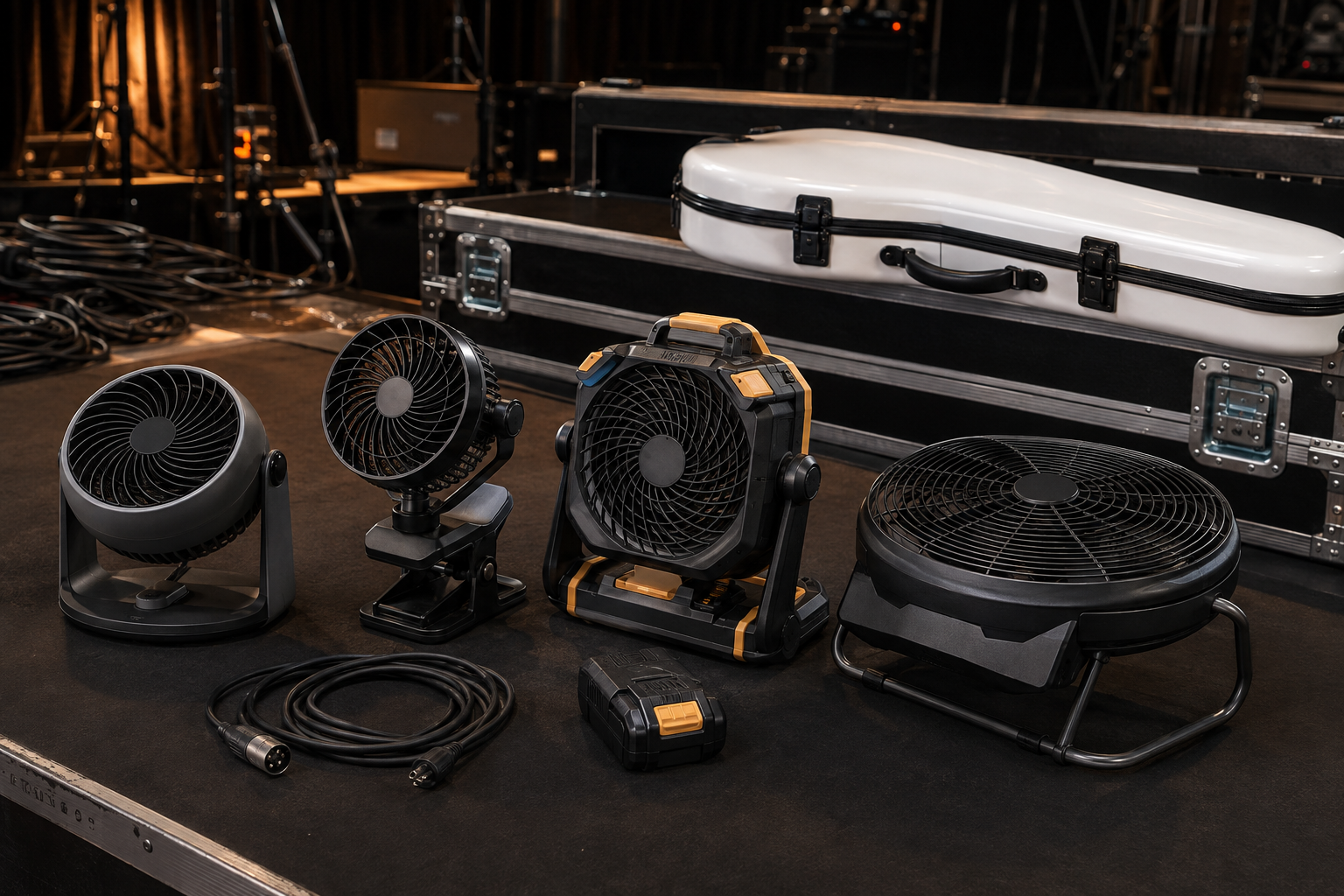
When should you choose Vornado 133 or Honeywell HT-900?
Choose the Vornado 133 when airflow quality and a tidy stage footprint matter most. Choose the Honeywell HT-900 when you want an inexpensive fan for rehearsals, wedding venues, or a backup case. Both are wired, so tape the extension path and keep it separate from instrument and power-supply connections.
What are the pros and cons?
- Vornado pros: compact, directional, polished, and easy to aim low. Cons: no battery operation and a higher price than basic fans.
- Honeywell pros: affordable, familiar controls, and easy availability. Cons: higher settings may be too noisy near a microphone.
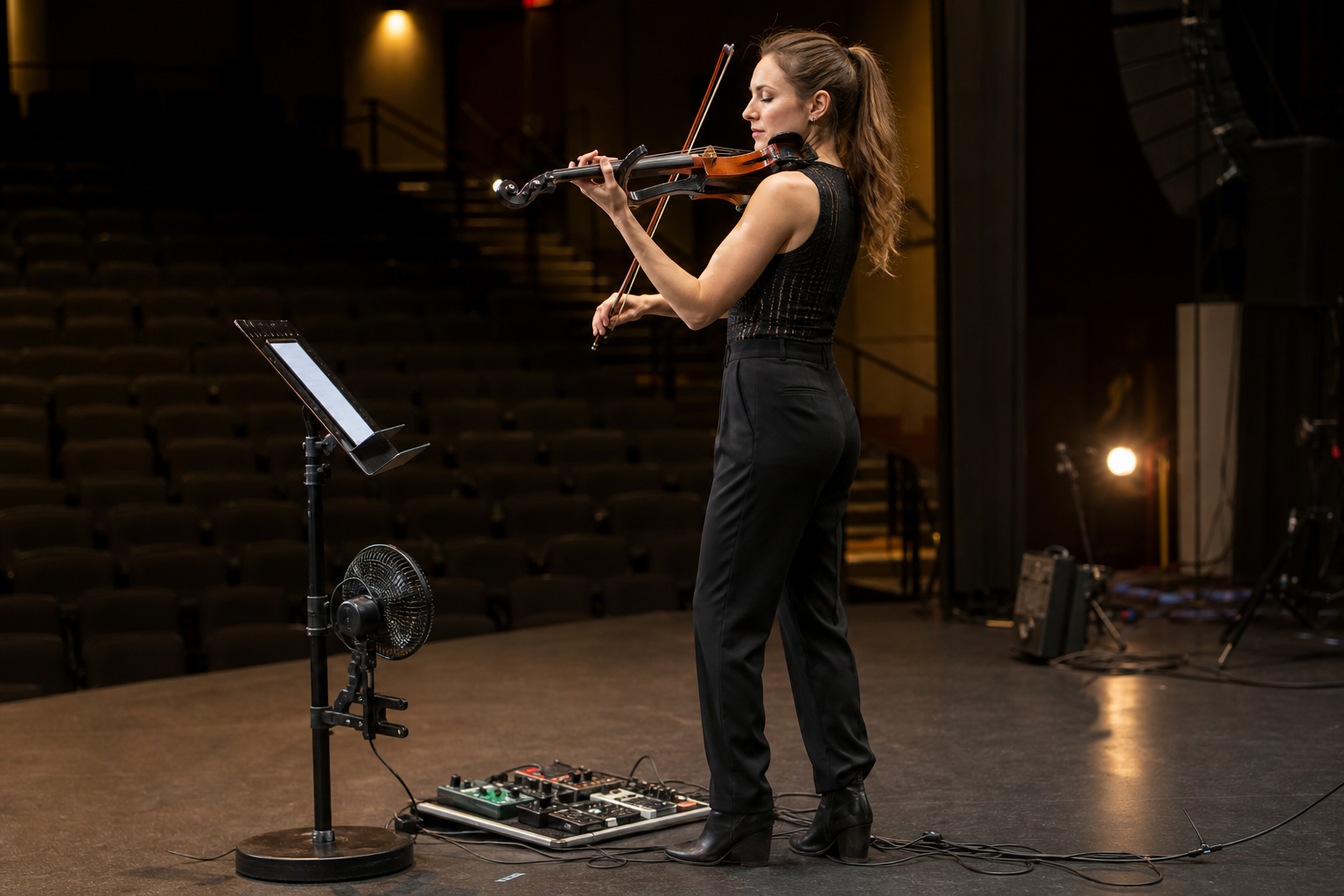
When is a cordless jobsite fan the smarter stage choice?
The RYOBI and DEWALT options earn their weight when a ceremony site, festival wing, or temporary stage has limited outlets. The RYOBI hybrid design is especially useful because it can run from the battery platform or external power. The DEWALT DCE512B suits performers already invested in 20V MAX batteries. I would rather carry one known battery ecosystem than add unrelated chargers to an already busy electric violin rig.
What are the cordless tradeoffs?
The advantages are cable-free placement, outdoor independence, and sturdier construction. The disadvantages are extra battery weight, uncertain runtime at maximum speed, and a tool-like appearance that may not suit elegant corporate or wedding staging. Test the complete fan and battery during a full-length rehearsal, not for five minutes backstage.
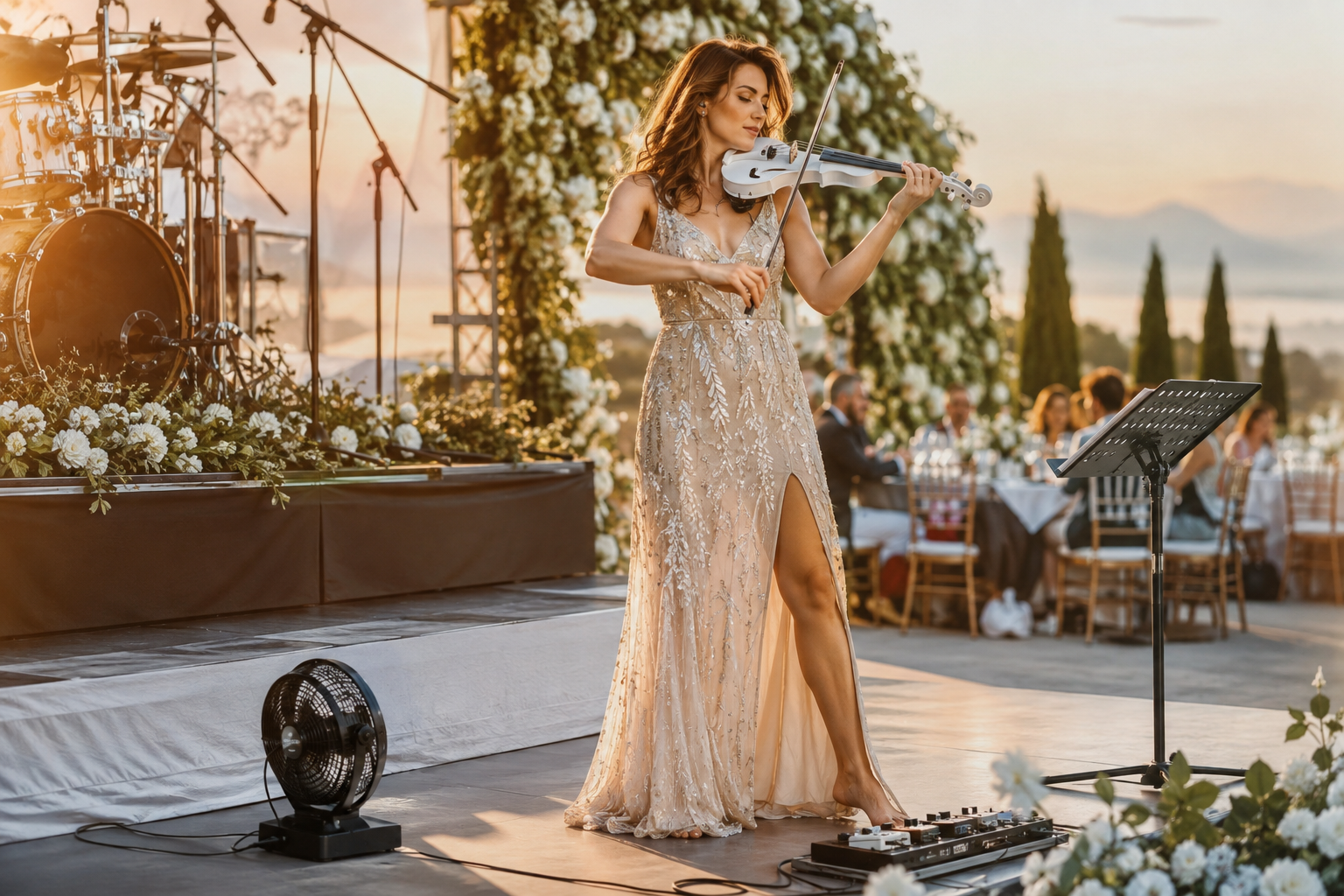
Should you buy a clamp fan or a high-output air circulator?
A rechargeable COMLIFE-style clamp fan is the space-saving answer for a crowded side stage, dressing room, or creator desk. Clamp it only to stable production hardware and add a safety tether where appropriate. Never let it make a music stand top-heavy. The XPOWER FC-200 is the opposite choice: stronger air for genuinely hot spaces, but harder to hide and more likely to reach live microphones. I use the smallest fan that solves the heat problem at its lowest useful speed.
What should an electric violin performer check before buying?
- Noise: listen beside the actual vocal, violin, and camera microphones.
- Airflow direction: aim at the torso or legs, not the bow hand, hair, sheet music, or dress fabric.
- Footprint: leave a clear route to the pedalboard and violin stand.
- Power: confirm outlet, extension, battery, charger, and realistic runtime.
- Stability: reject fans that walk across the floor or make stands top-heavy.
- Appearance: choose gear that fits the visual level of the performance.
Which stage-fan mistakes should you avoid?
Do not aim strong air directly at your face, because dry eyes and moving hair are poor trades for cooling. Do not place a fan where a dress hem, cable, or bow can meet the grille. Do not share an overloaded power strip with a stage power rig. Most importantly, test the fan during a recorded rehearsal: an audience may ignore low fan noise while a camera microphone makes it obvious.
FAQ
What is the best compact stage fan for most electric violinists?
Vornado 133 is my best overall wired choice for useful directional airflow in a small footprint.
Will a stage fan affect bow control?
It can if air hits the hands or moves clothing and hair, so aim it below the bow arm.
Should an outdoor performer buy a cordless fan?
Yes when outlet access is uncertain and the battery platform already fits the rest of the touring kit.
Can a fan be used while filming electric violin?
Yes. Keep it away from the microphone axis, select the lowest effective speed, and record a test.