Tuning · 2026-07-27
Best Clip-On Violin Tuners for Electric Violinists Who Need Silent Fast Tuning Backstage and Between Sets
The best clip-on violin tuner for most electric violinists is the D'Addario Nexxus 360 Violin Tuner because it gives Tanya Strings fast, visible, stage-friendly tuning without forcing a pedalboard workflow. If you want a smaller rechargeable unit, buy the D'Addario Micro Rechargeable Violin Tuner. If you prefer long AAA life and a dedicated violin clip, choose the Korg AW-LT100V. Peterson StroboClip HD is the premium precision upgrade, while the D'Addario Micro Violin Tuner and Korg Dolcetto-V still make real sense for silent backstage checks, rehearsal rooms, and hybrid acoustic-to-electric set changes.
Follow Tanya Strings on Google
Add the site as a preferred source to see more new violin posts from Tanya Strings in Google.
Some links in this article are affiliate links. I may earn a commission if you make a purchase, at no extra cost to you.

What is the best clip-on violin tuner for most electric violinists?
For most performers, I would buy the D'Addario Nexxus 360 Violin Tuner first. Tanya Strings does not need a clip-on tuner to replace a strong pedalboard. I need it to handle the moments before the rig is fully live: backstage checks, ceremony intros, acoustic doubles, rehearsals, and the quiet reset between songs where a floor tuner is either unavailable or too slow to reach. D'Addario says Nexxus 360 gives you a 360-degree full-color display, 24 hours of tuning time per charge, a violin shoulder clamp, and a 415-465Hz range. That is a serious performer tool, not a toy add-on.
My performer rule: if the tuner is hard to see from a natural playing angle, I stop trusting it no matter how good the spec sheet looks.
Why would Tanya Strings still carry a clip-on tuner if the rig already has a tuner pedal?
Because the pedalboard does not solve every tuning job. A tuner pedal is still the right answer when the electric violin lives inside a full live rig and I need silent muting on stage. But a clip-on tuner wins when the instrument is off the board, when I am switching between acoustic and electric material, when I am warming up in a dressing room, or when a wedding planner is talking and I want to verify pitch without stepping on anything.
This is the same reason I still care about disciplined accessory choices in the tuner pedal guide and the music stand light guide. The best show kits are not built around one hero product. They are built around friction disappearing in the right places.

Which clip-on violin tuners are worth buying right now?
This shortlist stays narrow on purpose. I only want tuners that fit real violin workflow, stay believable in a performer bag, and make sense for silent tuning around live electric violin work.
| Product | Best for | Why Tanya would use it | Watch out for | Links |
|---|---|---|---|---|
| D'Addario Nexxus 360 Violin Tuner | Most electric violinists who want the cleanest premium rechargeable stage-and-backstage pick | I trust it because the 360-degree display, violin shoulder mount, and 24-hour rechargeable workflow fit how a working performer actually checks pitch between sets and during hybrid shows. | It is best when you will really use the brighter screen and premium mount instead of just wanting the cheapest possible clip-on. | Official · Amazon |
| D'Addario Micro Rechargeable Violin Tuner | Compact travel kits that still want rechargeable convenience | I would buy it when I want the familiar D'Addario violin mount, USB-C charging, and a smaller tuner that disappears into a neat case pocket. | Its smaller screen is less luxurious than Nexxus 360 when visibility is your top priority. | Official · Amazon |
| Korg AW-LT100V | Players who want long AAA battery life and a dedicated violin clip with pure-fifths-friendly workflow | I like it because Korg built it specifically for violin and viola, gives it a color LCD, and rates it for about 100 hours on one AAA battery. | It feels more utilitarian than the best rechargeable options and uses a larger body. | Official · Amazon |
| Peterson StroboClip HD | Premium precision buyers who want the most exact clip-on readout | I would pay for it when exposed intros, solo endings, or content recording make tenth-of-a-cent accuracy worth real money. | It is the most expensive option here and has more depth than casual users need. | Official · Amazon |
| D'Addario Micro Violin Tuner | Performers who want a low-profile violin-specific default without moving to rechargeable yet | I still respect it because the lever-lock violin mount and reversible color screen remain practical, quiet, and easy to keep in a disciplined case setup. | Coin-cell battery workflow is less convenient if you play often and hate accessory maintenance. | Official · Amazon |
| Korg Dolcetto-V | Budget-minded players who want a violin clip plus metronome-friendly practice crossover | I would choose it when price matters, violin-specific mounting still matters, and I like the extra pure-fifths-oriented violin mode that Korg keeps in this family. | It is older-school and less polished than the best premium stage picks above it. | Official · Amazon |
When is the D'Addario Nexxus 360 the smartest premium stage pick?
It is the smartest pick when visibility and speed matter more than absolute smallness. D'Addario says Nexxus 360 gives you an extra-bright full-color LED, 360-degree adjustability, up to 24 hours per charge, a non-marring shoulder clamp, and tuning optimized for orchestral strings. That reads like a product built by people who understand that violinists do not always want the tuner hanging off the same place a guitarist would use.
Who should buy Nexxus 360 first?
Buy it first if you perform often, change environments constantly, and want the calmest all-around workflow for rehearsals, event sets, hybrid acoustic-electric shows, and quick backstage verification.
- Pros: strong screen visibility, rechargeable USB-C workflow, violin-specific shoulder mounting, wide reference range, and a confident premium feel.
- Cons: more expensive than simple clip-ons and physically less tiny than the most minimal options.
See D'Addario Nexxus 360 Violin Tuner · Find Nexxus 360 on Amazon
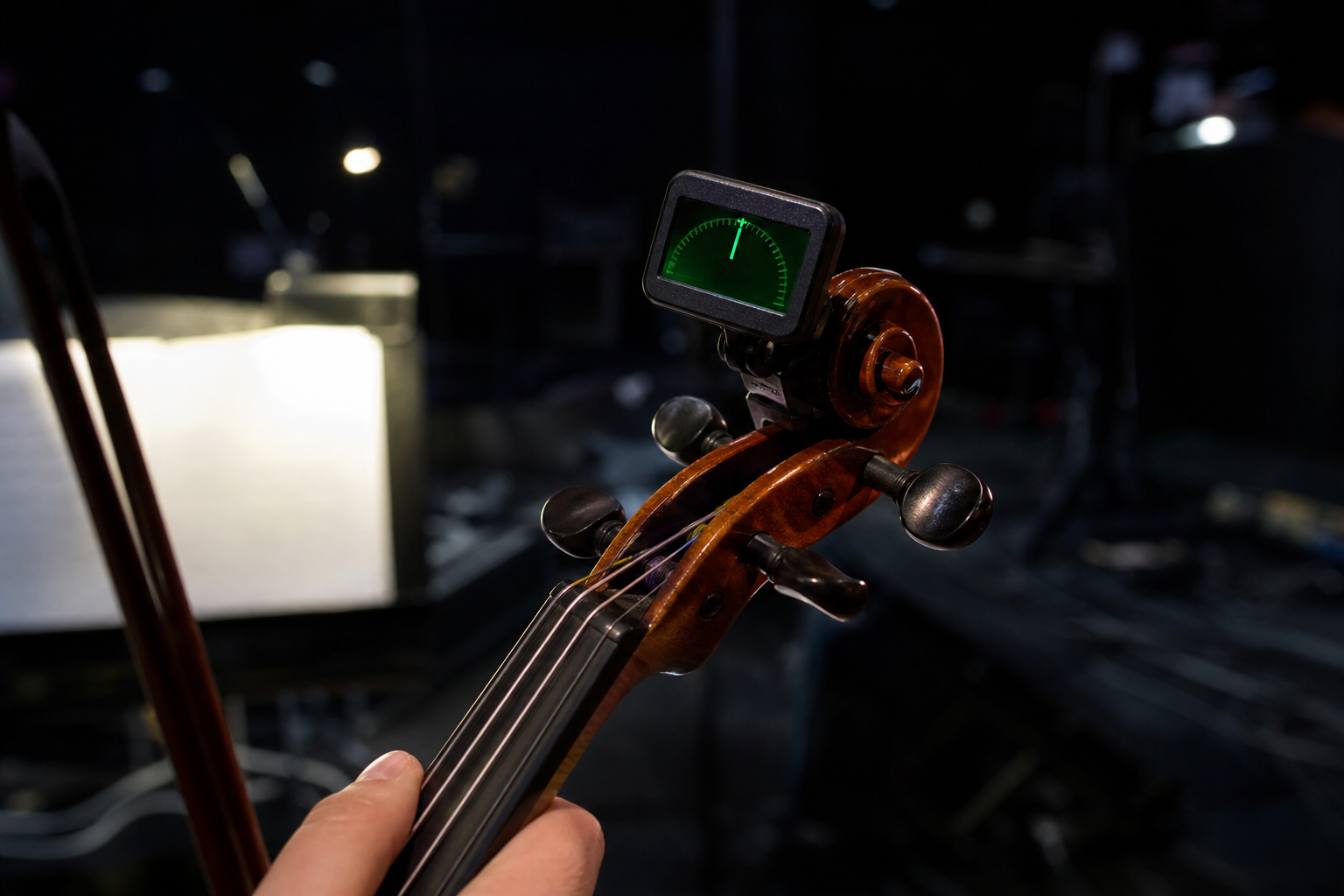
Why does the D'Addario Micro Rechargeable win for compact travel rigs?
Because it keeps the violin-specific mount without asking you to stay married to button cells. D'Addario says the Micro Rechargeable Violin Tuner uses USB-C charging, gives around 22 hours of tuning life, keeps the lever-lock clamp, and uses a reversible full-color display with a 410-480Hz calibration range. That is exactly the kind of specification sheet I want for fly dates, wedding weekends, and creator schedules where one more loose coin battery becomes annoying fast.
When should you buy the Micro Rechargeable instead of Nexxus 360?
Buy the Micro Rechargeable when bag space matters more than the most luxurious screen angle. It is the stronger choice for smaller cases, secondary instruments, and players who want a rechargeable tuner that stays visually discreet.
- Pros: USB-C charging, compact footprint, violin-specific mount, useful calibration range, and cleaner travel discipline than battery-cell models.
- Cons: less screen drama and less angular flexibility than Nexxus 360.
See D'Addario Micro Rechargeable Violin Tuner · Find the Micro Rechargeable on Amazon
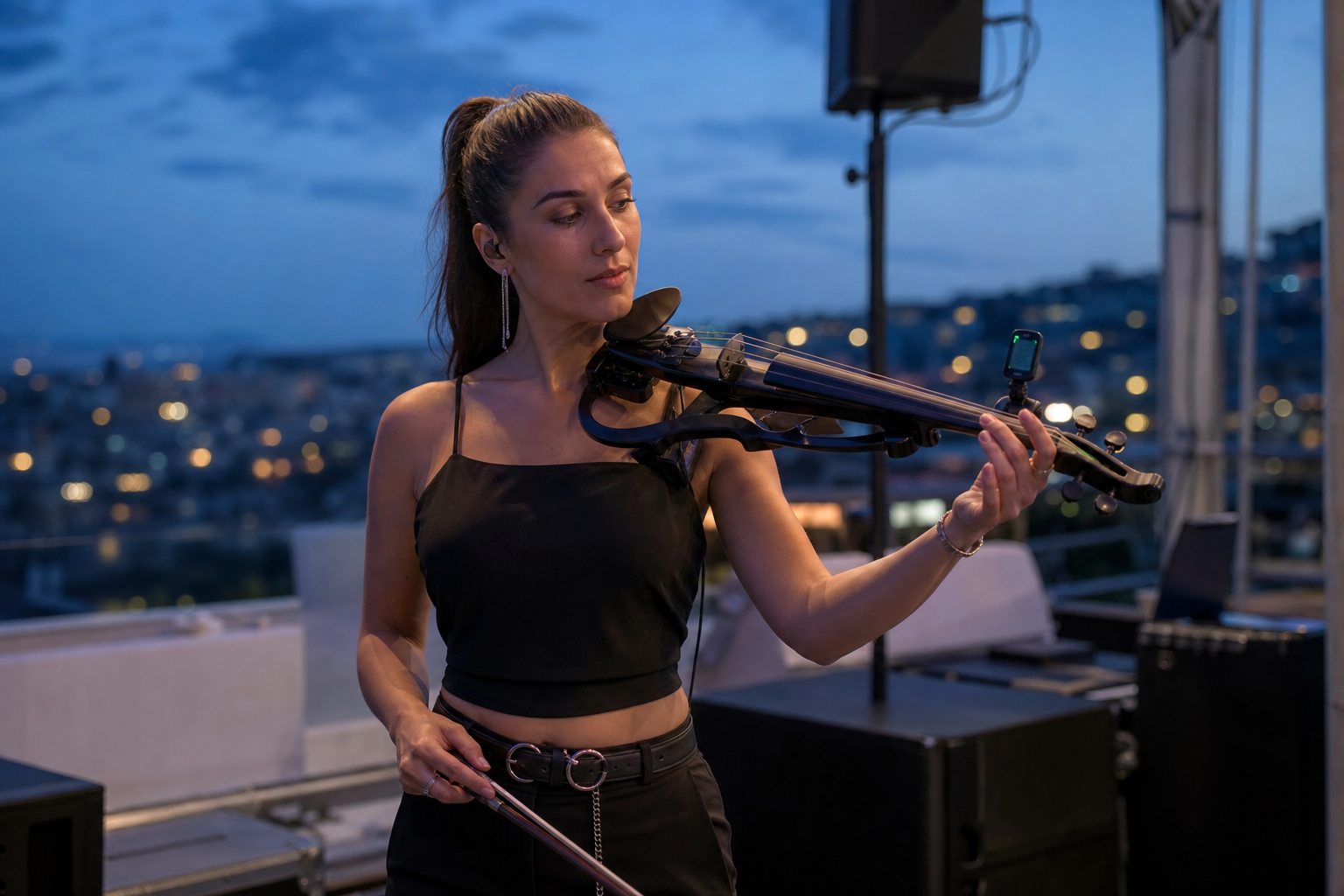
Who should buy the Korg AW-LT100V or Dolcetto-V instead?
Korg still makes sense when you value violin-specific function over trendier styling. The AW-LT100V is the better buy if you want the stronger screen and the long-life AAA logic. Korg says it is designed specifically for violin and viola, includes dedicated violin and viola modes, shows string numbers, and can run for about 100 hours on one AAA battery. That is strong working-player practicality.
The Dolcetto-V is the simpler, cheaper-feeling branch of the same idea. Korg positions it with a special violin/viola clip and a mode that shows pure fifths. I like that when the player still cares about bowed-string logic and intonation reference, but does not need the more premium AW-LT100V presentation.
Which Korg should you buy?
Buy AW-LT100V if you want longer battery life, a brighter current-generation feel, and a stronger stage-readability argument. Buy Dolcetto-V if budget matters more and you still want an orchestral-string-aware clip-on instead of a guitar-first generic tuner.
- AW-LT100V pros: dedicated violin clip, color LCD, long AAA life, dedicated modes, and strong practical value.
- AW-LT100V cons: larger body and a more technical look than the most discreet D'Addario options.
- Dolcetto-V pros: violin-specific clip, pure-fifths-friendly mode, and better value for lighter-use players.
- Dolcetto-V cons: older-school feel and less premium screen experience than the top picks.
See Korg AW-LT100V · Find AW-LT100V on Amazon
See Korg Dolcetto-V · Find Dolcetto-V on Amazon
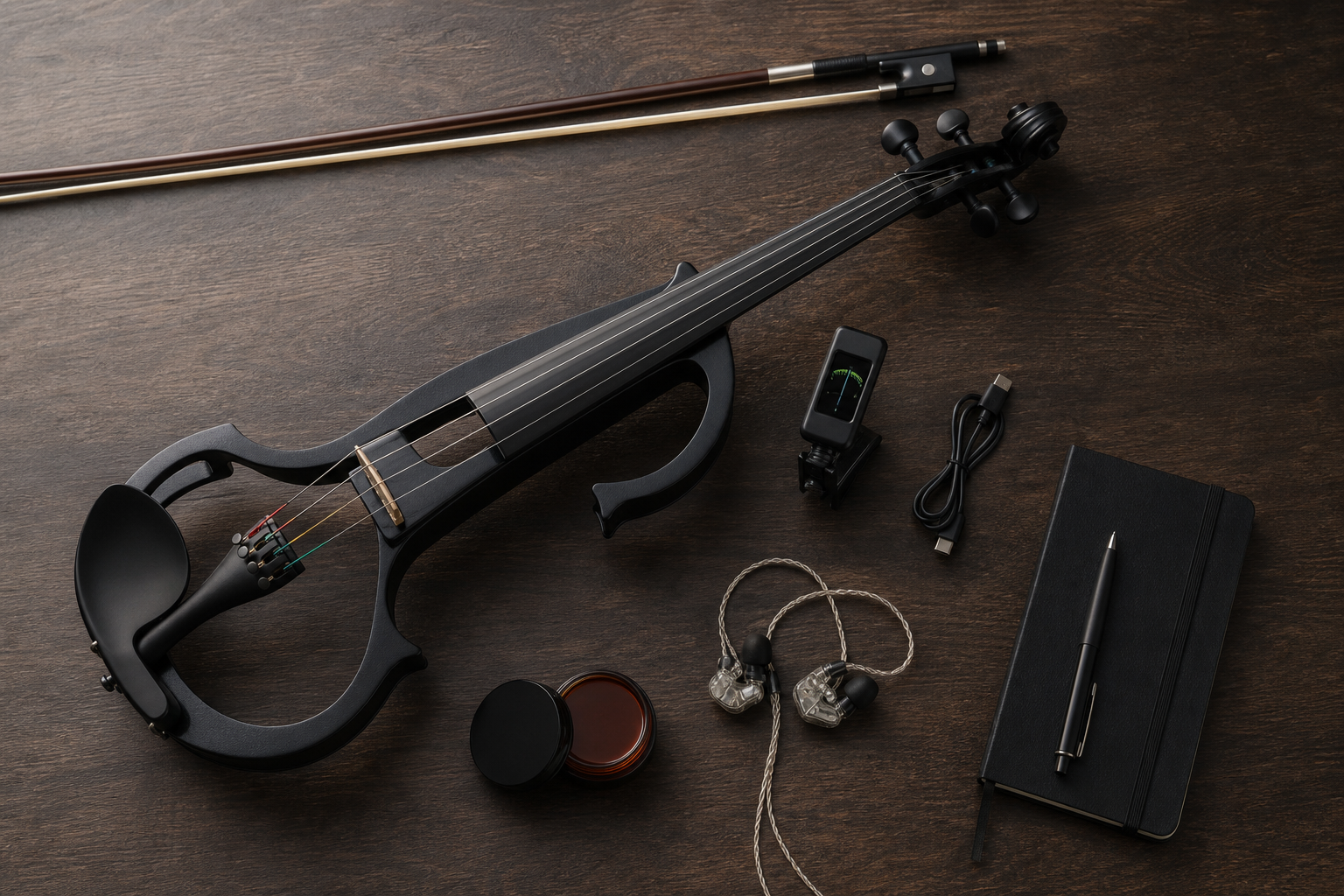
When does the Peterson StroboClip HD justify the extra money?
It justifies the money when you are not buying a convenience tool anymore. You are buying tuning authority. Peterson says the StroboClip HD brings true strobe 0.1-cent accuracy, a high-definition backlit display, visibility in direct sunlight, more than fifty Sweetened Tunings, and a wide clamp over one inch. It also calls out a raised power button and tactile controls for dark stages. That matters to Tanya Strings because the premium here is not about bragging rights. It is about exposed intros, exact unison entries, content filming, and the kind of intonation work where a generic needle display starts feeling vague.
Who should pay for Peterson instead of something simpler?
Pay for Peterson when your ear is already disciplined, your shows expose pitch clearly, and you want the clip-on version of a premium accuracy mindset rather than just a fast yes-or-no tuning check.
- Pros: excellent precision, premium tracking feel, wide clamp, sunlight visibility, and strong low-light controls.
- Cons: high price and more depth than many working violinists need for ordinary backstage sanity checks.
See Peterson StroboClip HD · Find StroboClip HD on Amazon
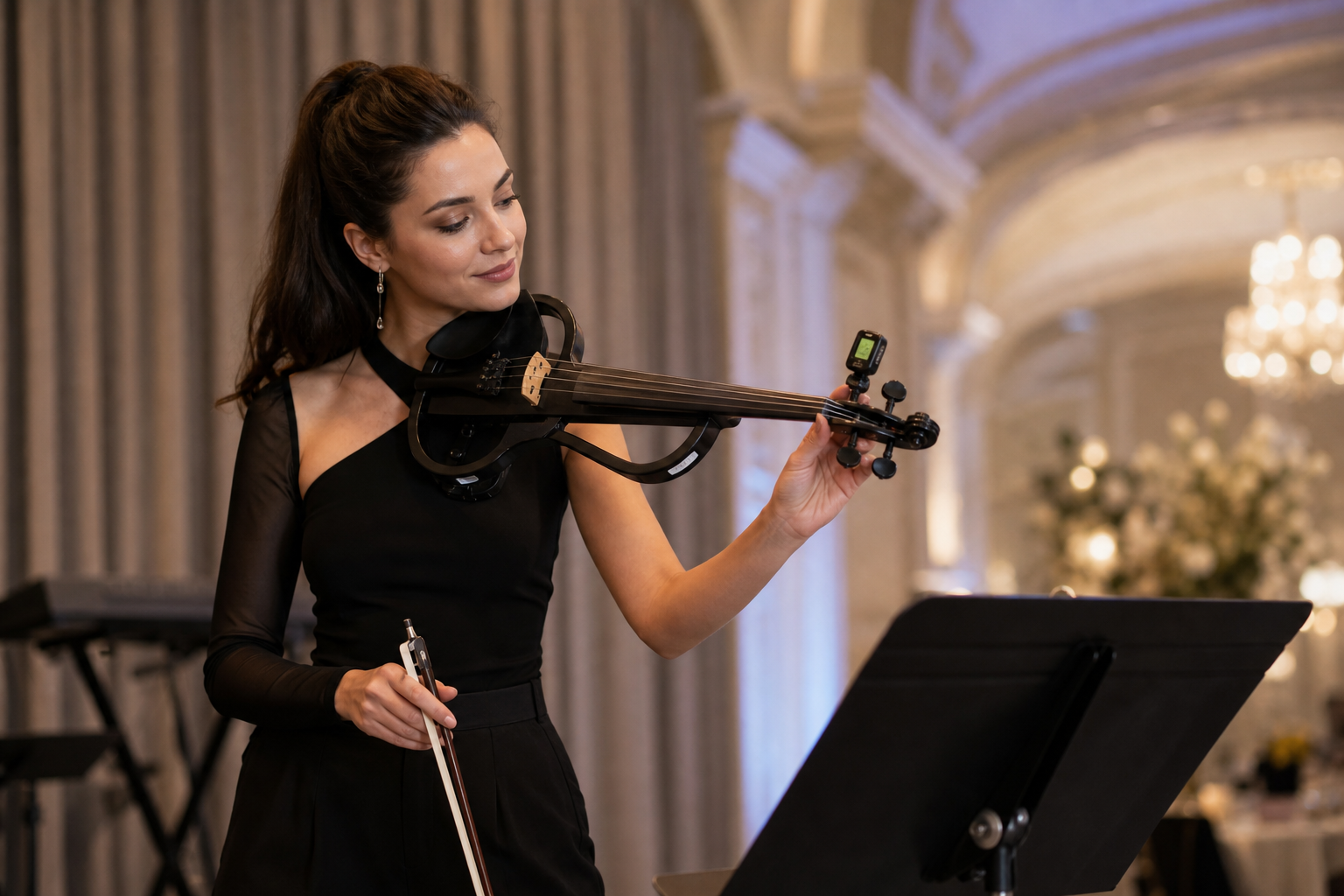
How should you buy a clip-on violin tuner without wasting money?
Buy for the tuning situation, not for abstract hype. Electric violin performers do not all need the same thing. Some need a silent backstage checker. Some need a travel-friendly backup to a tuner pedal. Some need a violin-specific clip for acoustic doubles. Some need a precise content-recording companion.
My buying checklist:
- Choose violin-specific mounting first if you care about elegant placement and believable vibration tracking.
- Choose rechargeable first if you play often and hate accessory clutter or dead coin cells.
- Choose AAA only when you really value instant battery swaps and long shelf life.
- Pay for premium precision only if your workflow will actually reward it.
- Keep a tuner pedal first if your main live problem is silent stage muting inside a full rig.
If the rest of the stage system is still messy, fix the bigger pieces first with the wireless guide, the instrument cable guide, and the in-ear monitor guide. A clip-on tuner is useful, but it is not the first thing that fixes a weak show path.
When should you skip this purchase and buy something else first?
Skip it first if you already own a dependable clip-on tuner that you actually trust. Also skip it if your real live problem is not tuning but monitoring, cable noise, power management, or unstable playback control. Tanya Strings would not buy a premium clip-on before securing a reliable show signal, calm monitoring, and a repeatable charging habit. The tuner only becomes a strong value buy after those basics stop wobbling.
What else do performers ask about clip-on violin tuners?
What clip-on violin tuner should most electric violinists buy first?
For most players, I would start with the D'Addario Nexxus 360 because it balances visibility, violin-specific mounting, rechargeability, and believable live-use speed.
Is a clip-on tuner better than a tuner pedal for live electric violin?
Not always. A tuner pedal still wins inside a full electric rig, but a clip-on tuner is often better for backstage checks, acoustic doubles, rehearsals, and low-friction travel use.
Should I buy rechargeable or AAA-powered?
Rechargeable usually wins for frequent performers. AAA still makes sense if you value instant swaps, long shelf life, and simpler travel redundancy.
Do violin-specific tuners really matter?
Yes, usually. The right mount and the right vibration behavior make the tuning process feel calmer, faster, and more natural for bowed-string workflow.