Monitoring · 2026-08-11
Best Wired In-Ear Monitor Belt Packs for Electric Violinists Who Want Simple, Reliable Stage Monitoring
For most electric violinists, the best wired in-ear monitor belt pack to buy first is the Behringer P2 because it is affordable, compact, takes a balanced mixer feed, and fixes the biggest live problem quickly: hearing yourself clearly without paying wireless money. Move to ART HP-1 if battery life matters more, PreSonus HP2 if you need a real stereo feed with pan control, Fischer Amps In Ear Stick if you want premium compact power, and Rolls PM351 if you want to blend your own violin into the monitor path. Tanya Strings treats wired monitoring as stage discipline, not compromise.
Follow Tanya Strings on Google
Add the site as a preferred source to see more new violin posts from Tanya Strings in Google.
Some links in this article are affiliate links. I may earn a commission if you make a purchase, at no extra cost to you.
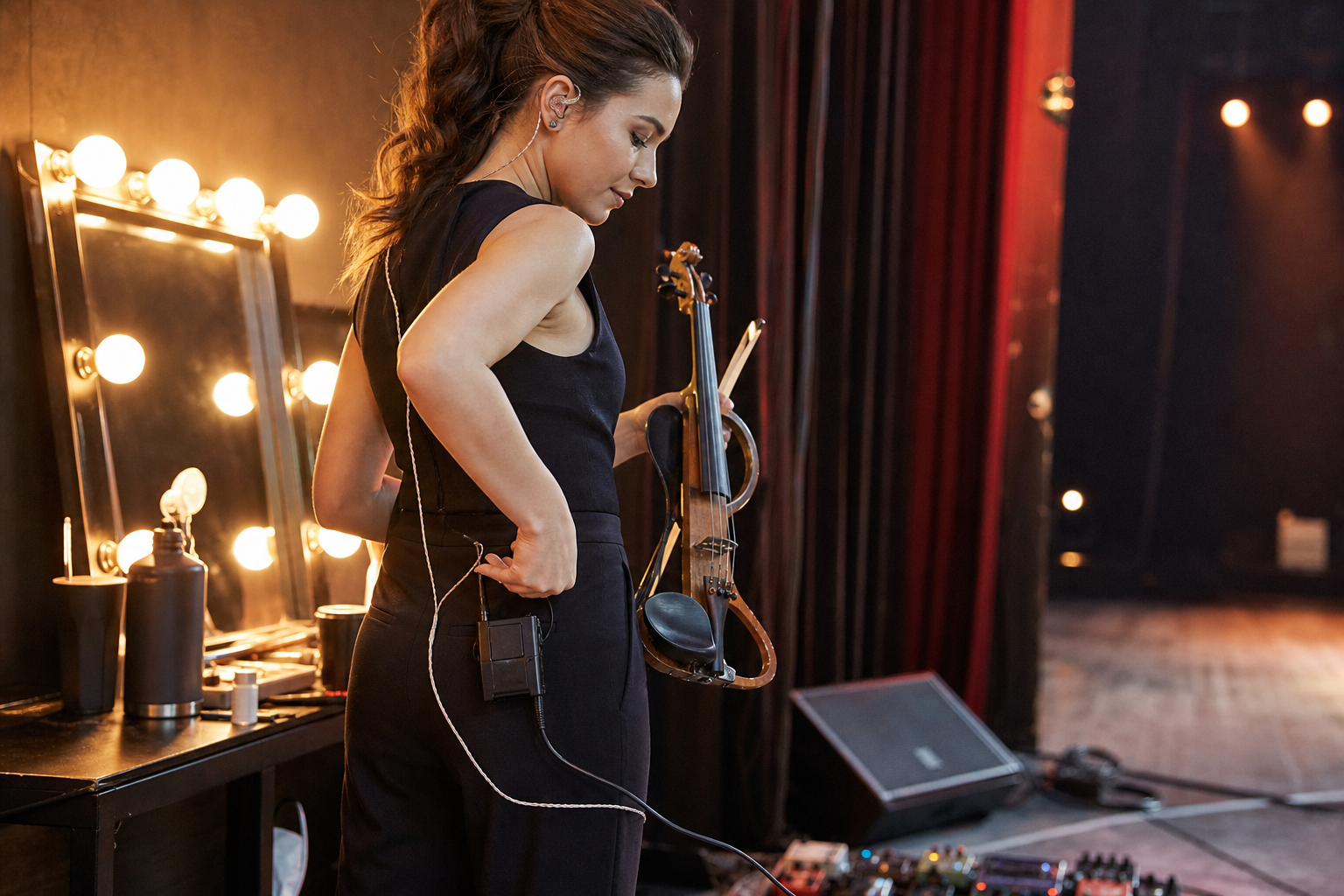
What is the best first wired in-ear monitor belt pack for most electric violinists?
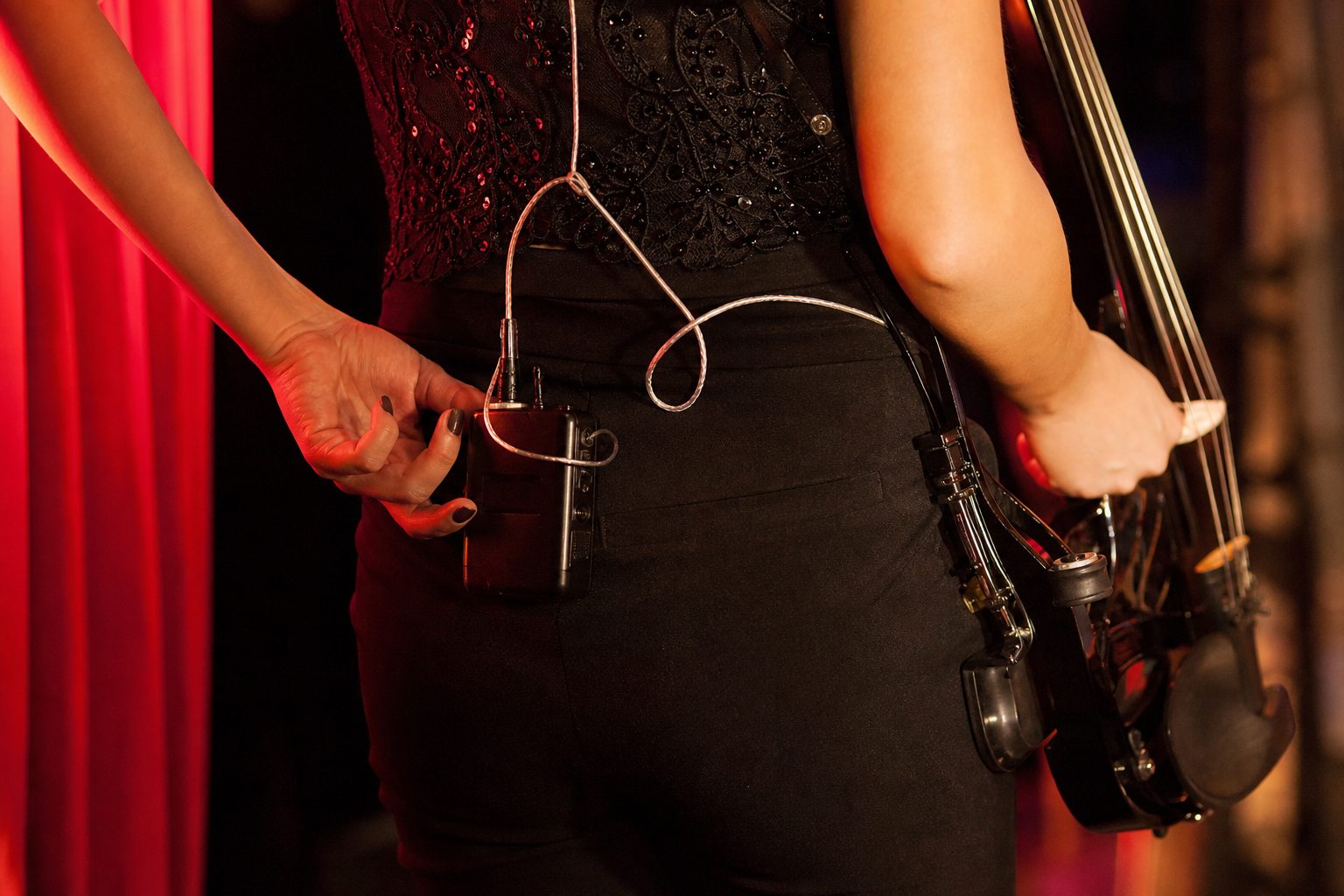
For most working players, I would start with the Behringer POWERPLAY P2. Tanya Strings likes it because it solves the real first problem cleanly. I want a belt pack that takes a proper line feed from the mixer, gives me easy level control, and stops the wedge from deciding how calm my intonation feels. Behringer positions the P2 as an ultra-compact wired in-ear amplifier with a locking XLR or TRS combo input, mono or stereo operation, and a metal belt-pack chassis. That is exactly the kind of no-drama starting point I trust on electric violin.
My performer rule: if my monitor path feels fragile, the show feels fragile, even when the violin itself is ready.
Which wired in-ear monitor belt packs are worth buying right now?
This shortlist stays focused on electric violin stage use, not generic drummer advice. I care about line-level compatibility, cable discipline, battery behavior, stereo options, and whether the pack helps me hear pitch center and tracks without adding a second technical headache.
| Product | Best for | Why Tanya would use it | Watch out for | Links |
|---|---|---|---|---|
| Behringer P2 | Most players who want the cheapest serious first wired IEM pack | I trust it because it is simple, small, and built around the exact mixer-to-belt-pack workflow many electric violinists need first. | It is the utility buy, so you choose it for speed and value, not for luxury extras. | Official · Amazon |
| ART HP-1 | Players who want a simple pack with stronger battery-life confidence | I like it when I want the same basic idea as the P2, but with over 40 hours of stated operation from two AA batteries and a clean mono or stereo switchable path. | It is still a straightforward one-feed pack, so buy it for stamina and simplicity, not for blend-box control. | Official · Amazon |
| PreSonus HP2 | Performers who want a proper stereo feed with pan control | I would use it when the set includes tracks, click, or a denser production where a true left-right picture makes the violin easier to place in the ear. | Stereo is only useful if the mixer send is actually planned well, so do not pay extra for imaginary complexity. | Official · Amazon |
| Fischer Amps In Ear Stick | Premium compact rigs that want low output impedance and a limiter | I respect it when the monitor pack is part of a polished touring workflow and I want a very compact premium tool with serious headphone amp behavior. | This is the premium compact move, so it makes less sense if your whole monitoring chain is still basic and inconsistent. | Official · Amazon |
| Rolls PM351 | Solo or hybrid performers who want their own violin feed plus monitor mix | I would choose it when I want more self-control than a basic belt pack gives, especially if the rig needs my own instrument or mic blended with the house monitor path. | It is more of a deliberate system choice, so skip it if a simple mono or stereo pack already solves your real problem. | Official · Amazon |
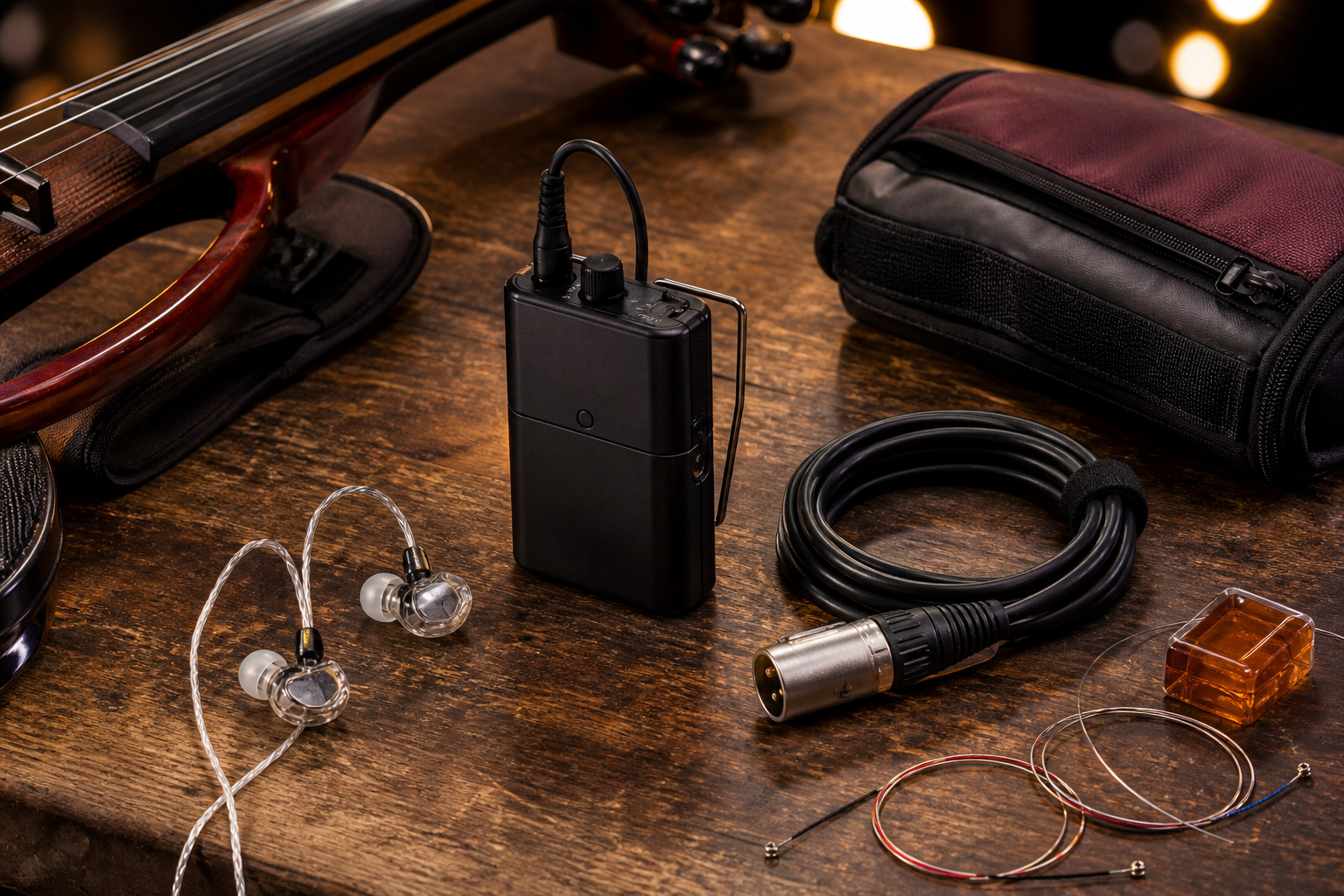
When should you buy the Behringer P2 first?
Buy it first when you want the fastest jump from inconsistent wedges to repeatable personal monitoring. Behringer describes the P2 around a locking combo input, mono or stereo operation, a standard 3.5 mm headphone output, and a belt-clip form factor. That makes sense for Tanya Strings because many violinists do not need a grand monitoring architecture on day one. They need one reliable monitor feed that lives on the body, stays easy to reach, and stops the room from throwing off pitch and timing.
- Pros: low cost, direct mixer compatibility, compact size, simple control, and a very easy first step into wired IEM workflow.
- Cons: no blend controls, no deluxe stereo pan section, and no reason to buy it if you already know you need more advanced routing.
See the Behringer P2 · Find the Behringer P2 on Amazon
When is ART HP-1 a better simple pack than the P2?
ART HP-1 makes more sense when you like the simple one-feed idea but care more about battery endurance and road confidence. ART positions the HP-1 as a battery-powered clip-on headphone amplifier for wired in-ear use, with a locking combo input, mono or stereo switching, a 3.5 mm headphone output, and over 40 hours of operation from two AA batteries. Tanya Strings pays attention to that because there are plenty of wedding, corporate, and travel days where the easiest win is fewer battery worries and fewer tiny compromises.
Why would I choose it over the cheaper pack?
I would choose it when the monitor pack is going to live in the case for long days and I want fewer power surprises. That matters more than shaving the last few dollars off the purchase.
- Pros: very strong stated battery life, locking combo input, mono or stereo switching, and a rugged clip-on form.
- Cons: still a basic feed-only pack, so it does not replace a more advanced routing tool when you need mix control.
See the ART HP-1 · Find the ART HP-1 on Amazon

Why does PreSonus HP2 make more sense for stereo monitor mixes?
The PreSonus HP2 is the better move when your set actually benefits from stereo information. PreSonus describes it as a battery-powered stereo personal headphone amplifier with two female XLR line inputs, mono or stereo operation, a pan knob, and 9V battery or DC power support. That matters when Tanya Strings is running tracks, click, or a wider production picture and wants the violin to sit in a cleaner left-right space instead of inside one crowded mono lane.
- Buy HP2 if stereo is part of the real show design and not just a nice idea.
- Skip HP2 if you always receive a single mono aux and simply need stable level control on the body.
See the PreSonus HP2 · Find the PreSonus HP2 on Amazon
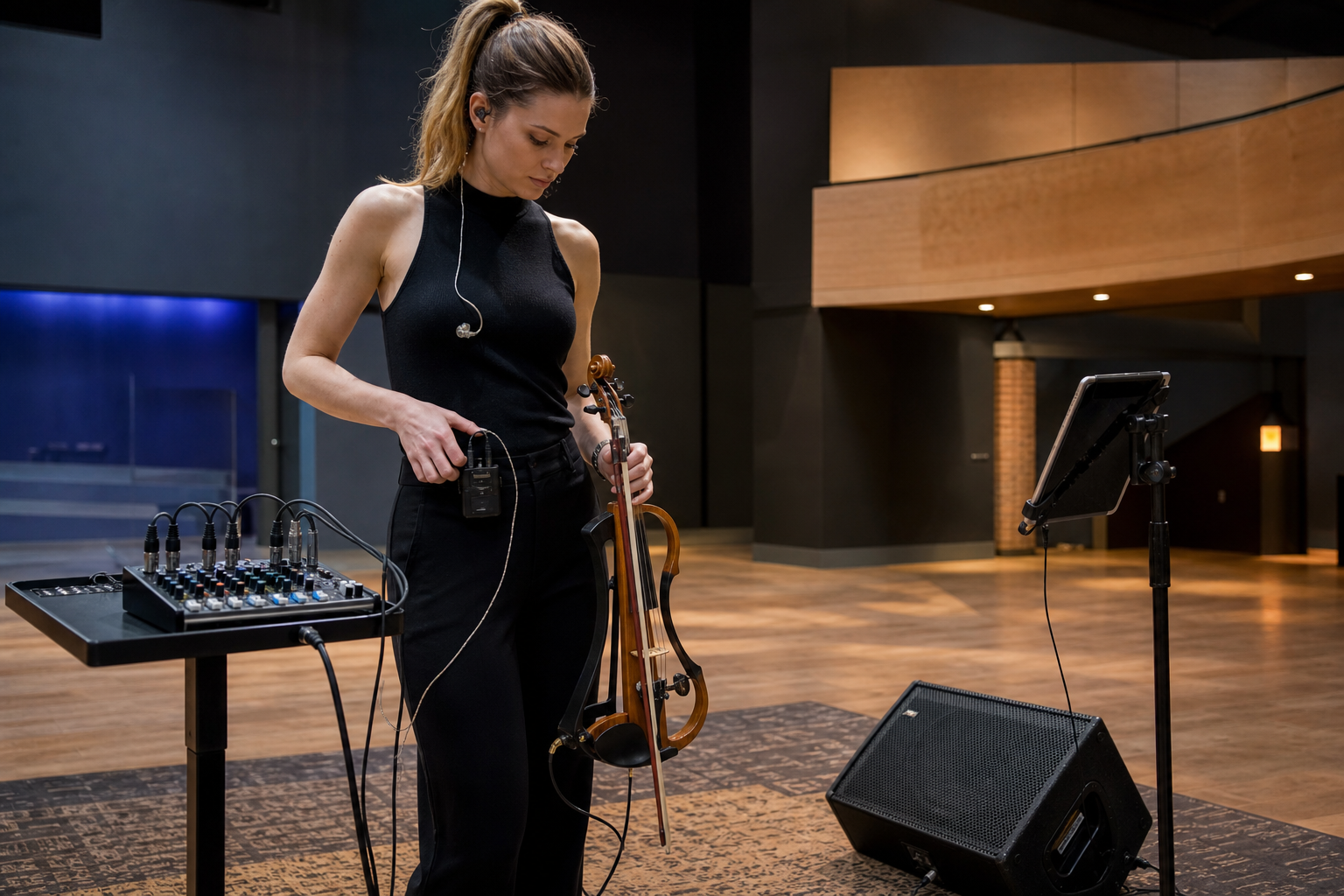
When is Fischer Amps In Ear Stick worth premium money?
It is worth it when the monitoring pack is already part of a serious touring workflow. Fischer Amps describes the In Ear Stick as a miniature pro audio in-ear amplifier with balanced mono or unbalanced stereo switching, a Neutrik combo input, two 100 mW of output power, very low 1.5-ohm output impedance, an electronic limiter, and more than 10 hours of operation from two AAA cells. Tanya Strings notices that because premium monitor tools matter when you are already protecting nuance, not when you are still solving beginner-level routing mistakes.
- Pros: premium compact build, limiter, strong output behavior, very low output impedance, and a more refined touring feel.
- Cons: noticeably more expensive than entry packs and less sensible if the rest of the rig is still casual.
See the Fischer Amps In Ear Stick · Find the In Ear Stick on Amazon
Who should buy a blend box like the Rolls PM351 instead of a simple belt pack?
The Rolls PM351 makes sense when you want your own violin or mic feed blended with the house monitor signal, not just louder headphones. Rolls describes the PM351 around a stereo or mono line input, an XLR mic input with pass-through, a stereo or mono instrument input with balanced XLR outputs, individual level controls, and ground-lift options on the mic through and instrument outputs. Tanya Strings would consider it for solo or hybrid sets where I want more direct authority over what the violin is doing in my ears, especially when the front-of-house monitor mix is not the whole story.
- Pros: more self-controlled monitoring, instrument and mic blend capability, pass-through routing, and a better fit for deliberate solo rigs.
- Cons: more complexity, more cabling, and more reason to think carefully about the full signal path before buying.
See the Rolls PM351 · Find the Rolls PM351 on Amazon
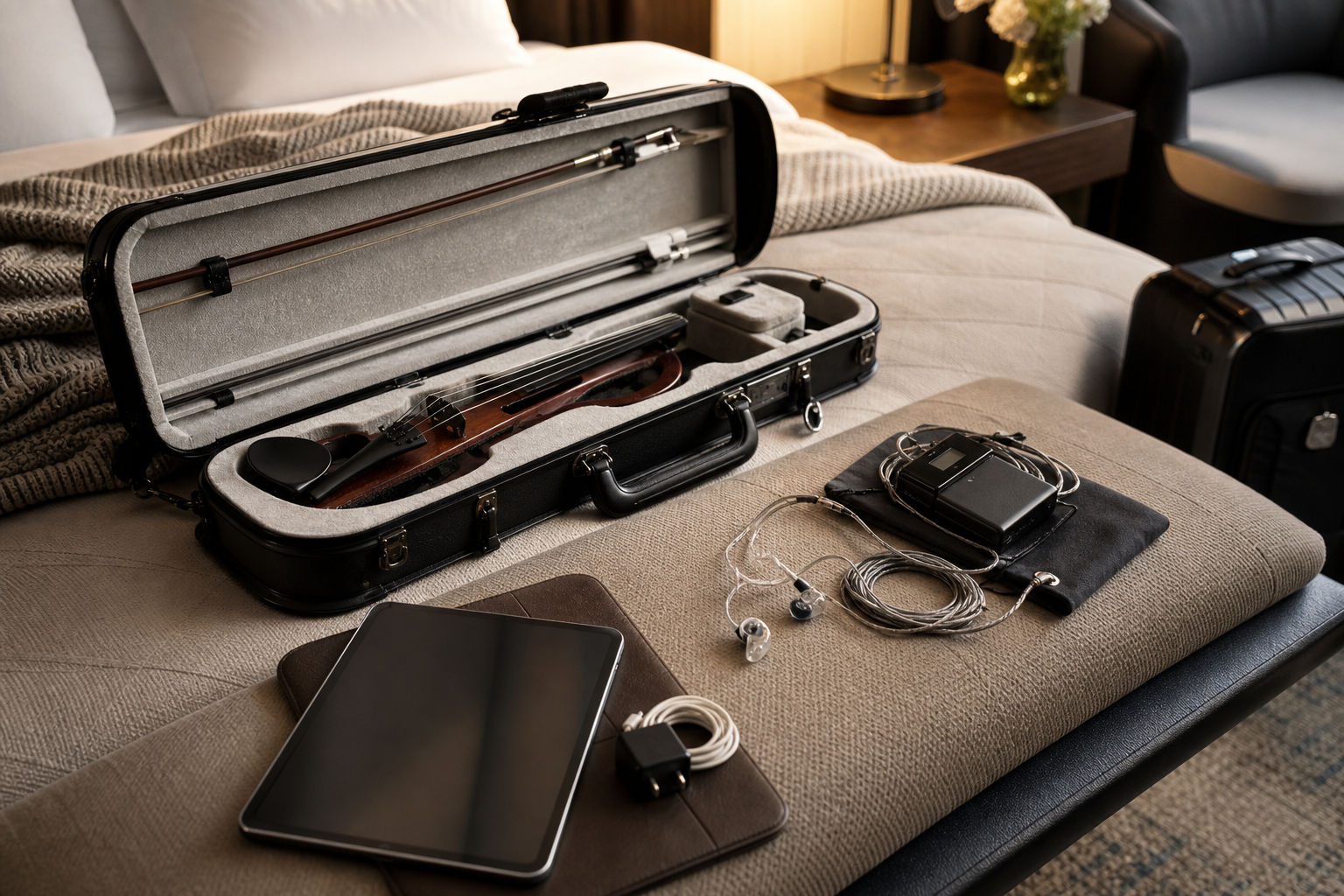
How should you choose a wired IEM belt pack for live electric violin work?
Buy the simplest pack that matches the real show. Electric violin monitoring gets messy when players buy for fantasy instead of workflow. Tanya Strings would choose by signal type first, then by battery behavior, then by how much control the set truly needs.
My buying guide:
- Buy a basic pack first if the only missing piece is a cleaner personal monitor feed from the mixer.
- Pay for stereo only when backing tracks, click, or wider production cues genuinely need a left-right image.
- Move to a premium compact pack when the rest of the rig is already polished enough to reveal the difference.
- Choose a blend box only if you know why your own violin or mic feed must live inside the personal monitor mix.
- Keep the wired monitor choice connected to the rest of the live rig, including my in-ear monitor, wireless system, stage monitor, and compact mixer decisions.
The point is not to build a complicated monitoring hobby. The point is to protect intonation, timing, and confidence so the performance feels world-class before the first bow stroke lands.
FAQ
What wired in-ear monitor belt pack should most electric violinists buy first?
Start with the Behringer P2 if your goal is a cheap, reliable first wired monitor path from the mixer to your ears. It solves the main problem without asking for a complicated rig redesign.
Is wired monitoring better than wireless for electric violin?
Often yes, especially when cost, simplicity, and soundcheck repeatability matter more than free movement. Wireless becomes worth it when movement is truly part of the performance design.
Do I need stereo monitoring for violin?
No. Many performers are fine with mono. Stereo becomes more useful when the show includes tracks, click, or a mix dense enough that panning makes the violin easier to hear.
When should I buy a blend box instead of a simple belt pack?
Buy the blend box when you want to control your own violin or mic feed alongside the house monitor send. If you only need volume and one clean feed, a basic pack is usually smarter.