Studio Monitoring · 2026-08-25
Best Studio Monitor Speakers for Electric Violinists Editing Tracks, Reels, and DI Tone
For most electric violinists, the best studio monitor speakers are the Kali Audio LP-6 V2 because they give Tanya Strings the clearest mix of honest low end, stable stereo image, and enough headroom for DI violin tone, backing tracks, and reel editing without forcing a subwoofer right away. If your desk is tighter and you want stricter midrange discipline, buy the Yamaha HS5. If you want a wider sweet spot, the JBL 305P MkII and ADAM Audio T5V are strong. For a hybrid creator desk, the PreSonus Eris 5BT 2nd Gen is easier to live with.
Follow Tanya Strings on Google
Add the site as a preferred source to see more new violin posts from Tanya Strings in Google.
Affiliate disclosure: Some links in this article are affiliate links. I may earn a commission if you make a purchase, at no extra cost to you.
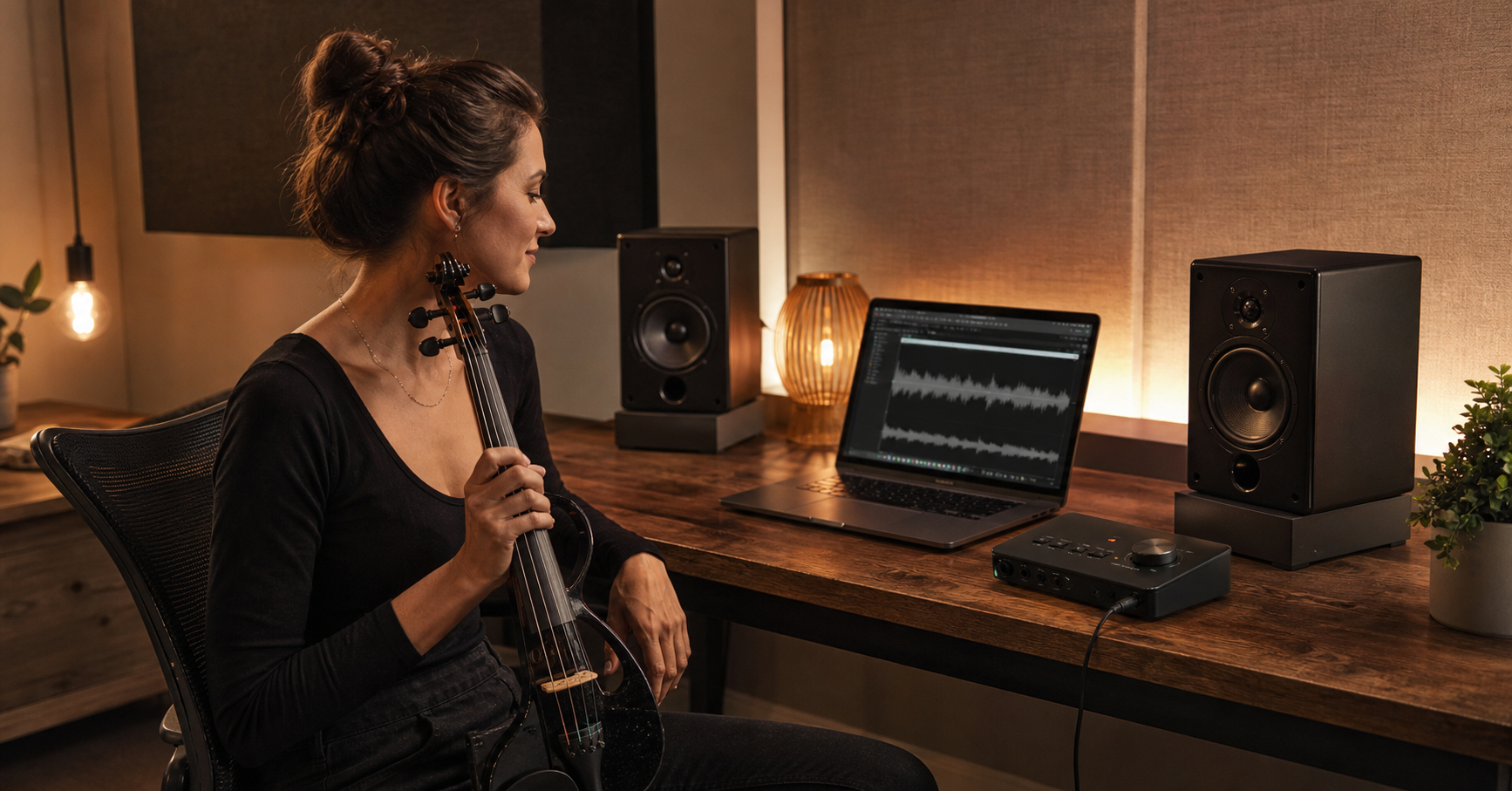
What are the best studio monitor speakers for most electric violinists?
The safest overall answer is the Kali Audio LP-6 V2 because electric violinists usually need one pair of speakers that can judge three things at once: DI violin tone, backing-track balance, and how creator content feels in a real room. Kali positions the LP-6 V2 as an 80 W bi-amped, front-ported monitor with XLR, TRS, and RCA inputs, a 39 Hz to 25 kHz frequency response at -10 dB, and boundary EQ options. That combination gives me more low-end truth than many 5-inch rivals without turning the desk into a subwoofer project. If your main concern is live playback, use my guide to powered stage monitors instead. If your work stays mostly silent, pair this article with my guide to closed-back headphones.
Which studio monitors are worth buying right now?
I kept this list focused on pairs that make sense for electric violinists who perform, record ideas, edit short-form content, and shape tracks from a desk instead of from a full control room. If your interface is still the weak link, read my guide to audio interfaces for recording electric violin at home after this.
| Product | Best for | Why Tanya would use it | Watch out for | Links |
|---|---|---|---|---|
| Kali Audio LP-6 V2 | Most electric violinists who want one honest all-around monitor pair | I trust it because the 6.5-inch format gives DI violin, backing tracks, and cinematic low mids more room to tell the truth before I ever add a sub. | It needs a little more desk space than compact 5-inch pairs, so measure first. | Official · Amazon |
| Yamaha HS5 | Small rooms and players who want disciplined midrange decisions | I would buy it when I want the speaker to expose bow noise, nasal upper mids, and harsh EQ choices before they go public. | It does not fake extra bass, so people who want a flattering first listen may find it austere. | Official · Amazon |
| JBL 305P MkII | Players who move around at the desk and want a forgiving sweet spot | I like it because the broad listening zone helps when I am switching between violin, keyboard, interface, and camera without staying frozen in one inch of space. | The low end can feel generous in a bad room, so placement still matters. | Official · Amazon |
| ADAM Audio T5V | Performers who want more treble detail and a wide stereo image | I reach for it when articulation, transient edges, and upper-air detail in electric violin layers need to stay easy to judge. | The rear port means it likes better placement discipline than front-ported rivals. | Official · Amazon |
| KRK Rokit 5 Generation Five | Hybrid creator desks that want tunable voicing and quick room correction help | I respect it because the mix, create, and focus modes let one desk move between critical work, arrangement sketching, and fast content review. | You still have to know which mode you are hearing, or your decisions get inconsistent. | Official · Amazon |
| PreSonus Eris 5BT 2nd Gen | Creator setups that also want casual playback, Bluetooth, and desk convenience | I would use it when the same room has to cover editing, references from a phone, and quick social-content review without extra adapters. | It is the most lifestyle-friendly pick here, not the purest critical-listening choice. | Official · Amazon |
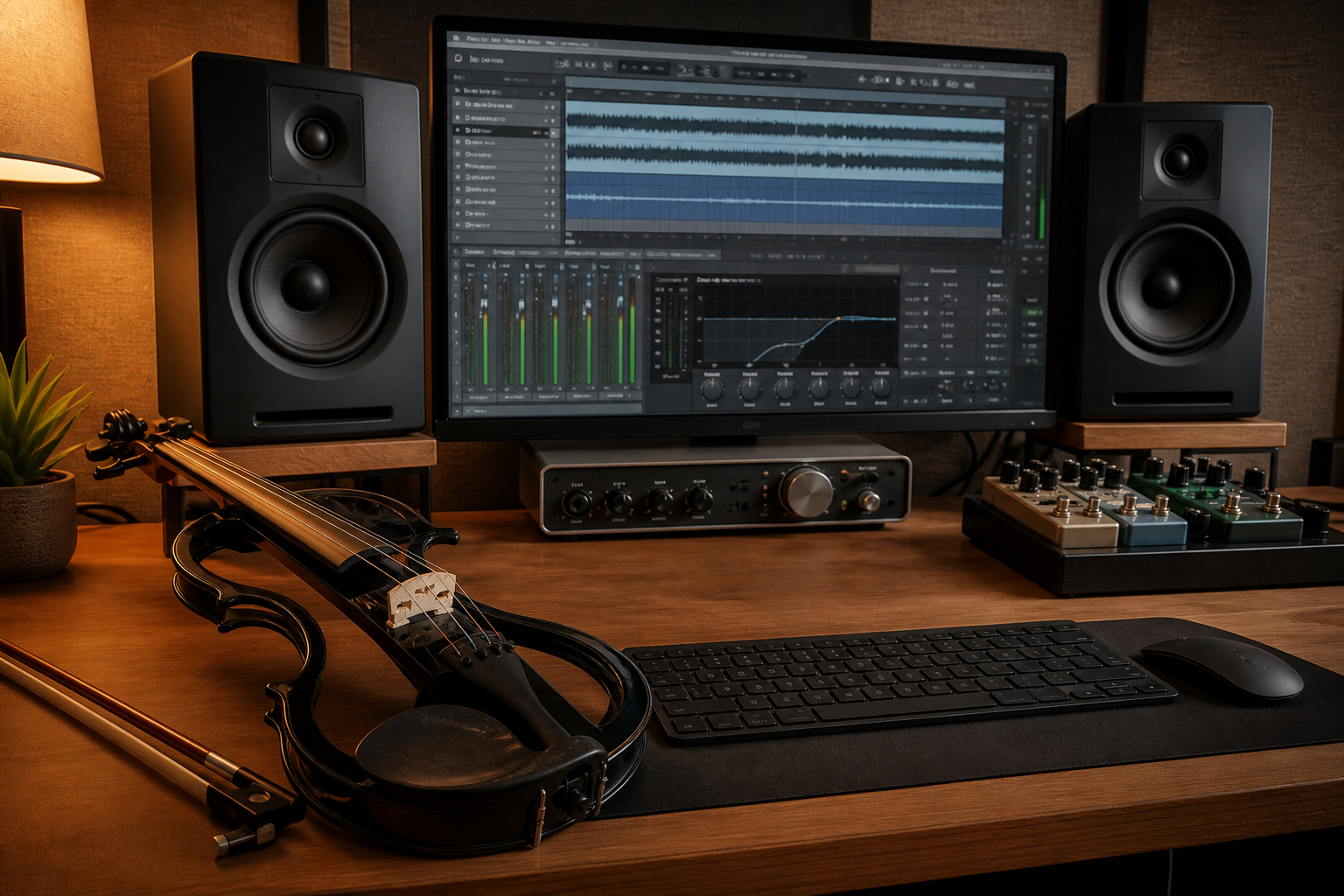
Why is Kali Audio LP-6 V2 my best overall pick?
The Kali Audio LP-6 V2 wins because it covers the broadest range of electric violin jobs without becoming a science project. Kali says the LP-6 V2 uses 80 W of total power, a front-ported enclosure, balanced XLR and TRS plus unbalanced RCA input, and boundary EQ controls designed to help on desks and near walls. That matters because many electric violinists work in creator rooms, not purpose-built studios. I want enough bass information to judge layered tracks and synth support, but I do not want hyped low end that flatters a muddy arrangement. The LP-6 V2 gets closer to that balance than anything else in this price lane.
Who should buy the LP-6 V2 first?
Buy it first if you publish performance clips, shape backing tracks, or record DI violin often enough that slightly bigger speakers will save you from constant second-guessing.
- Pros: stronger low-end truth, front port for easier placement, good inputs, solid output, and serious value.
- Cons: larger footprint than compact 5-inch pairs, more visual bulk on a small desk, and still benefits from basic stands or isolation pads.
See the Kali Audio LP-6 V2 · Check LP-6 V2 on Amazon
When is Yamaha HS5 the smarter small-room choice?
The Yamaha HS5 is the pick when you want discipline more than romance. Yamaha positions the HS5 as a 2-way bi-amp monitor with a 5-inch woofer, 1-inch dome tweeter, 54 Hz to 30 kHz frequency response, 70 W total output, and Room Control plus High Trim switches. That usually translates into a speaker that tells me quickly when upper mids are getting sharp or when my bow attack is turning scratchy on recorded electric violin. If your room is tight, your desk is shallow, or you already know you over-EQ the presence zone, the HS5 is a useful truth machine.
Who should start with the HS5?
Start here if your room is small and your bigger problem is tonal honesty in the critical violin range, not maximum bass extension.
- Pros: compact footprint, disciplined mids, clear voicing, room controls, and proven long-term trust factor.
- Cons: less bass extension than the Kali, less forgiving first impression, and can feel lean if you want a more cinematic playback sound.
See the Yamaha HS5 · Check HS5 on Amazon
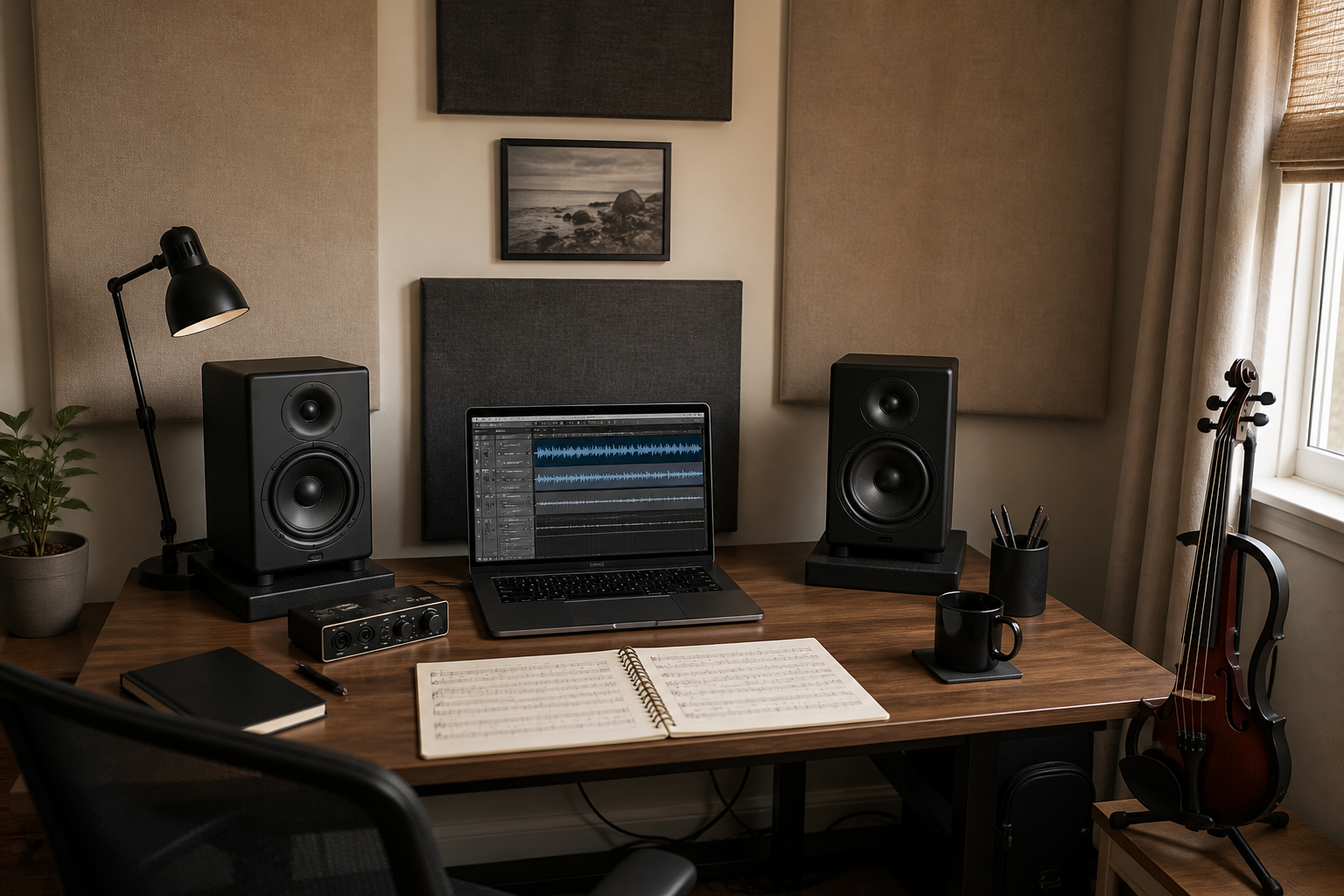
Which monitors make more sense if you want a wider sweet spot or more top-end detail?
This is where the JBL 305P MkII and ADAM Audio T5V become especially useful. Both are good if you move while working, switch between violin and screen often, or care a lot about image width and articulation.
Why would I choose JBL 305P MkII?
JBL says the 305P MkII provides 82 W of power, balanced XLR and 1/4-inch TRS inputs, adjustable input sensitivity, and a design built around its Linear Spatial Reference approach. In real use, that usually means a generous sweet spot. I like that for electric violin because I am rarely statuesque at the desk. I am reaching for the instrument, checking a pedal, replaying a section, and glancing at edits. A monitor that stays coherent while I move is genuinely useful.
- Pros: wide listening zone, good value, strong connectivity, and easy day-to-day usability.
- Cons: can sound a little bigger in the low end than a bad room deserves, so placement still matters.
See the JBL 305P MkII · Check 305P MkII on Amazon
When is ADAM Audio T5V the better move?
The ADAM Audio T5V makes more sense when you care deeply about treble texture, transient detail, and stereo width. ADAM says the T5V uses a 5-inch woofer, U-ART tweeter, HPS waveguide, 70 W total RMS power, and 45 Hz to 25 kHz response at -6 dB. That top-end behavior is useful when I want to hear whether the violin has elegant shine or just brittle hype after EQ, saturation, or exciters. It is also a strong pick for layered electric violin parts where upper-air separation matters.
- Pros: detailed top end, wide sweet spot, good transient clarity, and strong value for image precision.
- Cons: rear port wants smarter placement and the speaker can feel a little revealing if your room is untreated and bright.
See the ADAM Audio T5V · Check T5V on Amazon
Should you buy KRK Rokit 5 G5 or PreSonus Eris 5BT 2nd Gen for a hybrid creator desk?
If the desk has to handle critical work and faster creator workflow, these are the two picks I would separate carefully. The KRK Rokit 5 G5 is the more flexible performance tool. The PreSonus Eris 5BT 2nd Gen is the easier lifestyle-content desk answer.
Why would KRK Rokit 5 G5 help electric violin creators?
KRK says the Rokit 5 G5 gives you three voicing modes, 25 boundary and tuning EQ combinations, balanced XLR/TRS combo input, and response up to 40 kHz. That is attractive when one room keeps switching roles between mixing, arrangement, and casual reference playback. I would use Mix Mode for actual decisions and the alternative voicings as secondary checks, not as excuses to avoid learning my room.
- Pros: flexible voicing, practical EQ options, useful app support, and strong creator-room adaptability.
- Cons: easier to misuse if you keep changing modes and forgetting what the truthful reference is.
See the KRK Rokit 5 G5 · Check Rokit 5 G5 on Amazon
When is PreSonus Eris 5BT 2nd Gen the easier buy?
PreSonus positions the Eris 5BT 2nd Gen as a Bluetooth 5.0-enabled pair with 5.25-inch woofers, balanced 1/4-inch TRS, RCA, and front 1/8-inch input. I would choose it when the room has to do more than one job cleanly: edit a reel, reference a phone mix fast, play back arrangement ideas casually, and still stay close enough to studio behavior for content work. It is not my first pick for the most critical violin mixing, but it can be the most convenient desk companion in a small creator space.
- Pros: Bluetooth convenience, multiple inputs, easy hybrid workflow, compact pair format, and friendly day-to-day use.
- Cons: less purist than the more studio-strict options and easier to buy for convenience instead of truth.
See the PreSonus Eris 5BT 2nd Gen · Check Eris 5BT 2nd Gen on Amazon
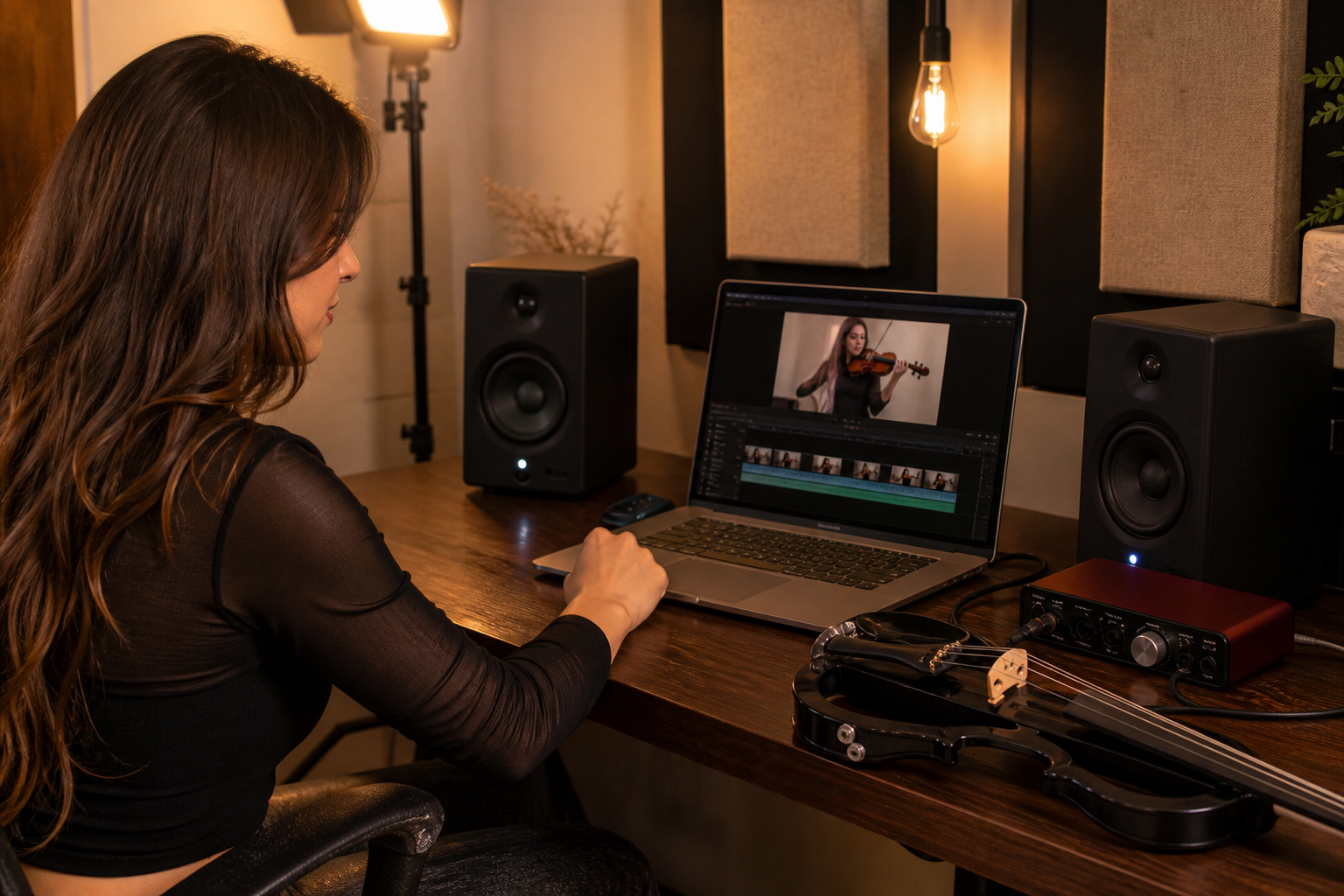
How should electric violinists buy studio monitors?
Buy around your actual workflow, not around producer fantasy shopping.
My buying checklist:
- Start with the room: small desk, untreated walls, and close listening distance usually favor honest nearfields over bigger speakers.
- Match the job: DI violin editing, backing-track balancing, and casual Bluetooth review are related jobs, but they are not identical.
- Respect placement: front-ported models tolerate walls better, while rear-ported speakers usually need more breathing room.
- Do not chase bass first: electric violin lives in the mids, and that is where bad buying choices usually show up.
- Budget for stands or isolation: good speakers directly on a resonant desk still make bad decisions easier.
- Keep one reference habit: I still cross-check important edits on headphones, the car, and a phone speaker.
What mistakes make studio monitors disappoint at home?
Most monitor disappointments come from setup laziness, not from the speaker being broken for violin.
- Buying for hype instead of truth: a flattering speaker can make electric violin sound finished before it really is.
- Pushing speakers against the wall without compensation: that often creates fake weight and hides muddy backing-track decisions.
- Skipping listening position discipline: if the monitors are too wide, too low, or uneven, stereo placement becomes guesswork.
- Judging only at loud volume: if the violin disappears quietly, the arrangement still needs work.
- Adding a subwoofer too early: more bass is not the same as more accuracy in a small content room.
FAQ
What size studio monitor is best for most electric violinists?
A strong 5-inch or 6.5-inch nearfield monitor is the safest answer. I would go 6.5-inch first if backing tracks and low mids matter a lot, and 5-inch first if the room is tight.
Do electric violinists need a subwoofer for editing tracks?
Usually no. I would rather learn one honest pair of nearfields well before adding extra bass problems to a small room.
Are studio monitors better than stage monitors for home editing?
Yes. Stage monitors are built for projection and live monitoring. Studio monitors are built to help you judge detail, balance, and image from a short listening distance.
Should I still use headphones if I buy studio monitors?
Yes. I use both. Speakers tell me how the violin breathes in a room, while headphones help me catch edits, noise, and stereo details at lower volumes.