Silent Practice · 2026-09-01
Best Headphone Amps and Mini Practice Amps for Electric Violinists Who Need Silent Practice, Hotel Warmups, and Fast Backing-Track Sessions
For most electric violinists, the best overall quiet-practice buy is the Fender Mustang Micro Plus because it gives you a tiny rechargeable format, onboard tuner, Bluetooth backing-track streaming, USB recording, and enough presets to move from clean warmup to polished content without unpacking a larger rig. If you want deeper editing and lower-latency feel in the same pocket class, the NUX Mighty Plug Pro is the sharper tech pick. If you want real speaker feel in a hotel room or creator desk, look harder at the Positive Grid Spark GO or Yamaha THR10II Wireless.
Follow Tanya Strings on Google
Add the site as a preferred source to see more new violin posts from Tanya Strings in Google.
Some links in this article are affiliate links. I may earn a commission if you make a purchase, at no extra cost to you.
What is the best overall silent-practice amp for most electric violinists?
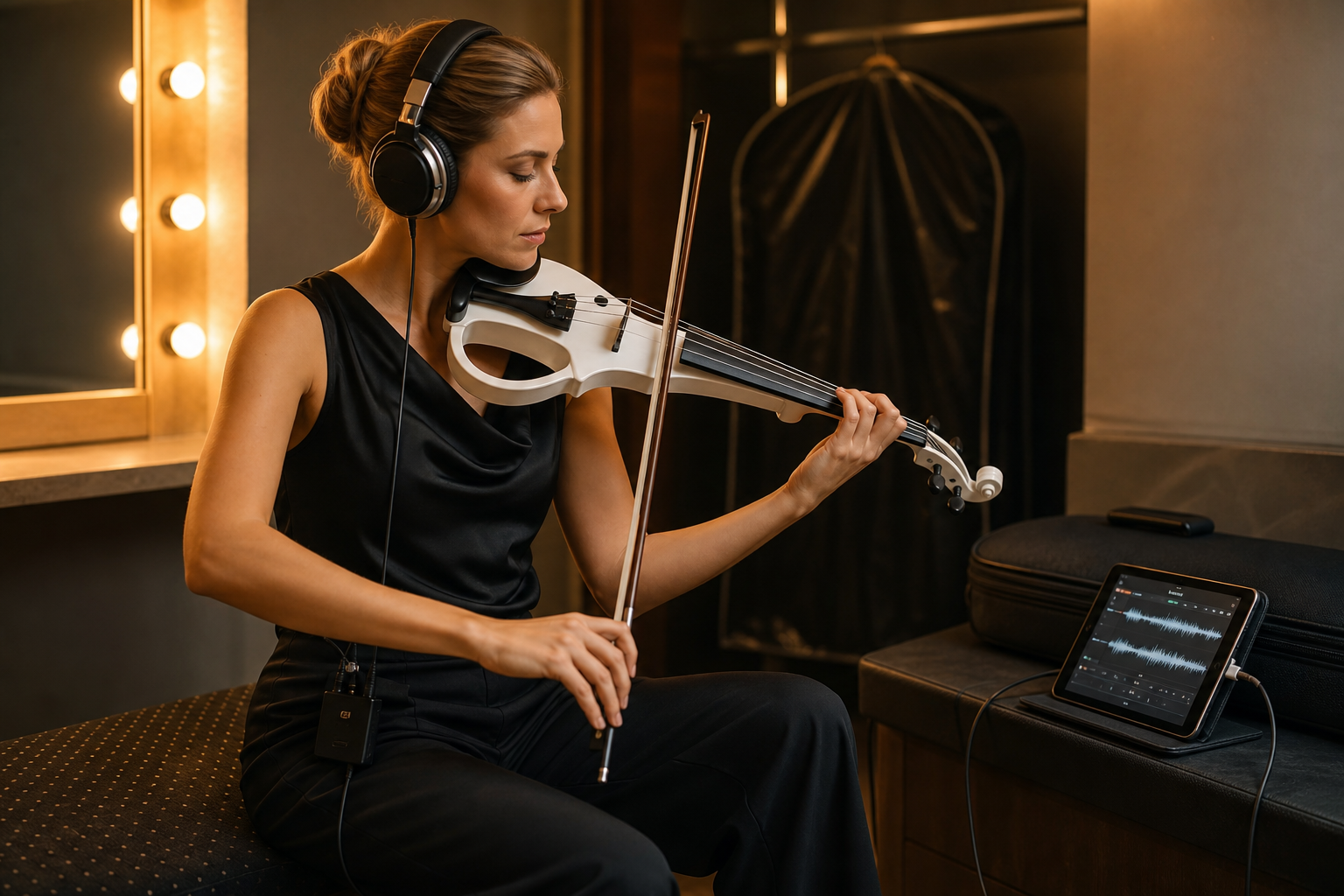
The safest overall answer is the Fender Mustang Micro Plus. Fender gives it 25 amp models, 25 effects, an onboard tuner, 100 preset slots, Bluetooth audio streaming with audio-video sync, over four hours of battery life, and bi-directional USB recording. That matters because Tanya Strings does not need a quiet-practice tool that is theoretically powerful but too annoying to pack. I need one unit that can handle backstage warmups, hotel-room repetition, and a quick creator capture pass when a riff idea lands at the wrong hour. The Mustang Micro Plus does that with very little friction.
My performer rule: if the warmup rig is slow to unpack, it will stay in the case on the day you need it most.
Which headphone amps and mini practice amps are worth buying right now?
I kept this list focused on portable rigs that make sense for electric violin, even when the products were designed with guitar players in mind. For me, the key is clean voicing, headphone comfort, easy backing-track playback, and how fast the unit gets from bag to bow.
| Product | Best for | Why Tanya would use it | Watch out for | Links |
|---|---|---|---|---|
| Fender Mustang Micro Plus | Best overall silent-practice buy | I trust it because it is tiny, rechargeable, includes a tuner, streams backing tracks, and can jump from hotel warmup to USB content capture without adding more boxes. | The amp voices still need restraint. Use the cleaner presets and keep the top end under control for violin. | Official · Amazon |
| NUX Mighty Plug Pro | Deep editing and lower-latency pocket practice | I would pick it when I want more control over block order, IR choices, USB routes, and quick content workflows from one travel-size box. | It rewards setup time more than the Fender does, so it is better for players who will actually edit presets. | Official · Amazon |
| Positive Grid Spark GO | Tiny battery amp with speaker feel and headphone backup | I like it when I want a real little speaker on a desk, easy app-based tone changes, and headphone or line-out flexibility without stepping up to a bigger desktop amp. | It is still a very small speaker, so it helps with warmup feel, not serious room-filling rehearsal volume. | Official · Amazon |
| Yamaha THR10II Wireless | Premium desktop practice with better body and stereo spread | I would use it when I care about a more realistic room feel, dual speakers, app editing, backing-track playback, and a desk rig that still stays compact. | It is much less pocketable than the headphone amp options and costs more space in the bag. | Official · Amazon |
| VOX amPlug 3 | Lightest simple backup for fast warmups | I would keep it as the easiest low-mass answer when I only need headphones, a few onboard sounds, and a basic warmup tool that takes almost no space. | It is the simplest product here, which also means less editing depth and less recording flexibility. | Official · Amazon |
Why is the Fender Mustang Micro Plus the best first buy for most cases?
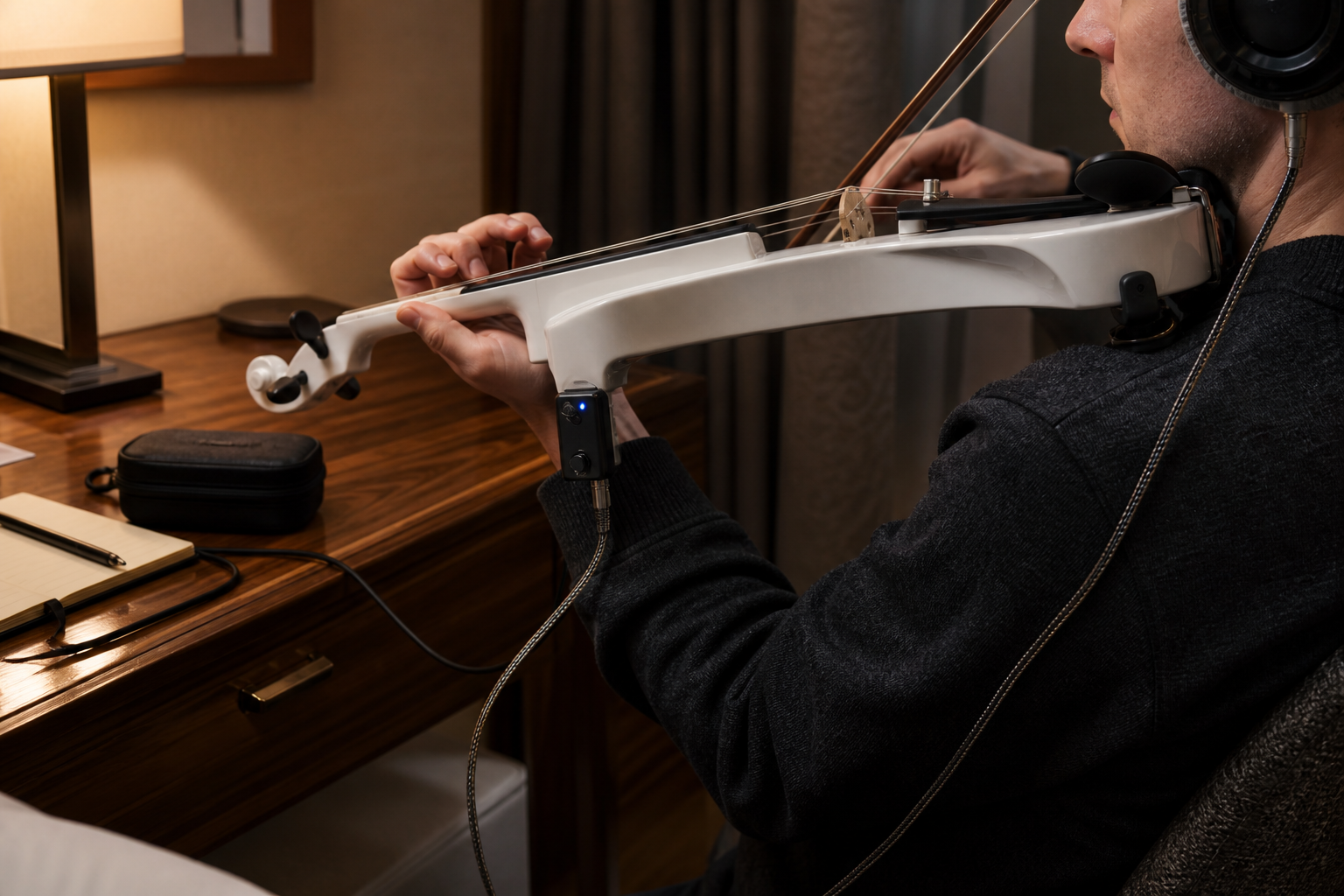
The Mustang Micro Plus wins because it covers the most real-world use without asking you to become a tech project manager. Fender built in 25 amp models, 25 effect models, 100 preset slots, a tuner, Bluetooth streaming, and USB recording in a 54-gram format. That is strong value for electric violinists who want one unit to travel with a case, a pair of closed-back headphones, and maybe a tablet full of backing tracks. I also like that it lets me move fast between pure warmup and content capture, which fits how a modern performer actually works.
Who should start with the Mustang before buying anything bigger?
Buy it first if your priority is hotel rooms, backstage corners, dressing rooms, and quick warmups that stay private. It pairs especially well with my guides to closed-back headphones and silent fast tuning, because those are the other pieces that decide whether the routine actually gets repeated.
- Pros: very small footprint, onboard tuner, Bluetooth backing tracks, USB recording, and enough presets for different jobs.
- Cons: cleaner voices work best for violin, and the feel is still headphone-first rather than speaker-first.
See the Fender Mustang Micro Plus · Find the Fender Mustang Micro Plus on Amazon
When is the NUX Mighty Plug Pro the smarter buy than Fender?
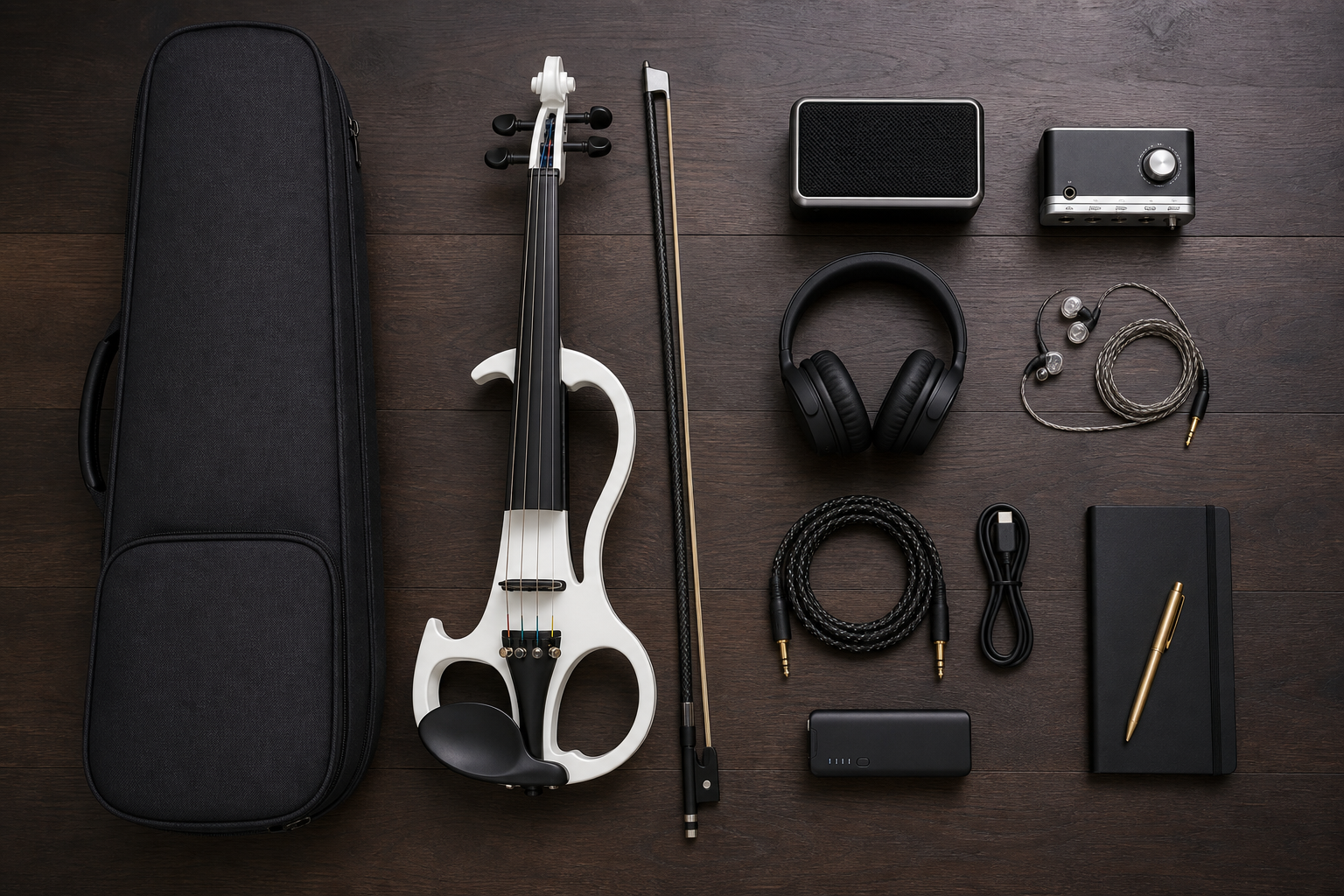
The NUX Mighty Plug Pro makes more sense when you care more about edit depth and routing control. NUX positions it around flexible block routing, 36 built-in IRs, 18 user IR slots, USB-C audio, TRRS headset support, five hours of playing time, 1.2 ms system latency, and 48 kHz/32-bit audio. That is a serious list for a device this small. Tanya Strings would lean this way when the practice rig also has to help with reels, short-form creator clips, or more exact repeatability between silent practice and direct recording.
What kind of player gets more from the Mighty Plug Pro?
Choose it if you enjoy building presets, loading alternate cabinet responses, or sending a more tailored signal into a mobile device. It also makes sense if your electric violin week includes quick demo recording, because the USB path is stronger here than on the most stripped-back products. If you want even more recording context, this article sits well beside my guide to audio interfaces for recording electric violin, since the travel rig and the main desk rig should complement each other instead of fighting for the same job.
- Pros: deeper editing, user IR support, very low stated latency, strong USB options, and content-friendly routing.
- Cons: more setup overhead, and it rewards preset discipline more than plug-it-in simplicity.
See the NUX Mighty Plug Pro · Find the NUX Mighty Plug Pro on Amazon
Do you need a speaker-based mini amp like Spark GO or Yamaha THR10II Wireless?
If you only care about silence, no. If you want a little air moving in the room before soundcheck, yes. The Spark GO is the smaller, lighter answer. Positive Grid gives it 33 amp models, 43 effects, four onboard presets, a 1/8-inch headphone or line output, a USB recording interface, Smart EQ, and up to eight hours of battery life in a 125 x 85 x 45 mm form. I like it when I want a desk speaker that still fits in a gig bag.
The Yamaha THR10II Wireless is the more premium desk answer. Yamaha lists Bluetooth audio and MIDI, five guitar models plus more via the app, acoustic and flat voices, USB Audio Class 2.0 support, dual 3.1-inch speakers, 20W rated output, a built-in wireless receiver, and about five hours of battery operation. That feels closer to a true desktop instrument amp, which can matter when Tanya Strings wants a little more body under the bow than a pure headphone solution gives.
- Spark GO pros: very small, battery powered, headphone and line out, useful app ecosystem, and easy travel fit.
- Spark GO cons: tiny speaker means limited scale and lower realism than the Yamaha.
- THR10II Wireless pros: better room feel, stereo spread, stronger desktop presence, and a cleaner crossover into home practice.
- THR10II Wireless cons: bigger, less pocket friendly, and not the answer for minimal-load travel.
See the Spark GO · Find the Spark GO on Amazon
See the Yamaha THR10II Wireless family · Find the Yamaha THR10II Wireless on Amazon
Is the VOX amPlug 3 enough for quick hotel-room warmups?
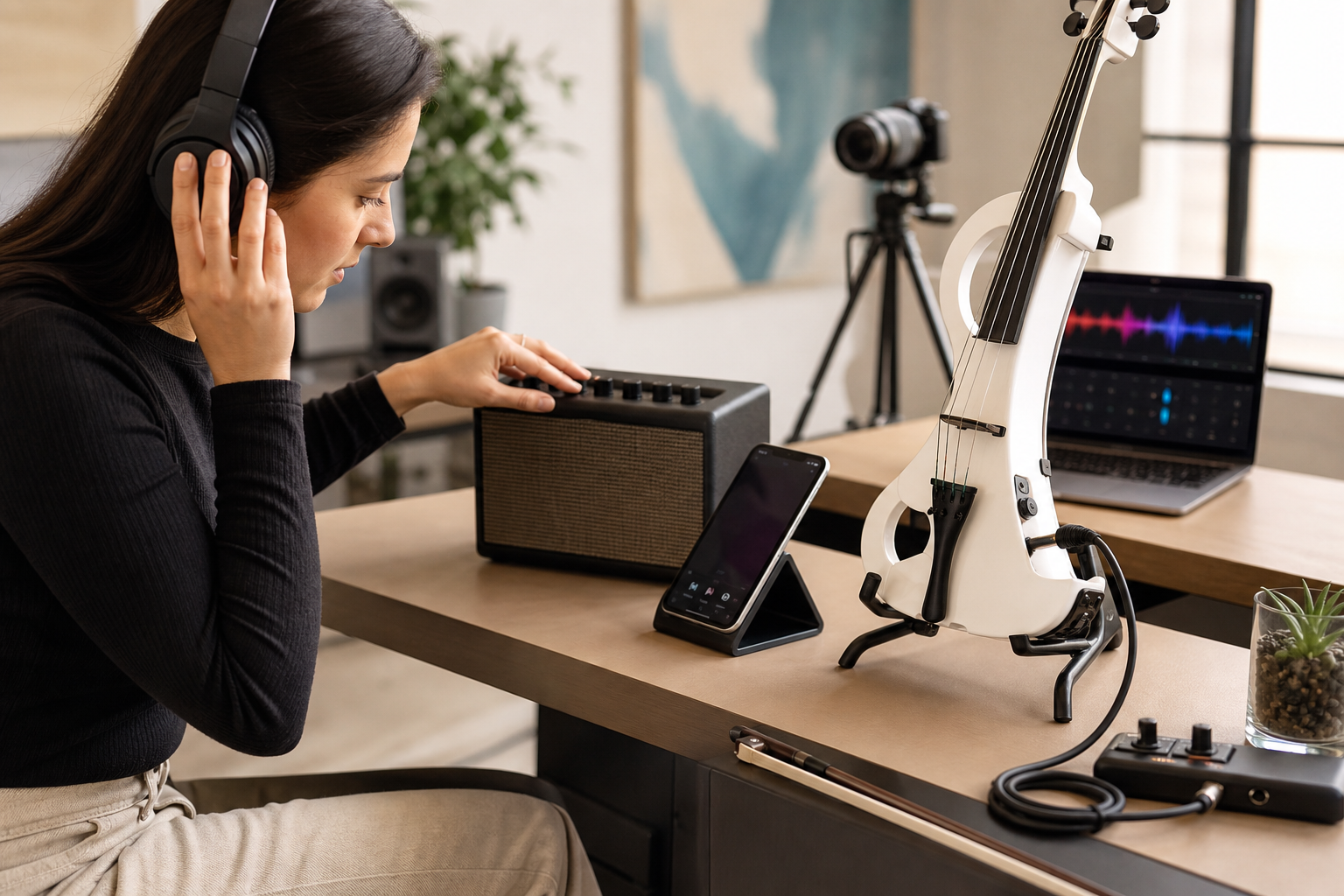
Yes, if your goal is speed and low weight more than deep editing. VOX describes the amPlug 3 around analog circuitry, dual channels, three built-in effects, and a rhythm function with nine patterns. That is not the broadest feature set in this guide, but it does not need to be. Tanya Strings would keep this kind of unit as the backup answer when there is very little room in the case and the main job is simply keeping the hands warm, the bow settled, and the ear connected to the instrument before walking onstage.
When does the amPlug 3 make more sense than the bigger picks?
It wins when you want the lightest possible warmup tool or a second rig that can stay in the bag at all times. I would not choose it over the Fender or NUX as a main purchase if you also care about USB recording or backing-track control, but I would absolutely respect it as the low-mass answer that gets used because it is always there.
- Pros: very light, quick to use, simple controls, and enough onboard variety for short warmups.
- Cons: less flexibility, less creator utility, and fewer reasons to replace a more complete travel rig.
See the VOX amPlug 3 · Find the VOX amPlug 3 on Amazon
What should electric violinists look for before buying a silent-practice amp?
Buy for the actual routine, not the most dramatic spec list. Tanya Strings wants a quiet-practice rig that supports performance life: early call times, hotel rehearsals, backstage calm, and occasional creator work between shows.
My buying checklist:
- Choose clean and flat voices first: electric violin usually wants less gain and less top-end hype than guitar demos suggest.
- Decide whether headphones are enough: if you need room feel, move up to a mini desktop amp.
- Check backing-track behavior: Bluetooth or easy aux-style playback matters if you rehearse to stems or click.
- Respect battery discipline: a quiet-practice rig is useless if it is always dead when the call time is tight.
- Think about creator spillover: USB recording can matter if you sketch reels or demo clips between gigs.
- Build the full private-practice chain: the amp works better when it sits beside strong headphones, solid tablet handling, and reliable practice tools.
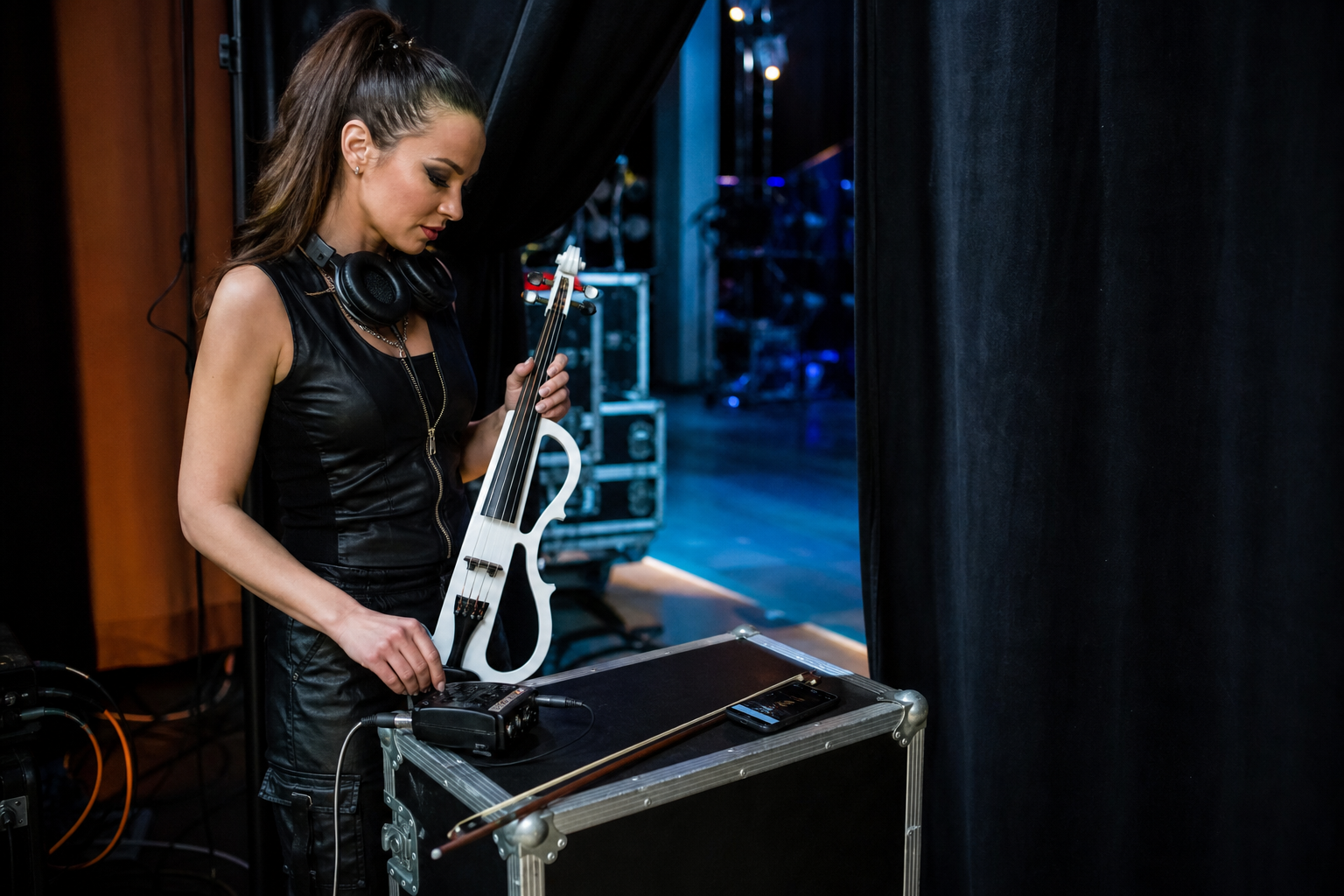
What mistakes make quiet practice rigs sound worse than they should?
The usual failures are small and repeatable. They come from using the wrong voicing, ignoring gain structure, or expecting a hotel-room tool to behave like a full show rig.
- Using a distorted preset as the starting point: electric violin usually needs a cleaner base than guitar marketing clips imply.
- Skipping headphone quality: weak headphones make you blame the amp for problems the transducer is creating.
- Running backing tracks too loud: the violin should still lead the ear during warmup.
- Ignoring input discipline: if the front end is clipping, no later preset edit will rescue the feel.
- Buying a desk amp for a fly-date bag: size matters when the real goal is repeatability.
- Expecting the warmup rig to replace the stage rig: these tools prepare the hands and ear; they do not replace full monitoring, DI, or PA decisions.
FAQ
What is the best overall silent-practice amp for most electric violinists?
For most players, I would start with the Fender Mustang Micro Plus because it gives the best balance of size, convenience, backing-track support, and creator usefulness.
Is a headphone amp better than a mini desktop amp for electric violin?
A headphone amp is better when travel size and private practice matter most. A mini desktop amp is better when you want some room feel and speaker response at a desk or in a hotel room.
Can guitar-focused practice amps still work for electric violin?
Yes. Stay on the cleaner or flatter voices, control the high end, and treat the unit as a compact practice tool rather than as your whole stage sound.
What should I buy for hotel room warmups with backing tracks?
The Fender Mustang Micro Plus is the easiest overall hotel answer, the NUX Mighty Plug Pro is stronger for deeper editing, and the VOX amPlug 3 is the lightest simple backup.