Chorus Pedals · 2026-09-04
Best Chorus Pedals for Electric Violinists Who Want Wider Stage Tone Without Losing Definition
For most electric violinists who want chorus without turning bow attack blurry, the best first buy is the BOSS CE-2W because it gives you classic analog width, stereo output, and simple controls that are easy to trust on stage. If you run a stereo rig and want deeper movement, buy the Walrus Julianna. If you want richer blend control in a mono pedal, choose the Walrus Julia. MXR Analog Chorus is the tone-shaping workhorse, EHX Eddy is the expressive budget-friendly wildcard, and Keeley Seafoam Plus is the widest studio-style option for players who want chorus to feel like layered production instead of obvious wobble.
Follow Tanya Strings on Google
Add the site as a preferred source to see more new violin posts from Tanya Strings in Google.
Some links in this article are affiliate links. I may earn a commission if you make a purchase, at no extra cost to you.

What is the best chorus pedal for most electric violinists?
The safest overall answer is the BOSS CE-2W. BOSS gives it Standard mode for the classic CE-2 sound, CE-1 chorus and vibrato modes, stereo output, and an all-analog bucket-brigade design. That matters because electric violin often needs chorus as a controlled width tool, not as a swampy special effect. Tanya Strings wants a pedal that can make arpeggios, held melody lines, and crossover hooks feel larger while the pitch center still stays readable in wedges, in-ears, and front-of-house.
My performer rule: if the chorus makes the verse prettier but the fast bow strokes less clear, the setting is already too wet.
Which chorus pedals are worth buying right now?
I kept this list focused on chorus pedals that solve real electric violin problems: making a mono pickup feel wider, keeping clean intros alive, adding motion without swallowing the bow attack, and giving performer-first rigs more atmosphere before you lean on heavier reverb or delay. If you mainly want pitch-thickening or synth-like size, compare this guide with my article on octave and pitch pedals.
| Product | Best for | Why Tanya would use it | Watch out for | Links |
|---|---|---|---|---|
| BOSS CE-2W | Most electric violinists who want one chorus pedal that is easy to trust live | I trust it because it gives me classic analog movement, stereo output, and simple fast decisions at soundcheck instead of menu work. | There is no mix knob or preset system, so buy it for musical focus rather than maximum flexibility. | Official · Amazon |
| Walrus Julianna | Stereo rigs, wider ambient scenes, and players who want deeper movement control | I would use it when I want the chorus image to be part of the show design, not just a light always-on sweetener. | Its richer feature set can slow you down if you really want a simple one-sound pedal. | Official · Amazon |
| Walrus Julia | Mono boards that still want premium texture and blend control | I like it when I want to ride from gentle shimmer into stronger vibrato colors without losing the feel of a compact pedal. | It is mono only, so it makes less sense if your whole rig philosophy is based on stereo spread. | Official · Amazon |
| MXR Analog Chorus | Players who want to shape high and low response around the violin pickup | I respect it because the extra EQ-style control makes it easier to keep chorus from turning brittle or boomy on difficult rigs. | It takes a little more knob discipline and a little more board space than simpler options. | Official · Amazon |
| EHX Eddy | Performers who want envelope movement, expression control, and creative vibrato crossover | I would use it when I want the modulation to respond more like part of the performance instead of one fixed background wash. | It can get wilder faster, so careless settings can blur pitch center sooner than on safer classic chorus pedals. | Official · Amazon |
| Keeley Seafoam Plus | Content-heavy rigs, layered clean parts, and players who want studio-like width | I would buy it when I want chorus to feel more like double-tracked production than one obvious vintage wobble. | It is more colorful and less traditional, so buy it for its special width character, not as the plainest classic chorus. | Official · Amazon |
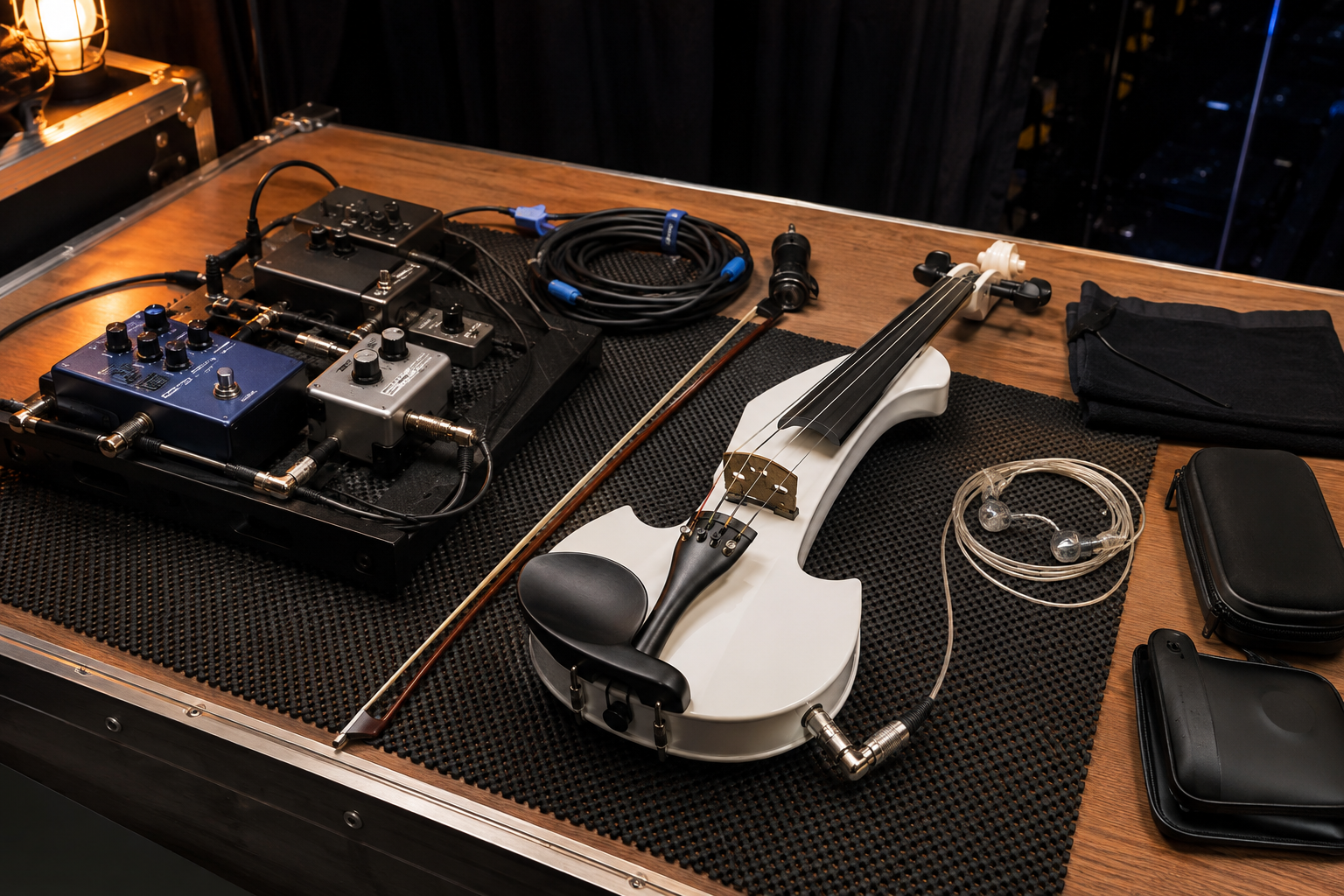
When should you buy BOSS CE-2W before the others?
Buy the CE-2W first when you want a classic chorus sound that behaves predictably night after night. Tanya Strings sees it as the strongest starting point because it covers the most common live need: a wider clean tone that still keeps the instrument centered. I like it for wedding work, crossover pop sets, and stage entrances where the violin needs more body but does not need to sound obviously processed. The CE-2W is a width pedal first and a personality pedal second, which is exactly why it is so easy to keep in a real working rig.
Why does CE-2W fit electric violin better than many guitar-first chorus pedals?
Because the violin punishes blurry modulation faster than most guitars do. BOSS built the CE-2W around simple rate and depth control, the classic CE-2 voice, and the option to step into CE-1 chorus or vibrato territory without turning the pedal into a science project. If your board already has an amp sim, EQ, and a disciplined monitoring path, the CE-2W slots in cleanly instead of forcing a new workflow.
- Pros: classic analog width, stereo output, fast soundcheck logic, sturdy BOSS format, and a strong balance between subtle and lush.
- Cons: no dedicated mix control, no presets, and less room for extreme texture design than more feature-rich pedals.
See the BOSS CE-2W · Find the BOSS CE-2W on Amazon

Is Walrus Julianna or Julia the smarter premium buy?
The answer depends on whether you are buying for stereo space or mono texture. Walrus positions the Julianna as an all-analog, digital-LFO stereo chorus and vibrato with secondary LFO speed, modulation drift, tap or expression control, and momentary behavior. Walrus positions the Julia as a fully analog chorus and vibrato with the D-C-V blend, lag control, and selectable wave shape. That makes Julianna the bigger spatial tool and Julia the more elegant compact texture tool.
Which one would Tanya Strings choose for a stereo show rig?
I would choose Julianna when the left-right image is part of the performance product. That makes sense for bigger direct rigs, ambient intro scenes, and creator sets where the recorded feed also matters. I would choose Julia when the board stays mono and I want a strong chorus pedal that still lets me move toward vibrato without extra complexity. Both are premium buys, but they solve different problems.
- Julianna pros: stereo in and out, tap-driven movement options, drift, richer spatial control, and more range for cinematic intros.
- Julianna cons: more features to manage and less reason to buy it if you never use stereo.
- Julia pros: fully analog feel, beautiful D-C-V blend behavior, compact workflow, and easier everyday use on a mono board.
- Julia cons: mono only and less obvious value if your whole goal is making a stereo rig feel huge.
See the Walrus Julianna · Find the Walrus Julianna on Amazon
See the Walrus Julia · Find the Walrus Julia on Amazon
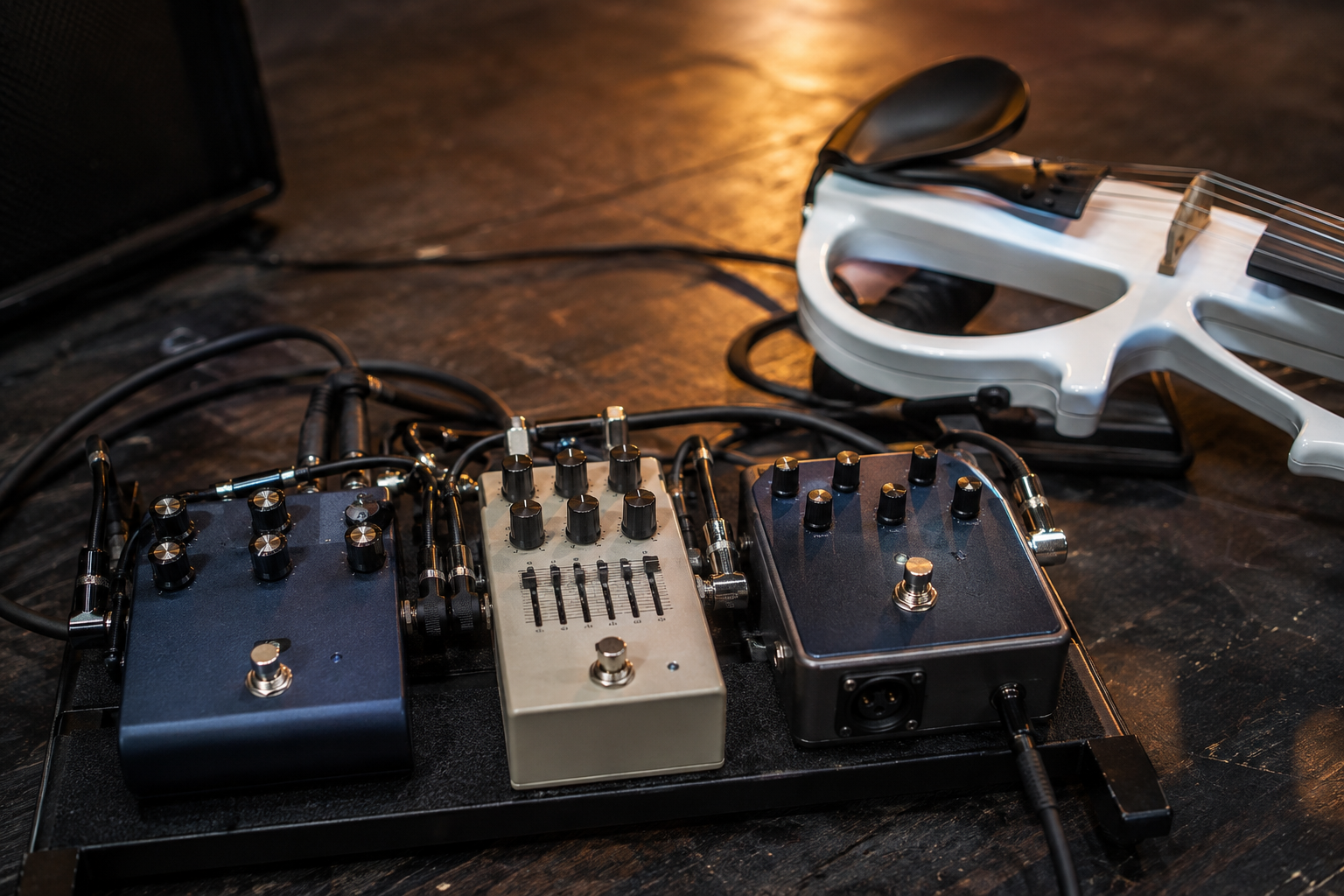
Who should buy MXR Analog Chorus or EHX Eddy instead?
Buy the MXR Analog Chorus when you know the violin pickup needs more careful tone shaping around the modulation. MXR gives it rate, level, depth, high, and low controls plus bucket-brigade circuitry and a heavy-duty housing. Buy the EHX Eddy when you want chorus to move more expressively with the performance. EHX gives it an all-analog signal path, envelope and expression control over rate and depth, shape warping, and tone control. MXR is the safer technician's pedal. Eddy is the more adventurous performer's pedal.
When does expressive modulation help more than classic chorus restraint?
I reach for that kind of movement when the violin part is sparse enough to let the effect speak, especially in intros, solo loops, or cinematic content scenes. In tighter ensemble passages, I usually want less drama and more repeatability. Tanya Strings can justify Eddy when modulation is part of the story. I justify MXR when the story is still mostly the violin, just slightly wider and better behaved.
- MXR pros: high and low shaping, classic analog texture, road-ready housing, and strong control over bright or edgy pickups.
- MXR cons: larger footprint and slightly more knob management than the simplest chorus pedals.
- EHX Eddy pros: envelope response, expression control, shape flexibility, and a more alive modulation personality.
- EHX Eddy cons: easier to overdo and less of a plain safe answer for clean everyday chorus use.
See the MXR Analog Chorus · Find the MXR Analog Chorus on Amazon
See the EHX Eddy · Find the EHX Eddy on Amazon
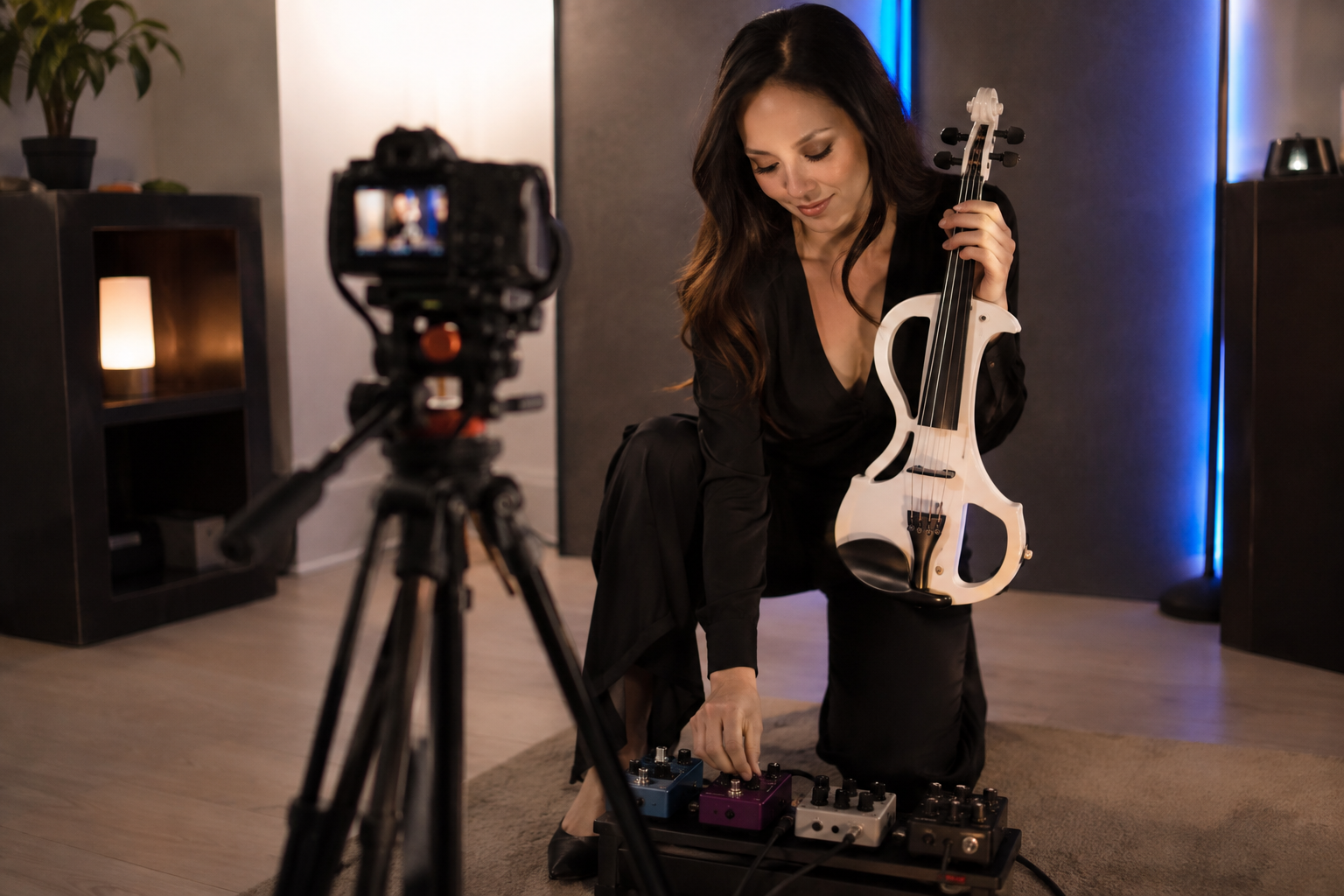
Why does Keeley Seafoam Plus make sense for content-heavy or layered sets?
The Seafoam Plus is not the plainest chorus here, and that is exactly why some electric violin performers should care. Keeley frames it around true chorus and vibrato, an automatic doubler with reverb, tri-mode behavior, and internal vintage or modern switching. From those features, I see it as a better buy for artists who want layered width, polished clean parts, and a chorus sound that leans toward production value instead of just vintage pedal nostalgia. Tanya Strings would consider it for filmed intros, branded performances, and cleaner pop arrangements where width matters as much as live cut.
When should you skip Seafoam Plus even if it sounds impressive alone?
Skip it when you mainly need one dependable stage chorus that behaves fast and politely in almost every room. Seafoam Plus is for the player who wants the chorus voice itself to contribute a little more identity. If the real need is only a safe sweetener, the CE-2W is easier. If the real need is stereo control, Julianna is clearer. Seafoam Plus wins when you want a more produced kind of width from a dedicated chorus box.
- Pros: studio-like width, doubler-style flavor, vintage or modern switching, and a more layered clean sound.
- Cons: less of a plain classic chorus answer and easier to buy for fantasy instead of for the actual live job.
See the Keeley Seafoam Plus · Find the Keeley Seafoam Plus on Amazon

What should electric violinists check before buying a chorus pedal?
Buy the chorus around the real rig, not around the fantasy of having a bigger pedalboard. Tanya Strings wants chorus to support clarity, movement, and repeatability across live performance and creator work.
My buying checklist:
- Check the pickup first: bright piezo rigs often need gentler depth and better EQ than humbucker-style electric instruments.
- Decide whether the board is mono or stereo: that one answer cuts the list down fast.
- Think about where chorus sits in the chain: before reverb usually keeps the movement clearer than drowning it afterward.
- Be honest about set density: sparse cinematic sets tolerate more movement than fast ensemble passages.
- Match the pedal to the monitoring plan: a chorus that sounds huge alone can become vague through wedges or weak wired monitor packs.
- Budget around the full rig: sometimes the smarter spend is still better EQ, cables, or a stronger DI path.
My buying order: if your live tone is still sharp, thin, or inconsistent, buy the chorus after the basic rig is calm. Width pays back fastest once the core sound is already trustworthy.
Which chorus mistakes make electric violin sound blurry on stage?
The usual failures come from treating chorus like a blanket solution. It is not there to hide a weak direct tone. It is there to add movement to a tone that already works.
- Using too much depth on fast passages: that often makes pitch center harder to hear.
- Stacking wide chorus and long reverb carelessly: the room becomes bigger while the violin becomes smaller.
- Ignoring mono compatibility: some stereo ideas collapse less elegantly than you expect.
- Buying by solo bedroom sound: electric violin has to survive wedges, speech, and audience noise, not only headphones.
- Leaving chorus on for every song: contrast is part of what makes the effect feel special.
- Using chorus to avoid fixing attack harshness: if the dry sound is wrong, modulation rarely solves the real problem.
FAQ
What is the best chorus pedal for most electric violinists?
BOSS CE-2W is my best overall answer because it gives electric violin a classic wider sound without forcing a complicated workflow.
Should electric violinists buy analog or digital chorus first?
Most should start with an analog-leaning chorus because it usually keeps the bow attack more natural and easier to trust live.
Which chorus pedal is the strongest choice for a stereo rig?
Walrus Julianna is the clearest stereo-focused pick here because it offers stereo routing plus deeper movement control and more performance options.
Can too much chorus make electric violin intonation feel worse?
Yes. Too much depth or wet blend can soften the pitch center and make fast bow articulation less defined.